
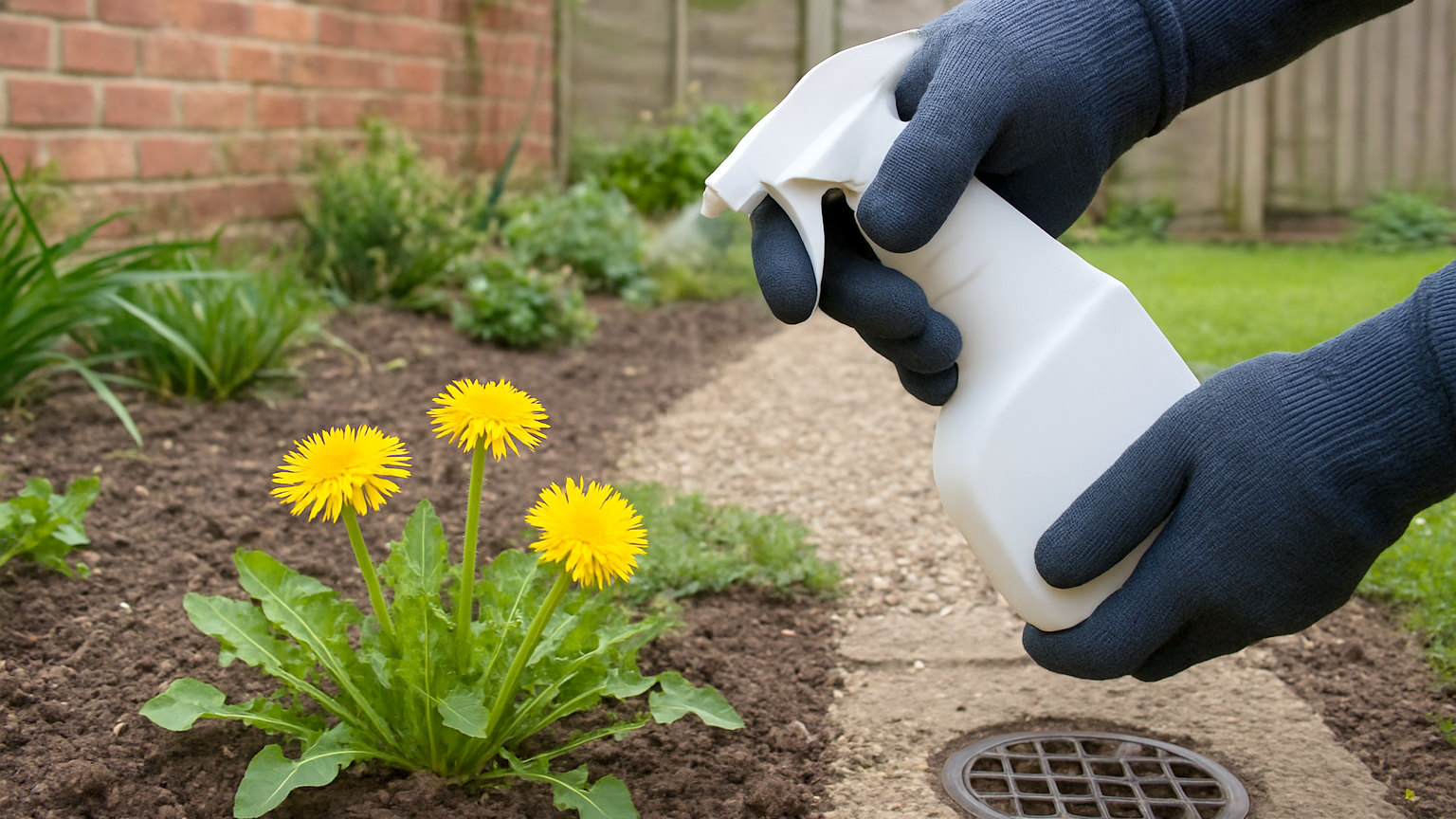
Garden weedkillers are regulated products, and the rules around them are stricter and more specific than most gardeners realise.
The label is a legal document
It is an offence to use a pesticide, including a weedkiller, other than in accordance with its label.
That covers the crops or situations it may be used on, the rate, the timing, the number of applications, the protective equipment, and any harvest interval.
Using a product on something not listed on the label is unlawful, even if it would work.
Read the label before buying, not after, since many products are approved only for specific situations.
Protecting water
The most important restriction.
Never use a weedkiller in or near water, a pond, a ditch or a watercourse without the specific approval required. Most garden products are not approved for use near water.
Do not apply anything where run-off could reach a drain, since surface water drains discharge to watercourses.
Do not apply before rain.
Do not fill, mix or wash out equipment near a drain, a gully or a water source.
Never pour surplus or washings down any drain, into a gully, or onto a hard surface.
Application
Apply in calm conditions, since spray drift damages neighbouring plants and a neighbour's garden.
Use a coarse spray at low pressure, or a watering can with a dribble bar for accuracy.
Keep a separate sprayer and watering can for weedkiller, clearly marked, and never use them for anything else. Residues are extremely difficult to remove and will damage plants watered from the same can afterwards.
Wear the protective equipment stated on the label.
Keep children and pets off treated areas for the period stated.
Apply to actively growing weeds, since systemic products need to be transported to the roots.
Storage and disposal
Store in the original container with the label intact, closed, frost free, and locked away out of reach of children and pets.
Never decant into an unlabelled bottle, which is how serious accidents happen.
Buy only what you will use, since approvals are withdrawn and a product legal today may not be usable in a few years.
Dispose of surplus concentrate and out-of-date products through a household hazardous waste facility, checking first what the local recycling centre accepts.
Apply diluted surplus to an area listed on the label rather than tipping it away.
Types of weedkiller
Systemic: absorbed by the foliage and moved to the roots, killing the whole plant. Necessary for perennial weeds. Requires actively growing leaves.
Contact: kills the tissue it touches. Effective on annual seedlings and merely prunes perennials.
Selective: kills broad-leaved plants but not grasses, used on lawns.
Residual: persists in the soil. Heavily restricted and generally unsuitable for domestic use.
Hormone residues in manure
A real and frequently unrecognised problem.
Certain hormone weedkillers used on pasture persist through the animal, through composting and into manure and hay.
Manure containing them causes twisted, distorted, cupped growth on tomatoes, beans, potatoes and other sensitive plants, and the effect can last years.
Ask about the source of any manure and whether the pasture was treated.
Test a doubtful batch by growing broad beans in a pot of it before spreading it on a vegetable plot.
What is no longer available
Approvals change frequently, and several products once regarded as standard have been withdrawn.
Do not rely on older books or advice. Check what is currently approved, and dispose of anything in the shed that is no longer permitted.
Whether to use one at all
Most garden weed problems can be handled without chemicals: hoeing at the right stage, hand weeding, mulching, dense planting and light exclusion.
Where a weedkiller is used, restrict it to a specific job on a specific area, follow the label exactly, and protect water above everything else.
Neighbours
Spray drift onto a neighbour's garden can damage their plants and may give rise to a claim.
Do not apply anything close to a boundary in wind, and be aware that some products move in vapour as well as droplets in warm conditions.
Talk to a neighbour before treating anything along a shared boundary, particularly where they grow food crops.
Bear in mind that you may not apply anything to a plant or a fence you do not own.


