
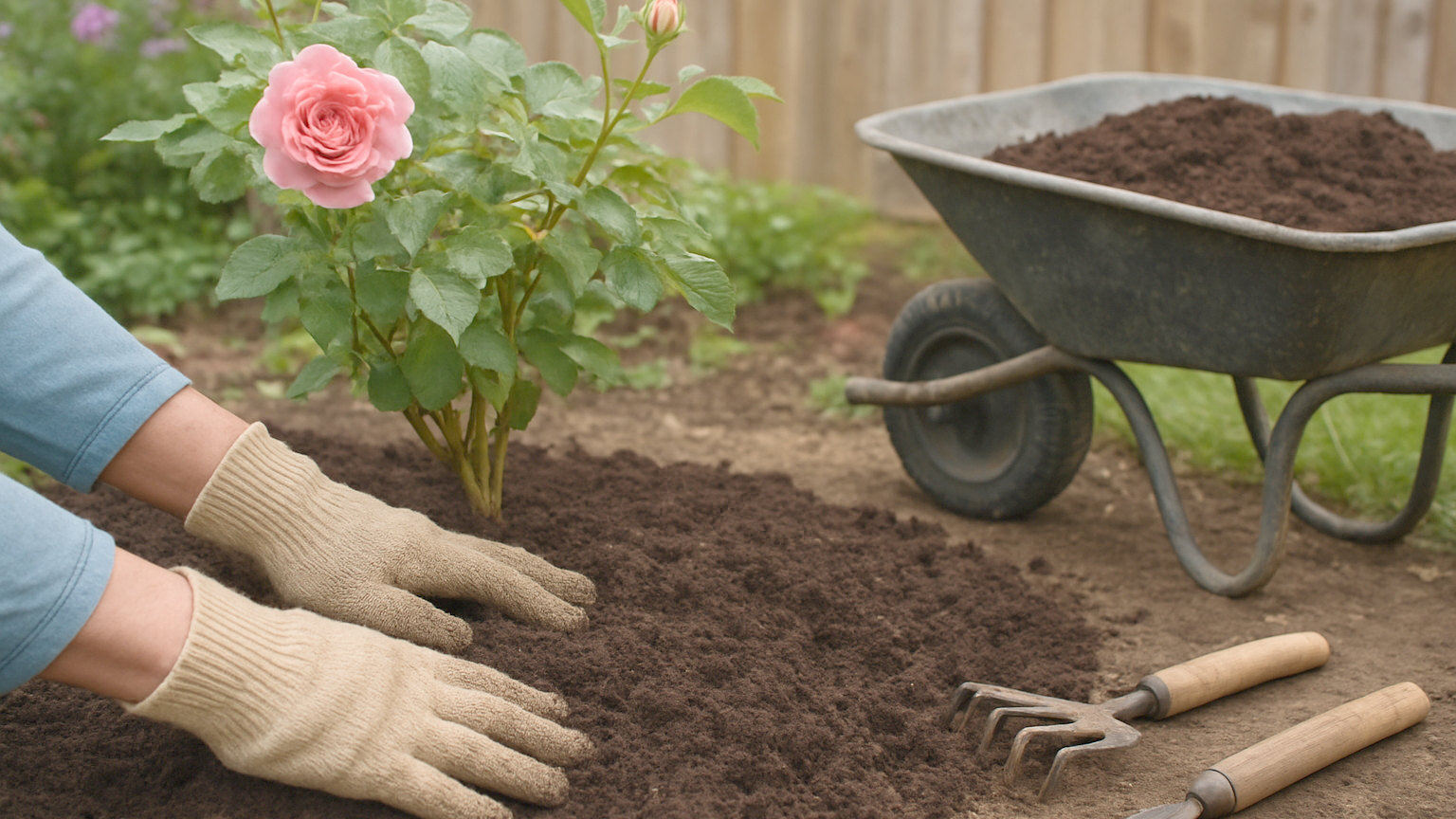
Mulching is the most effective weed control available to a gardener, because it prevents germination rather than dealing with the consequences of it.
How it works
Most weed seeds need light to germinate.
A layer of opaque material over the soil surface keeps the seed bank in darkness, so the seed remains dormant.
It also conserves moisture, moderates soil temperature, protects the surface from rain compaction, and feeds the soil as organic mulches break down.
Depth and timing
Five to seven centimetres is the working depth. Thinner than that and light penetrates and weeds come through.
Mulch onto weed-free soil. Mulch does not kill established weeds; it suppresses germination. Clear perennials thoroughly first.
Mulch onto moist soil. Mulching dry ground seals the dryness in, and rain then takes far longer to penetrate.
The ideal moment is late winter or early spring, after rain, before growth starts and before the spring flush of weed seed germinates.
Autumn is the other good time, on ground that is still warm and moist.
Top up annually, since organic mulches break down and thin.
Materials
Garden compost feeds the soil as well as suppressing weeds, and it may contain weed seed if the heap did not heat sufficiently.
Well-rotted manure is excellent for hungry plants such as roses and vegetables. It must be well rotted, and ask about the source, since residues of some hormone weedkillers persist in manure from treated pasture and damage tomatoes, beans and other sensitive crops.
Bark and wood chip last well and suppress effectively, and are low in nutrients. Excellent for shrub borders and paths.
Leaf mould is ideal for woodland and shade planting, and mimics what happens naturally.
Spent mushroom compost is alkaline, so avoid it around lime-hating plants.
Gravel and grit suit Mediterranean planting, alpines and gravel gardens, keep plant crowns dry, and do not feed the soil, which is often the point.
Straw around strawberries and vegetables, though it can carry seed.
Does woodchip rob nitrogen
Only where it is dug into the soil, where decomposing organisms draw on nitrogen.
As a surface mulch it does not, since the interface with the soil is small. This is a persistent misunderstanding.
Fresh chip is best left to weather for a few months before use where appearance matters.
Landscape membrane
Widely used and frequently disappointing in a planted border.
It works initially, and within a few years windblown soil and organic debris accumulate on top and weeds germinate in that layer, rooting through the membrane.
Removing them then is far harder than from open soil.
It prevents worms incorporating organic matter, so the soil beneath deteriorates.
It makes planting, dividing and adding bulbs awkward, and looks unpleasant as it degrades and becomes exposed.
It belongs beneath gravel paths, bark paths and driveways, where nothing is to be planted, and under a bog garden or a pond. It does not belong under a planted border.
Mulching around plants
Keep mulch clear of stems and trunks by a few centimetres. Material heaped against a stem holds moisture, encourages rot and provides shelter for slugs and voles.
Do not mulch over the crowns of herbaceous plants.
Around a young tree, mulch a circle of at least a metre diameter, which speeds establishment more than anything else, and keep it clear of the trunk.
Keep mulch away from the base of newly planted seedlings, since it provides ideal slug shelter.
Cardboard and sheet mulching
A layer of plain cardboard beneath a mulch excludes light thoroughly and is useful when converting turf or a weedy area to a bed.
Remove tape and staples, overlap the sheets generously, wet it thoroughly, and cover with several centimetres of compost.
It rots down within a season and worms incorporate it.
It suppresses annual weeds and grass effectively, and it will not stop established bindweed, ground elder or couch.
How much you need
A cubic metre covers roughly fifteen to twenty square metres at the right depth.
Bulk delivery is far cheaper than bags for anything more than a small area.
Order it delivered as close to where it is needed as access allows, since barrowing is where the work actually is.
What mulch will not do
It will not kill established perennial weeds, which push straight through.
It will not suppress weeds if laid too thinly.
It will not stop windblown seed germinating in the mulch itself once organic material has broken down into it, which is why topping up annually matters.


