
A small number of introduced plants spread aggressively enough to cause ecological and legal problems. Two points matter most: one of them is genuinely dangerous to handle, and several carry legal duties.
Giant hogweed
This is a serious health hazard and should not be touched.
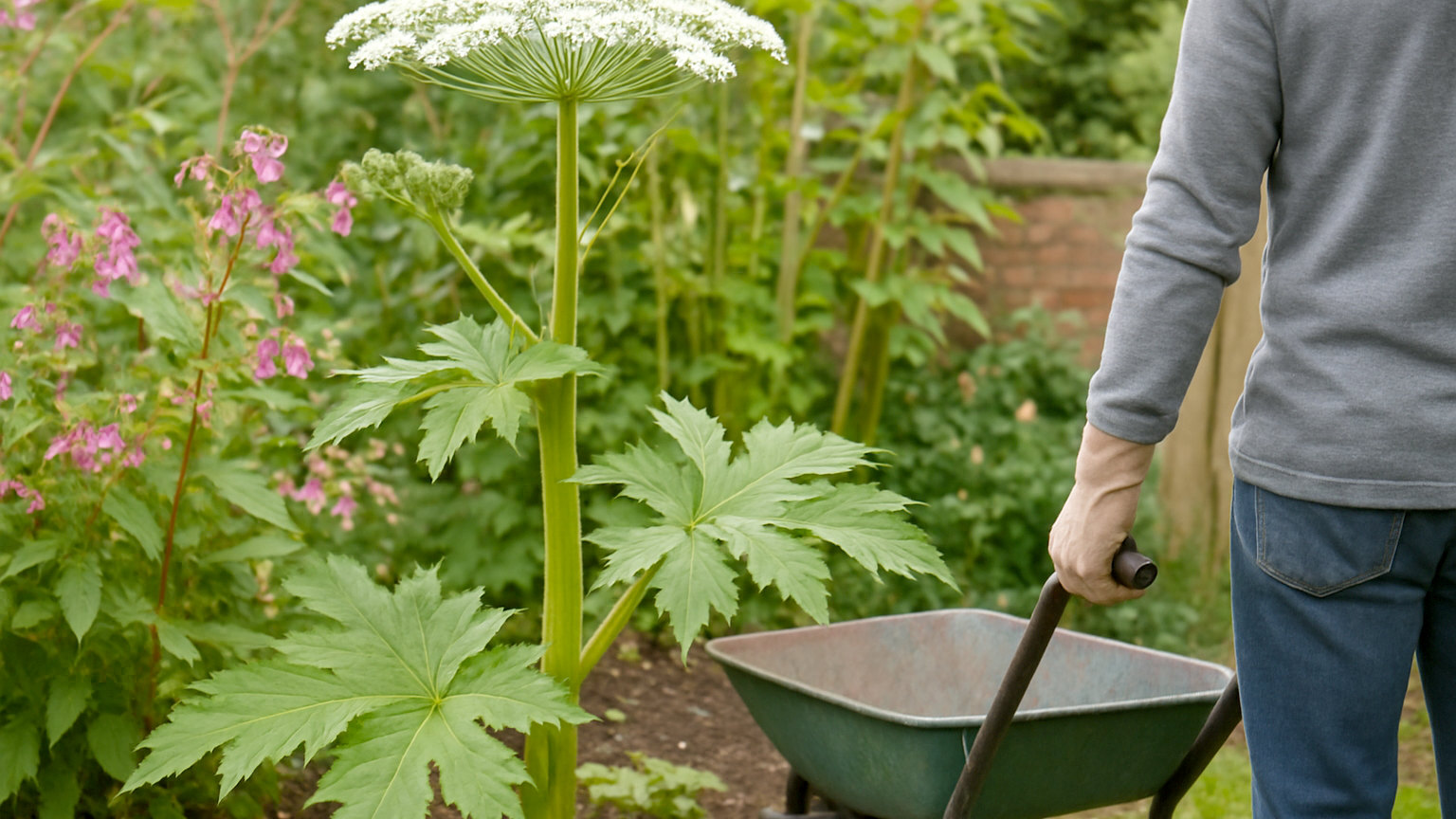
A very large umbellifer, reaching three to five metres, with a thick bristly stem often blotched purple, huge deeply divided leaves and enormous white umbel flower heads.
The sap causes phytophotodermatitis. It reacts with sunlight on skin to produce severe painful blistering burns, which can take months to heal, leave lasting pigmentation, and recur on exposure to sunlight for years afterwards. Sap in the eyes can cause serious injury.
Do not strim, mow or cut it, which spreads sap widely.
If sap contacts skin, wash immediately with soap and water, keep the area covered and out of sunlight, and seek medical advice. Seek urgent medical help for eye contact.
Control is a job for someone equipped and experienced. Report it to the landowner or the local authority where it is on public or neighbouring land.
Do not confuse it with common hogweed, which is much smaller and far less hazardous, though its sap can still irritate.
Himalayan balsam
Tall annual with pink helmet-shaped flowers and explosive seed pods that fling seed several metres.
Dominates riverbanks and damp ground, outcompeting native plants, and dies back in winter leaving bare eroding soil.
Being an annual, it is straightforward to control: pull it up before it sets seed, which is easy since the roots are shallow. Snap the stems below the lowest node.
Persistence over several years clears an area, provided upstream sources are also dealt with.
Rhododendron ponticum
Forms dense thickets that shade out everything beneath, and hosts Phytophthora diseases affecting trees.
Distinguish it from garden hybrids, which are not the problem.
Removal requires digging out the stump and roots, since it regrows readily.
Others to know
Japanese knotweed, with distinctive zigzag stems and shield-shaped leaves, which damages structures and carries significant legal and property implications.
Aquatic invaders: New Zealand pigmyweed, floating pennywort, parrot's feather, water fern and water primrose, several of which are banned from sale.
Three-cornered leek, few-flowered leek and Spanish bluebell, which spread readily from gardens.
Cotoneaster species, montbretia and variegated yellow archangel, all of which have escaped from gardens.
The legal position
It is an offence to plant, or otherwise cause to grow in the wild, plants listed under the relevant schedule of the Wildlife and Countryside Act.
This includes Japanese knotweed, giant hogweed, Himalayan balsam, rhododendron ponticum and several aquatic species.
Several listed species may not be sold.
Allowing a listed plant to spread onto neighbouring land can give rise to civil liability.
Rules differ between England, Scotland, Wales and Northern Ireland, and lists change. Check the current position.
Disposal
This is where people most often go wrong.
Material from listed invasive plants is classed as controlled waste.
It must not go into household waste, garden waste collections or a compost heap.
It must be disposed of at a licensed facility, or dealt with on site under the appropriate guidance.
Never tip garden waste, pond plants or clearings into a hedgerow, a stream, a ditch or a wild area. This is how the great majority of these plants escaped in the first place.
Preventing spread
Do not tip anything over a fence or into a watercourse.
Compost or dispose of surplus plants responsibly.
Check the species names of aquatic plants before buying.
Clean boots, tools and equipment when moving between sites.
Where any listed species is found, seek advice from the local authority or a specialist rather than acting on assumptions.
Buying and selling plants
Check species names rather than common names, which vary and mislead.
Buy aquatic plants only from reputable suppliers, and be cautious about plants offered informally or online.
Do not pass on surplus plants that are known to spread aggressively, however generous the intention behind it.
Why it matters
Most invasive plants in Britain escaped from gardens, either by being planted out or through tipped garden waste.
The cost of controlling them runs to enormous sums annually, and the ecological damage is substantial.
Responsible disposal is the single most useful thing a gardener can do about it.


