
Most gardens have the same two dozen weeds. Recognising them tells you whether to hoe, dig or leave them, and a few are useful enough to keep in a corner.
Common annuals
Chickweed. Sprawling, pale green, small white star flowers, with a single line of hairs along the stem. Germinates all year and seeds within weeks.
Groundsel. Upright, ragged leaves, yellow flowers that never open properly, then fluffy seedheads. Several generations a year.
Hairy bittercress. Small rosette with tiny white flowers, and seed pods that fire seed several feet when touched. Pull before it flowers, and check any plant bought in a pot, which is how it arrives.
Annual meadow grass. Low tufted grass flowering at any height, including in a mown lawn. Seeds prolifically.
Fat hen. Upright with mealy grey-green leaves. Seeds remain viable for decades.
Cleavers. Sticky, clinging, scrambling through everything. Pulls out easily as a whole plant.
Speedwell and shepherd's purse. Both low growing and prolific seeders.
Common perennials
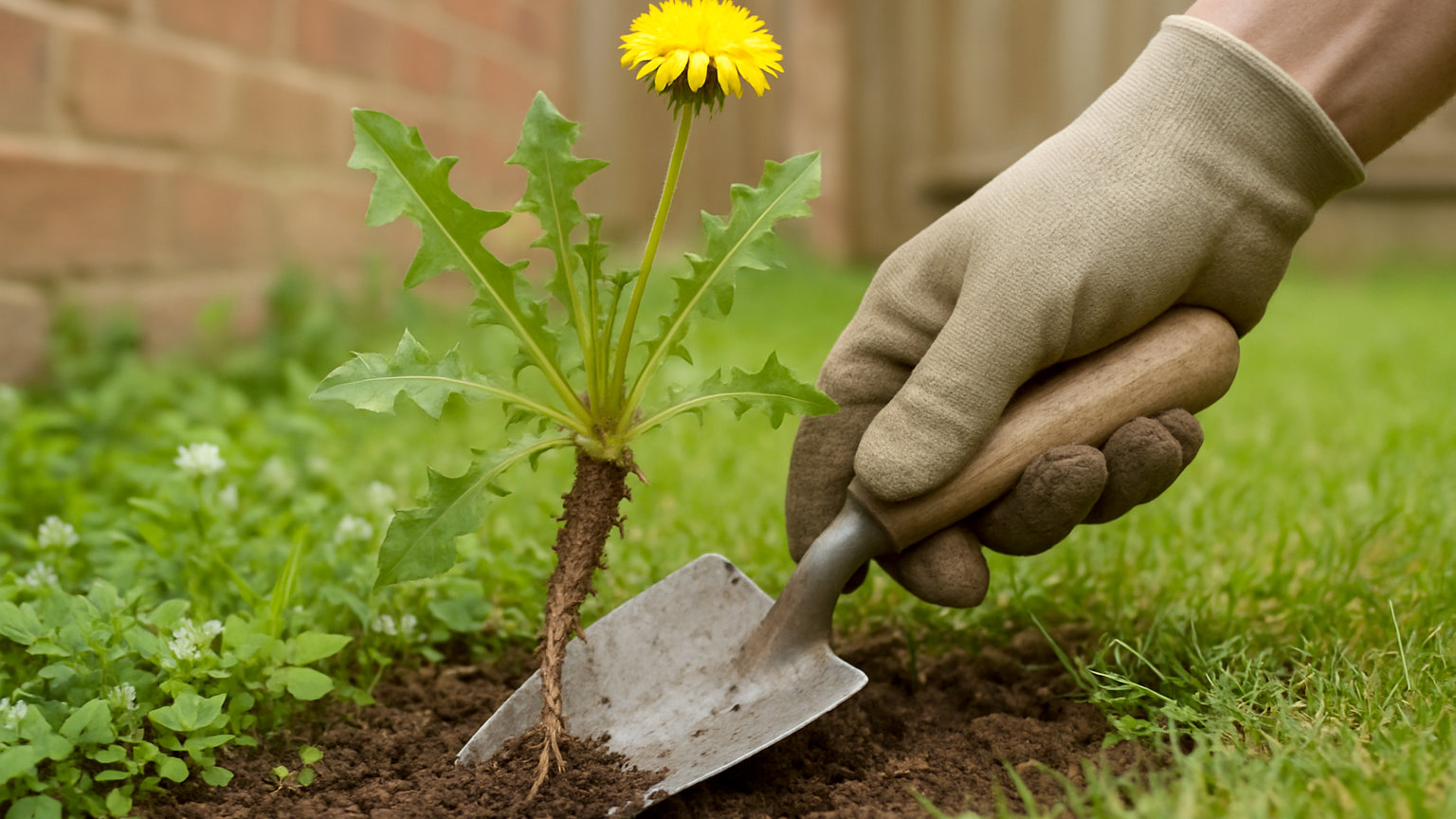
Dandelion. Deep brittle tap root that regrows from any fragment left behind. Dig deeply with a fork or a long narrow tool.
Creeping buttercup. Spreads by runners rooting at nodes, thriving on wet compacted ground. Trace and lift the runners; improving drainage reduces it.
Ground elder. Divided leaves in threes, white umbel flowers, and white brittle rhizomes just below the surface. Every fragment regrows.
Couch grass. Coarse grass with sharp-pointed white rhizomes running horizontally.
Bindweed. Twining stems, white trumpet flowers, deep brittle white roots.
Docks. Broad leaves and a very deep tap root. Remove before seeding, since a single plant produces thousands of seeds.
Nettles. Yellow spreading roots just below the surface, easy to lift from loose soil.
Creeping thistle. Spreads by deep underground roots, so pulling the tops achieves little.
Horsetail. Distinctive whorled shoots, with rhizomes going to great depth.
Oxalis. Clover-like leaves and masses of tiny bulbils that scatter when disturbed. Extremely difficult once established.
Bramble and ivy where borders adjoin rough ground.
Weeds worth keeping
A patch of the right weeds in an out-of-the-way corner is genuinely valuable.
Nettles are the food plant of peacock, small tortoiseshell, red admiral and comma butterfly caterpillars, and make an excellent liquid feed.
Dandelions are an important early nectar source for bees before much else is flowering.
Clover fixes nitrogen and feeds pollinators, and is increasingly welcomed in lawns.
Comfrey, though vigorous, makes a high-potash liquid feed and is excellent for bees.
Selfheal, bird's-foot trefoil and daisies in a lawn support a great deal and cost nothing.
Keep them contained and never let them seed into cultivated ground.
Weeds that indicate conditions
Weeds tell you about your soil.
Creeping buttercup, horsetail, rushes and sedges suggest wet or compacted ground.
Nettles, fat hen and chickweed suggest fertile soil high in nitrogen.
Plantains and knotweed in a lawn suggest compaction.
Moss suggests shade, poor drainage, compaction or low fertility.
Dealing with the underlying condition reduces the weed more effectively than removing it repeatedly.
Take care with two
Giant hogweed sap causes severe blistering burns that react with sunlight and can recur for years. Do not touch it, and take advice.
Ragwort is toxic to horses and livestock and is subject to specific control legislation where it threatens grazing land.
Getting an identification
Photograph the whole plant, a leaf and the root, and compare against a reliable guide before deciding on an approach.
Getting it right matters, since hoeing an annual clears it while hoeing a rhizomatous perennial multiplies it.
Seedlings of garden plants
Learn to recognise the seedlings of plants you want, since foxgloves, aquilegia, honesty, nigella and hellebores all self-sow and are easily hoed off in spring by mistake.
Leave anything you are unsure of until it is large enough to identify, and remove it then.
Tree seedlings
Sycamore, ash, holly, elder, cotoneaster and buddleja all seed into borders and walls.
Remove them small, since a sycamore left for one season has a tap root that is difficult to extract by the next.
Seedlings in wall joints and paving must be removed while tiny, since the roots damage the structure as they expand.
Keeping a note
Recording which weeds a garden has, and where, saves repeating the identification every year and helps you spot anything new arriving.


