
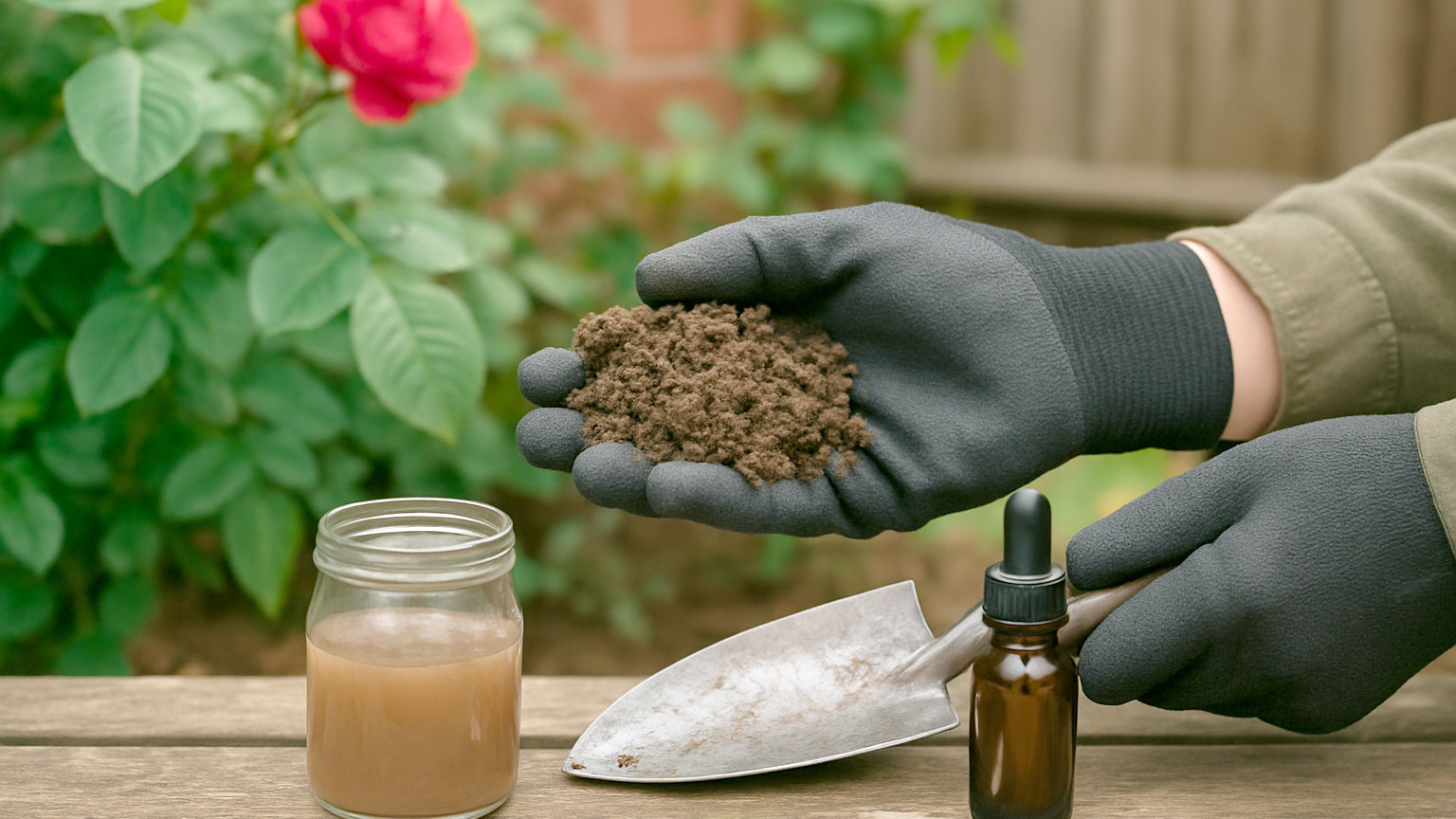
Soil determines more about what will grow than any other factor, and testing it costs very little. Most gardeners never do it and then wonder why particular plants fail.
Taking a sample
The result is only as good as the sample.
Soil varies within a garden, particularly near buildings where builders' rubble and mortar are common, and near hedges and trees.
Take several small samples from different points in the area you are testing, from about ten to fifteen centimetres down, and mix them thoroughly in a clean container.
Remove stones, roots and debris.
Test different areas separately rather than averaging the whole garden.
Do not sample immediately after adding lime, fertiliser or manure, which distorts the result.
Use clean hands and clean equipment.
Testing pH
The most useful single test, and a kit costs very little.
Simple colour-change kits are adequate for garden purposes. Follow the instructions exactly, particularly on the ratio of soil to solution.
Probe meters pushed into the soil are convenient and generally less reliable.
Test in several places, since pH varies across a garden and one reading can be misleading.
Most plants suit a pH of about 6.0 to 7.0. Below about 5.5 is acid, above about 7.5 is alkaline.
The result tells you whether lime-hating plants such as rhododendrons, camellias and blueberries are realistic in open ground, and whether liming is worth considering for brassicas.
The hand texture test
Costs nothing and tells you a great deal.
Take a small handful of moist soil and work it between your fingers.
Clay feels smooth and sticky, rolls into a ball and then a sausage, bends into a ring without cracking, and takes a shine when rubbed.
Sand feels gritty, will not hold together and falls apart when you try to roll it.
Silt feels silky or soapy, rolls into a ball but not a firm ring.
Loam is somewhere between, holding together loosely with some grittiness. This is what most gardeners are aiming for.
Chalk soils are pale, shallow, stony and free draining, often with visible chalk fragments.
Peaty soils are dark, spongy and hold a great deal of water.
Testing drainage
Dig a hole about thirty centimetres deep and wide, and fill it with water.
Let it drain, then fill it again and time how long the second filling takes to drain away.
Draining within a few hours indicates reasonable drainage. Water still standing after a day indicates a real problem that affects what you can grow and how you plant.
Note also where water collects after heavy rain and where the ground stays wet longest in winter.
Digging a profile
Dig a hole about half a metre deep and look at the layers.
Note the depth of dark topsoil before you reach paler subsoil. Anything under about twenty centimetres is shallow.
Look for a compacted pan, which appears as a dense layer that roots do not penetrate.
Look for signs of waterlogging: grey or blue-grey mottling, orange staining, and a sour smell.
Count the worms, which is a reasonable indicator of soil health.
Note any buried rubble, plastic or debris.
Laboratory testing
Worth doing before a major project, on a new garden, or where something is persistently wrong.
A laboratory test reports pH, major nutrients, organic matter and sometimes trace elements, with recommendations.
It costs more than a kit and is far more informative than colour-change tests for nutrients, which are of limited value.
Where contamination is suspected, on former industrial land or where a garden has an unexplained history, specific testing for heavy metals and contaminants is worth arranging before growing food.
What to do with the results
Match plants to the soil you have, which is far easier than changing it.
Add organic matter, which improves every soil type.
Adjust pH only where necessary and modestly, since large changes are impractical.
Address drainage and compaction, which are frequently the real limitation.
Retesting
Test pH every few years, and after liming, since it drifts over time.
Retest a specific area if plants that should thrive there consistently fail, since something has usually changed.
What testing will not tell you
Simple kits give a general indication rather than a precise figure, and nutrient test kits for amateurs are of limited reliability.
They will not identify contamination, compaction at depth, or a drainage problem, all of which need looking at directly.
Digging a hole and examining what is there remains the most informative thing you can do.


