
Texture is the proportion of sand, silt and clay, and it cannot be changed. Structure is how those particles are arranged, and it can be improved or destroyed, which makes it the thing worth attending to.
What good structure looks like
Soil particles bound into crumbs and aggregates, with spaces between them.
Those spaces are the point. Large pores drain and admit air; smaller ones hold water available to roots.
Well-structured soil crumbles readily in the hand, drains freely, holds moisture, is easy to dig and is full of roots and worms.
Poorly structured soil is dense and airless, or dusty and structureless, water either sits on top or runs straight through, and roots are confined to the surface.
What builds structure
Organic matter above everything else. It binds particles into crumbs, feeds the organisms whose secretions glue them together, and improves both drainage and water holding.
Roots, which physically create channels and bind soil.
Earthworms, which create channels and bring material through the profile.
Fungal networks, which bind particles at a fine scale.
Freezing and thawing, which breaks clay clods down over winter.
Calcium, which is why liming an acid clay improves its workability.
What destroys it
Working or walking on wet soil is the single greatest cause of damage in gardens.
Wet soil has no strength; pressure smears the particles together and destroys the pore spaces, and the damage lasts for years on clay.
If soil sticks to your boots, stay off it.
Repeated cultivation, which breaks crumbs down and burns off organic matter.
Rotavating, which creates a fine tilth on top and a compacted pan beneath.
Rain falling on bare soil, which caps the surface.
Heavy traffic, machinery and stacked materials.
Growing the same thing continuously without adding organic matter.
Recognising compaction
Water standing on the surface after rain, or running off.
Hard ground that is difficult to push a fork into.
Roots growing sideways at a particular depth rather than downwards.
A distinct dense layer visible when digging a profile, often at the depth of previous cultivation.
Poor growth, shallow rooting and plants that suffer in both drought and wet.
Moss, plantains and creeping buttercup in a lawn.
Few worms.
Relieving compaction
Do not simply dig it over, which relieves the surface and can create a new pan beneath.
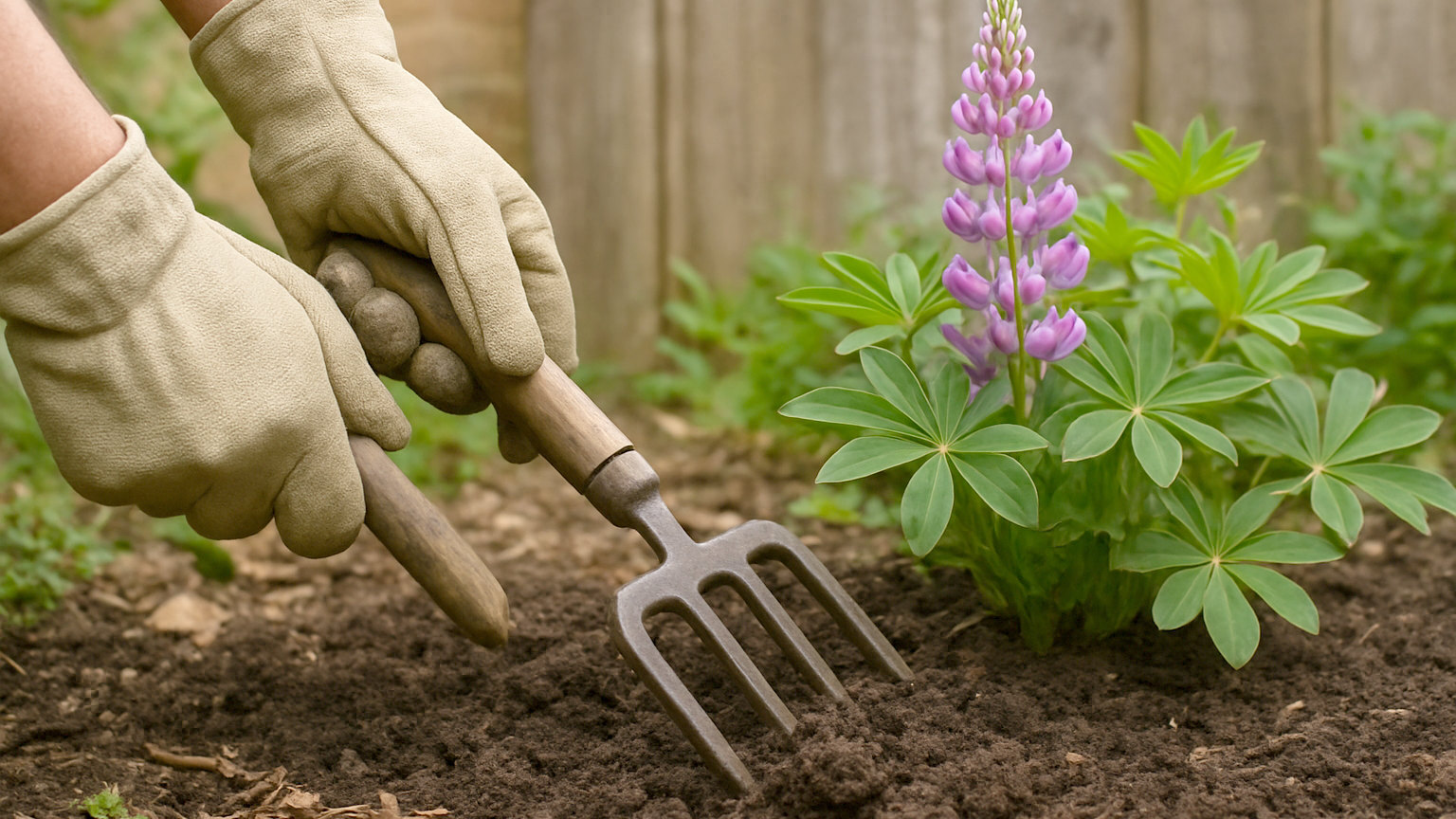
Loosen with a fork driven in and levered gently, without turning the soil, which opens the structure while leaving the layers in place.
Work when the soil is moist but not wet.
Add organic matter generously to the surface and let worms incorporate it.
On a lawn, hollow-tine aerate in autumn and topdress.
Where a hard pan exists at depth, break through it with a fork or a subsoiling action, since roots and water cannot pass otherwise.
Deep-rooting green manures such as grazing rye and fodder radish penetrate compaction and leave channels when they die.
Recovery takes seasons rather than weeks.
Protecting structure
Stay off wet soil. Use boards to spread weight where you must cross it.
Design beds narrow enough to reach across, so the growing area is never walked on. This is the main argument for raised and defined beds.
Keep the surface covered with mulch or planting rather than leaving it bare.
Reduce cultivation, since every pass costs structure and organic matter.
Add organic matter every year, which is the single most effective habit.
Clay in particular
Clay has enormous potential fertility and the worst structural vulnerability.
Never work it wet, add organic matter generously, consider liming if it is acid, and let winter frost do the work of breaking clods.
Well-structured clay is among the best garden soils there is.
Sand and silt
Sandy soils have large pores, drain rapidly and lose nutrients readily, and they are hard to compact.
The remedy is organic matter, which holds water and nutrients, and keeping the surface covered.
Silty soils have good water holding and cap and compact easily, so they need the same protection from traffic and rain as clay does.
Testing for compaction
Push a stiff wire or a screwdriver into moist soil and note where it stops.
Do this in several places and compare with an undisturbed area such as a border edge.
A consistent depth at which it becomes hard indicates a pan.


