
Soil pH measures acidity and alkalinity, and its importance is indirect: it determines which nutrients are available to plant roots, regardless of how much of them is present.
What the numbers mean
The scale runs from strongly acid to strongly alkaline, with 7.0 neutral.
Most garden plants suit about 6.0 to 7.0, slightly acid to neutral.
Below about 5.5 is acid, above about 7.5 is alkaline.
The scale is logarithmic, so each whole number represents a tenfold change. Moving pH by a full point is a substantial alteration, not a minor adjustment.
Why it matters
Nutrient availability changes with pH.
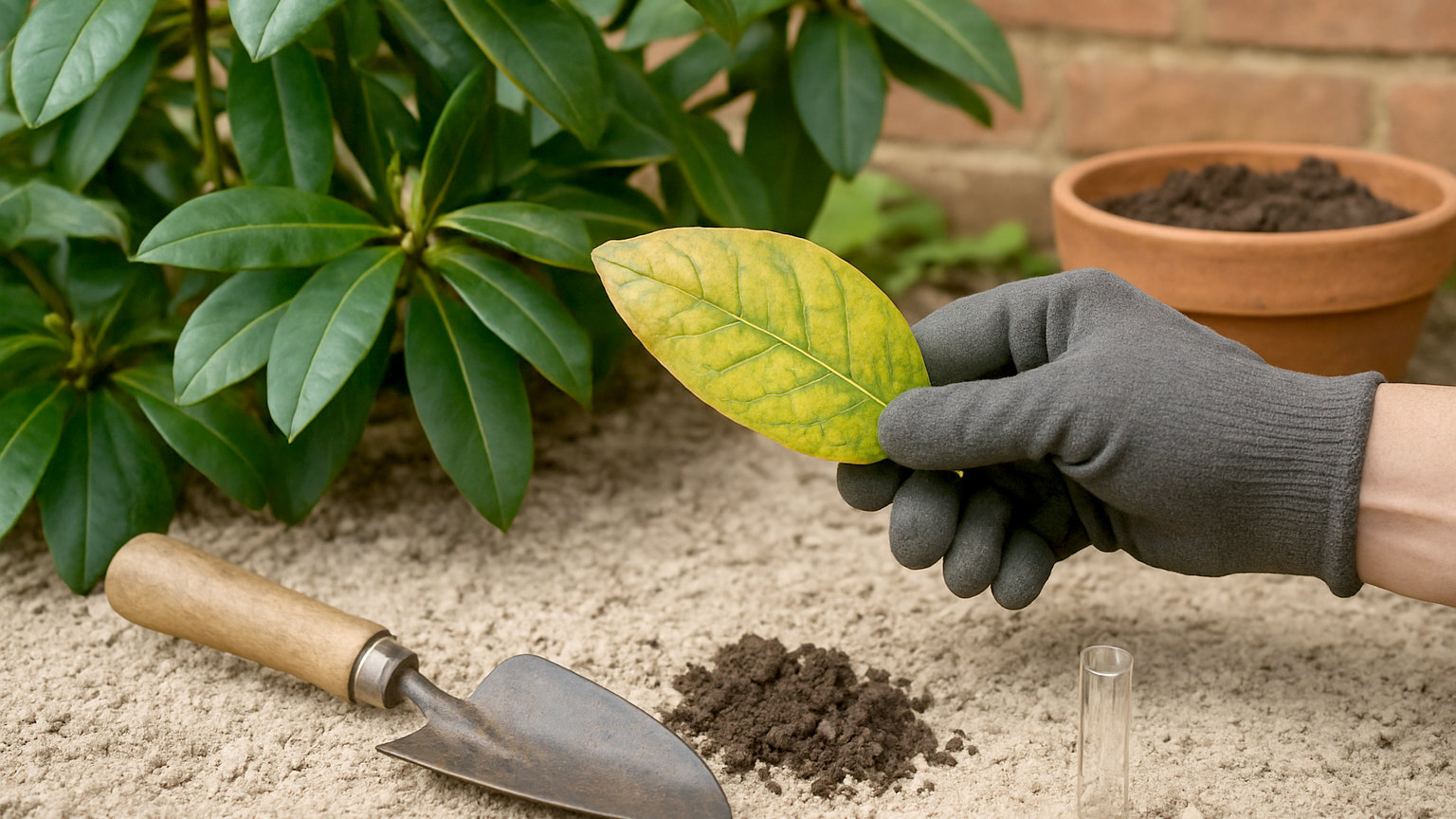
In alkaline soil, iron and manganese become locked up and unavailable, which is why lime-hating plants show yellowing between green veins on chalk. The iron is present; the plant cannot take it up.
In strongly acid soil, phosphorus becomes less available, and aluminium and manganese can reach levels that harm plants.
Soil organisms and earthworms are also affected, and both are less active in strongly acid conditions.
Clubroot is far less active in alkaline soil, which is the basis for liming brassica ground.
Raising pH with lime
Applied to acid soils to bring them towards neutral.
Ground limestone or garden lime is the usual choice, being slow acting and safe to handle with normal precautions.
Dolomitic lime supplies magnesium as well and suits soils short of it.
Hydrated and quicklime act faster and are caustic, and are best avoided by gardeners.
Apply in autumn or winter, well before planting, since lime takes months to act.
Apply to the surface and rake or fork in lightly. Wear gloves and eye protection, and avoid applying in wind.
Follow the rate on the packet, which varies with soil type: clay needs considerably more than sand to shift the same amount.
Do not apply lime and manure or fertiliser at the same time. Lime reacts with nitrogen fertilisers and manure to release ammonia, wasting the nitrogen. Leave several months between them, applying manure in autumn and lime in late winter, or the reverse.
Retest after a season rather than reapplying blindly.
Lowering pH
Considerably harder, and rarely successful on chalk.
Sulphur, applied as flowers of sulphur or a proprietary soil acidifier, lowers pH slowly over months as soil bacteria convert it.
Adding acidic organic matter such as composted bracken, pine needles and leaf mould has a modest effect over years.
On chalk or limestone soil, do not attempt it. The underlying rock continuously buffers the pH back up, and any change is temporary and expensive.
Ferrous sulphate produces a rapid but short-lived effect.
Growing lime-haters
Where the soil is alkaline, the practical answer is containers.
Grow rhododendrons, azaleas, camellias, pieris and blueberries in pots of ericaceous compost.
Water them with rainwater rather than hard tap water, which raises the pH of the compost over time.
Feed with an ericaceous fertiliser, and treat yellowing with sequestered iron, which supplies iron in a form available at high pH.
A raised bed filled with ericaceous compost works for a period and is gradually affected by the underlying soil and by irrigation water.
Working with what you have
The most sensible approach in almost every case.
Chalk and alkaline soils suit an enormous range of plants: clematis, lilac, buddleja, dianthus, scabious, lavender, hellebores, box, yew and many more.
Acid soils suit rhododendrons, camellias, heathers, pieris and blueberries without any intervention.
Adjusting pH by a small amount for a specific purpose is reasonable. Attempting to convert a soil from one type to another is not.
Testing
Test before liming rather than assuming, and test in several places.
Retest every few years, since pH drifts with rainfall, irrigation water and the materials added.
Rain is slightly acidic, so soils tend to acidify slowly over time, particularly light ones in high-rainfall areas.
Signs of a pH problem
Yellowing between green veins on rhododendrons, camellias and blueberries indicates iron unavailable at high pH.
Poor growth of brassicas, with clubroot, on acid ground.
Moss and poor grass in a lawn on acid soil.
Where such symptoms appear, test before treating rather than assuming.
Sequestered iron
Supplies iron in a form plants can take up even at high pH, which relieves the yellowing on lime-hating plants.
It treats the symptom rather than the soil, and needs repeating, and it is the practical answer for a camellia or a blueberry in a container.


