
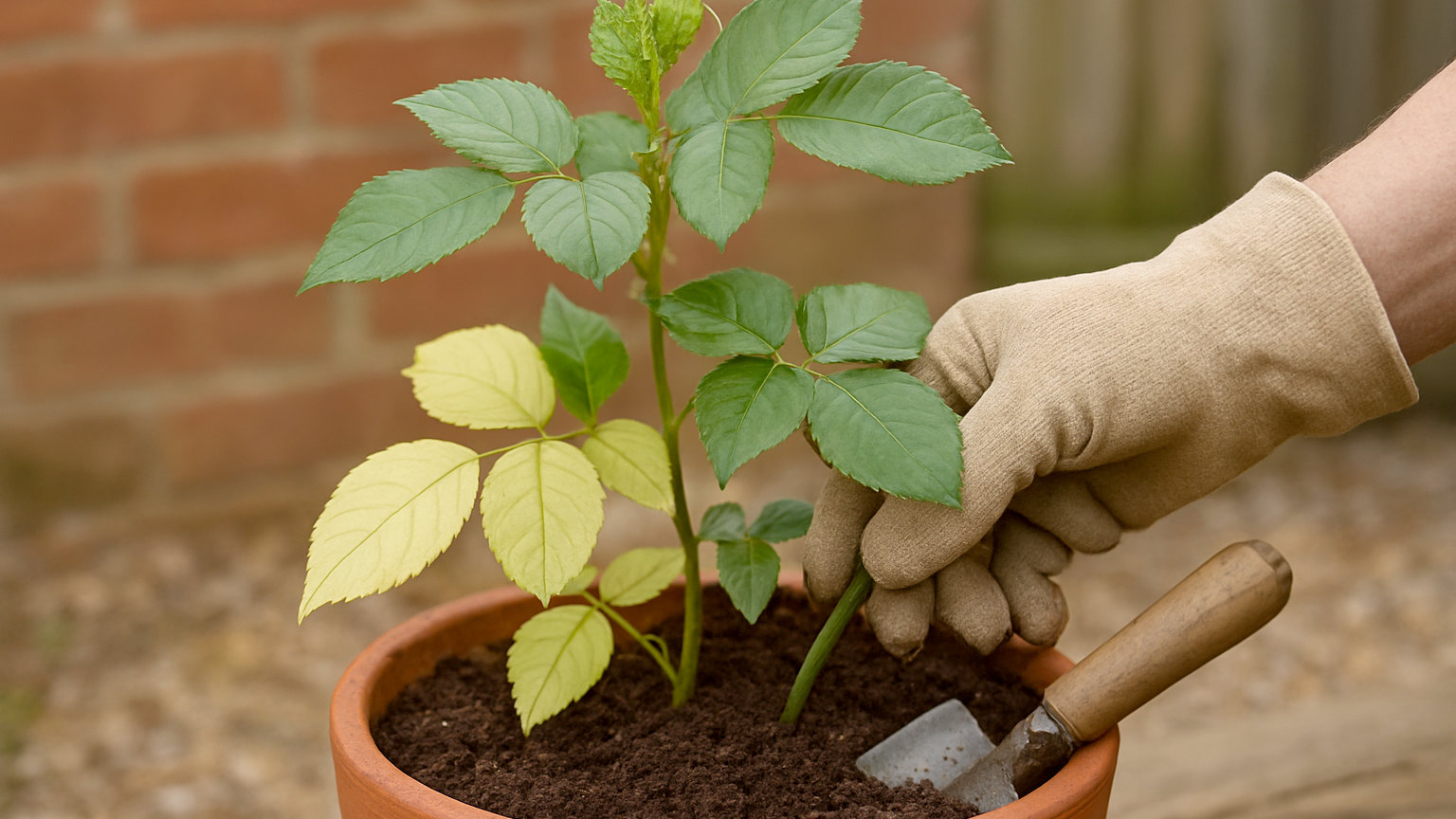
Yellowing leaves are one of the vaguest symptoms in gardening, and yet the pattern is remarkably informative. Two questions narrow it down quickly: which leaves are affected, the old or the new, and whether the yellowing is between the veins or across the whole leaf.
Why old versus new matters
Some nutrients are mobile within a plant and some are not. When a mobile nutrient runs short, the plant moves it from old leaves to new growth, so symptoms appear on the older lower leaves first.
Immobile nutrients cannot be moved, so shortages show on the newest growth at the tips while older leaves stay green.
That single distinction separates most of the common deficiencies.
Symptoms on older leaves
Nitrogen - uniform pale yellowing of the whole leaf, starting with the oldest, along with generally weak, stunted growth and thin stems. The commonest deficiency, particularly in containers and after heavy rain on light soil. Corrected with a balanced or high-nitrogen feed, or a mulch of well-rotted manure.
Magnesium - yellowing between the veins while the veins themselves stay distinctly green, sometimes with reddish or purple tints, on older leaves. Very common on tomatoes, and on light soils where it leaches. Epsom salts, magnesium sulphate, applied as a foliar spray or a soil drench, corrects it quickly.
Potassium - browning and scorching around the leaf margins, curling edges, poor flowering and fruiting. Common on light and chalky soils. Sulphate of potash corrects it, and a high-potassium tomato feed is the usual route for fruiting plants.
Phosphorus - dull, sometimes purplish foliage and stunted growth with poor root development. Less common in gardens, and often really a symptom of cold soil in spring preventing uptake rather than a genuine shortage.
Symptoms on new leaves
Iron - yellowing between the veins on the youngest leaves, with the veins remaining green, progressing to almost white leaves in bad cases.
The important point is that iron shortage in a British garden is very rarely a lack of iron in the soil. It is nearly always high pH locking the iron up so the plant cannot take it in, which is why it appears on acid-loving plants growing on chalk or watered with hard tap water.
Chelated iron, sold as sequestered iron, provides a form the plant can use and gives a quick fix. The durable answer is to grow ericaceous plants in containers of the right compost, watered with rainwater, rather than fighting the soil.
Manganese - similar to iron, also linked to alkaline conditions, with yellowing between the veins on younger leaves.
Calcium - shows as damage to growing points and fruit rather than leaf colour. Blossom end rot on tomatoes and peppers, and bitter pit on apples, are calcium problems. Almost always caused by irregular watering preventing the plant from moving calcium, not by a shortage in the soil, so the fix is consistent watering rather than a feed.
Check the obvious things first
A great many suspected deficiencies are something else entirely.
- Waterlogging - roots deprived of oxygen cannot take up nutrients, so a plant in wet soil shows deficiency symptoms while surrounded by nutrients
- Drought - nutrients move to roots in soil water, so dry soil produces the same effect
- Cold soil - uptake slows in spring, and symptoms often disappear as the soil warms
- Root damage - vine weevil grubs, or a pot-bound plant
- Natural ageing - the oldest leaves on any plant yellow and drop, which is normal
Feel the soil before reaching for a feed. Adding fertiliser to a waterlogged plant makes matters worse.
When to test rather than guess
For a persistent problem across a whole bed, a soil test is worth the modest cost, since it measures what is actually present rather than inferring it from symptoms. Guessing and feeding blind can make things worse, because an excess of one nutrient can block the uptake of another, and high potassium in particular interferes with magnesium.
Prevention
An annual mulch of compost or well-rotted manure supplies a broad range of nutrients slowly and improves the soil's ability to hold them, which prevents most deficiencies without any testing.
Container plants are the exception and genuinely need feeding, since compost is exhausted within about six weeks. Feed weekly through the growing season, using a balanced feed for foliage and a high-potassium one for anything flowering or fruiting.


