
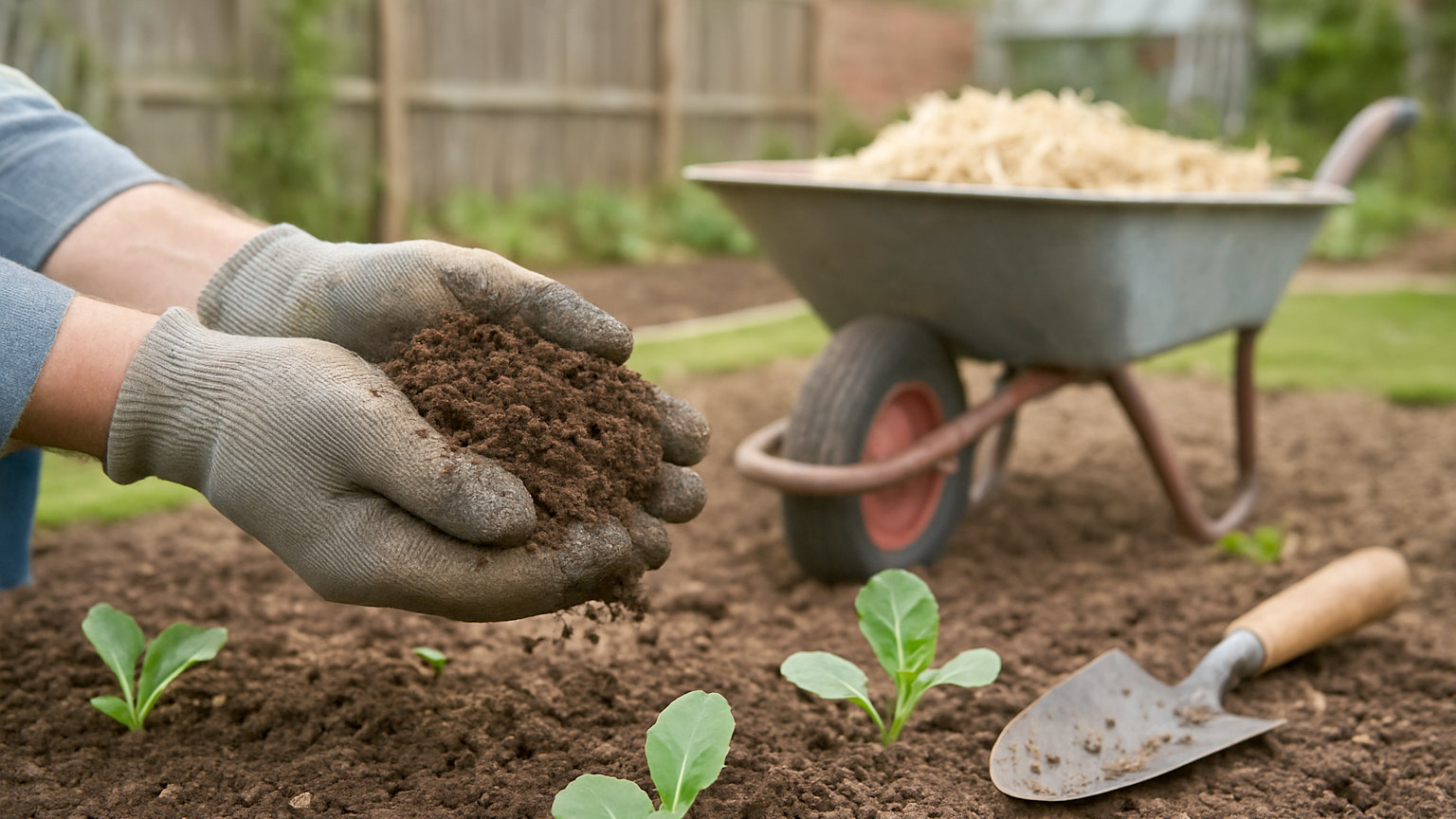
Manure supplies organic matter and nutrients together, which is why it has been the mainstay of garden fertility for centuries. There are two things to get right: rotting and sourcing.
It must be well rotted
Fresh manure scorches roots and foliage, being high in ammonia and soluble salts.
It also ties up nitrogen temporarily as the bedding material decomposes, so the crop is starved rather than fed.
Fresh manure carries weed seed and pathogens.
Well-rotted manure is dark, crumbly, sweet-smelling and with no recognisable straw or odour of ammonia.
Allow at least six months, and a year is better. Stack it, cover it to keep rain off, and let it rot.
The residue problem
This is worth understanding before accepting a load.
Certain hormone weedkillers used on grassland persist through the animal, through the manure heap and through composting.
Manure containing them causes twisted, cupped, fern-like distorted growth on tomatoes, potatoes, beans, peas and other sensitive plants, and the effect can last for years in the soil.
Ask the supplier whether the pasture or the hay was treated. Many will not know, which is itself informative.
Test a doubtful batch: sow broad beans or tomatoes in a pot of the manure mixed with compost, and compare with a control in ordinary compost. Distorted growth within a few weeks indicates residues.
Manure from horses fed on treated hay is the commonest source in gardens.
Types
Horse manure is the most widely available to gardeners, often free from stables. Usually mixed with straw or shavings. Shavings and sawdust rot slowly and tie up nitrogen for longer, so straw-based is preferable.
Cattle manure is wetter, denser and lower in nutrients, and excellent as a soil conditioner, particularly on light soil.
Poultry manure is much stronger, high in nitrogen, and must be well composted or used sparingly. Pelleted poultry manure is a convenient concentrated fertiliser rather than a bulky conditioner.
Sheep and goat manure is relatively dry and easy to handle.
Pig manure is strong and needs thorough rotting.
Spent mushroom compost is not strictly manure and is alkaline, so avoid it around lime-hating plants.
Do not use manure from dogs, cats or any carnivore, because of parasites.
When and how to apply
Autumn or late winter is the usual timing, spread on the surface at about five to seven centimetres and left for worms to incorporate, or forked in lightly.
Apply to moist soil.
Do not apply lime at the same time, since the two react and release nitrogen as ammonia. Leave several months between them.
Keep manure clear of plant stems and crowns.
Where it suits
Hungry crops: potatoes, brassicas, courgettes, pumpkins, sweetcorn, celery.
Roses, clematis, fruit trees and bushes.
Improving poor, thin, sandy or heavy soils generally.
Where it does not
Root crops. Carrots and parsnips fork and become misshapen in freshly manured ground. Manure the previous crop instead.
Mediterranean planting, gravel gardens and anything wanting lean conditions, where rich soil produces soft growth, fewer flowers, less scent and reduced hardiness.
Alpines and plants adapted to poor soil.
Where a soil is already high in nutrients, since excess phosphorus in particular accumulates.
Handling safely
Wear gloves and wash hands thoroughly afterwards.
Avoid breathing dust from dry manure or compost.
Keep tetanus vaccination current, since soil-contaminated wounds are the classic route.
Wash produce grown in manured ground.
Do not apply manure where run-off could reach a watercourse, and store heaps away from drains and ditches.
The alternative
Garden compost does much of the same work, costs nothing and carries no residue risk from an unknown source.
Where manure is uncertain, compost, leaf mould and green manures together maintain fertility perfectly well.
How much to use
Five to seven centimetres over a bed is a generous annual application.
Roughly a cubic metre covers fifteen to twenty square metres at that depth.
More is not better, and repeated heavy applications build up phosphorus and other nutrients to levels that do no good and can run off into watercourses.
Getting hold of it
Local stables frequently give it away, and the buyer collects.
Take it fresh and stack it to rot for a year, or ask for well-rotted material from the bottom of an old heap.
Cover the stack to keep rain off, which prevents nutrients washing out.


