
Composting turns garden and kitchen waste into the best soil improver there is, free of charge. It goes wrong in a small number of predictable ways.
Greens and browns
The central principle.
Greens are moist and nitrogen-rich: grass clippings, vegetable peelings, soft prunings, annual weeds, coffee grounds, spent plants.
Browns are dry and carbon-rich: cardboard, paper, straw, dead leaves, woody prunings, wood chip, egg boxes.
Aim for roughly equal volumes, layered or mixed rather than added in thick single layers.
Too many greens produces a wet, slimy, smelly heap that has gone anaerobic.
Too many browns produces a dry heap that sits there doing nothing for years.
Grass clippings alone are the classic failure: a thick layer becomes a slimy mat. Mix them with cardboard or dry material.
Air and moisture
Composting organisms need both.
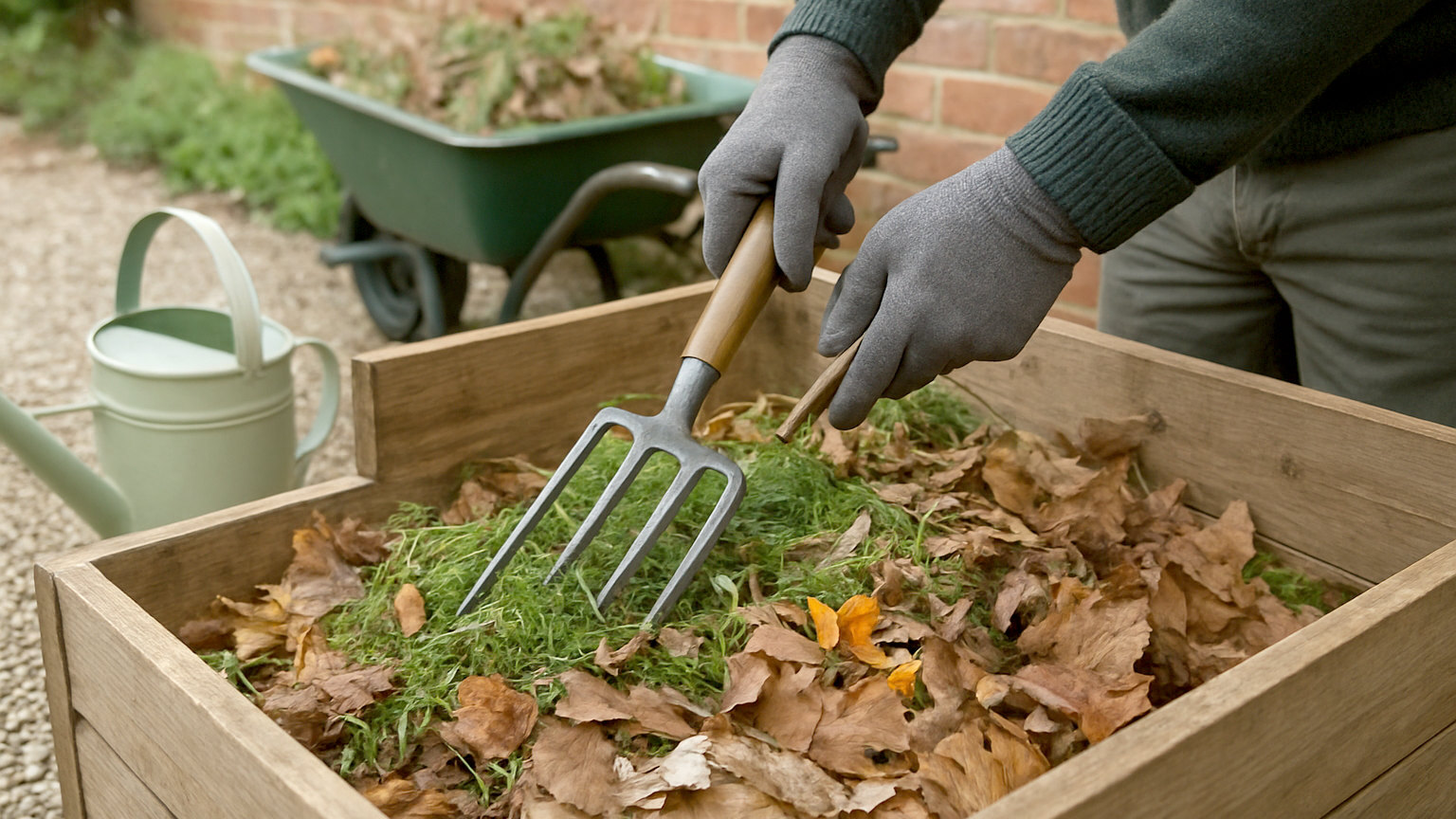
Turn the heap every few weeks if you can, which introduces air and mixes the material. This is the difference between compost in six months and compost in two years.
Add bulky material such as scrunched cardboard, straw or twiggy prunings to keep it open.
The heap should be as damp as a wrung-out sponge. Water it in dry weather; cover it in prolonged rain.
A lid or a cover keeps rain out and warmth in.
Size and siting
Bigger heaps heat better. A cubic metre is a good size for a garden.
Two or three bays let you fill one while another rots, which is the most practical arrangement.
Site it on soil rather than a hard surface, so worms and organisms can enter.
A sheltered spot in sun or part shade.
What to include
Vegetable and fruit peelings, tea leaves and coffee grounds, eggshells.
Grass clippings, mixed with browns.
Annual weeds that have not set seed.
Soft prunings and spent plants.
Cardboard, paper, egg boxes, torn up.
Straw, hay and bedding from herbivorous pets.
Autumn leaves in modest quantity, though large amounts are better made into leaf mould separately.
What to keep out
Cooked food, meat, fish, dairy and bread, which attract rats and do not break down well in a domestic heap.
Perennial weed roots: bindweed, ground elder, couch, docks and dandelion. A domestic heap will not kill them and you will spread them.
Weeds in seed, since the heap rarely reaches a temperature high enough to kill seed.
Diseased material, particularly clubroot, white rot, blight and persistent soil-borne diseases.
Cat and dog faeces, because of parasites including toxoplasma and roundworm.
Coal ash, treated or painted timber, glossy printed paper, and anything synthetic.
Large woody prunings unless shredded.
Hot and cold heaps
A well-balanced, well-turned heap of sufficient size heats up considerably, which speeds decomposition and kills some weed seed and pathogens.
Most domestic heaps run cool, which works perfectly well and takes longer, and does not kill seed or disease.
Assume yours is cool unless you can demonstrate otherwise.
When it is ready
Dark, crumbly, sweet-smelling and with the original materials no longer recognisable.
Six months to two years depending on management.
Sieve out anything unrotted and return it to the new heap.
Troubleshooting
Smelly and slimy: too wet and too many greens. Add browns and turn it.
Dry and unchanged: too many browns and too dry. Add greens and water, and turn it.
Rats: remove any cooked food, use a closed bin with a base, and site it away from cover.
Flies: cover fresh kitchen waste with a layer of browns.
Ants: the heap is too dry. Water and turn it.
Safety
Check for hedgehogs, slow worms and grass snakes before forking a heap over, all of which shelter in them.
Wear gloves and wash hands afterwards, and avoid breathing the dust from a dry heap.
Bins and bays
Plastic bins suit small gardens, retain warmth and moisture, and are awkward to turn.
Timber bays are easier to turn and to empty, and a run of two or three is the most practical arrangement where space allows.
Tumblers work quickly on small quantities and need the mixture to be right.
Whatever the container, siting it on bare soil rather than a hard surface lets worms and organisms in from below.
Where it must stand on paving, add a spadeful of garden soil or finished compost to introduce the organisms.


