
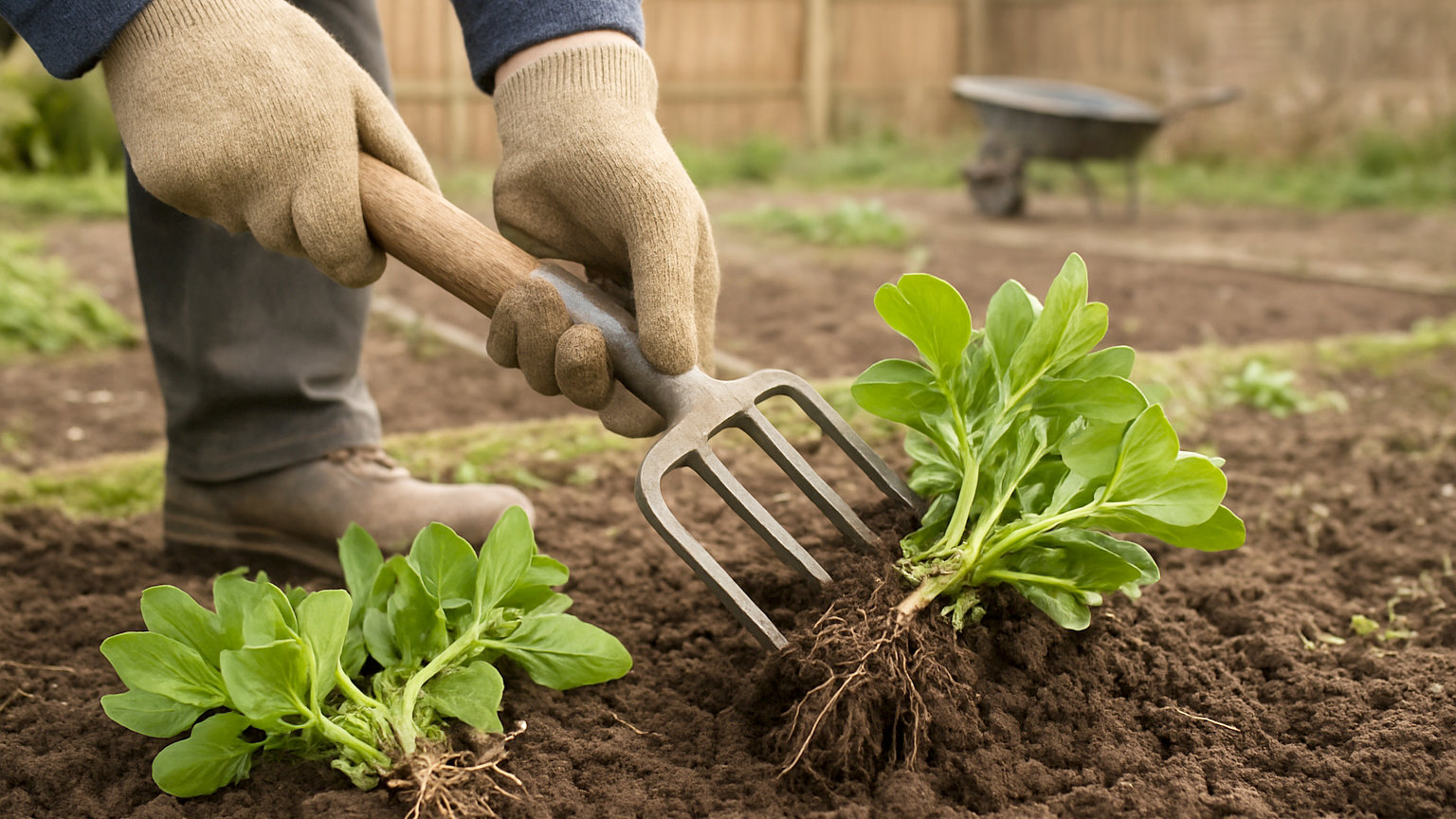
A green manure is a crop grown not to be eaten but to be returned to the soil. It costs the price of a packet of seed and does several jobs at once.
What they do
Cover bare ground, which prevents weeds germinating and protects the surface from rain compaction and erosion.
Take up nutrients that would otherwise leach away over winter, holding them in the plant and releasing them when incorporated.
Add organic matter when dug in or cut down, feeding soil organisms and improving structure.
Break up compaction, since several have deep or vigorous root systems.
Fix nitrogen, in the case of legumes, capturing it from the air in root nodules.
Some also flower and feed pollinators if left long enough.
Nitrogen fixers
Legumes forming partnerships with bacteria in their root nodules.
Field beans for autumn sowing, hardy and vigorous, excellent on heavy soil.
Winter tares or vetch, hardy and a good nitrogen fixer, sown late summer to autumn.
Crimson clover for spring and summer sowing, and good for bees if allowed to flower.
Red clover, which can be left for a season or longer on ground being rested.
Nitrogen fixing works best when the crop is incorporated before or at flowering, when the nodules are most active.
Non-legumes
Grazing rye is the best overwintering choice: extremely hardy, deep rooting, excellent at holding nutrients and breaking up compaction. It produces a lot of top growth and needs digging in well before sowing, since it releases substances that inhibit germination for a few weeks.
Phacelia is fast, easy, produces plenty of soft growth and has beautiful flowers that bees adore. Half hardy, so a spring or summer sowing.
Mustard is very fast and useful as a short-term summer cover. It is a brassica, so do not use it where clubroot is present or in a brassica rotation slot.
Buckwheat for summer, fast growing on poor soil and good for pollinators.
Fodder radish for deep rooting and breaking compaction.
When to sow
Late summer to early autumn for an overwintering crop on ground cleared after harvest. This is the most valuable use, since bare soil over winter loses nutrients and grows weeds.
Spring and summer on ground between crops, using something fast such as phacelia or mustard.
Any gap of six weeks or more is worth filling.
Sowing
Rake the ground to a rough tilth, broadcast the seed evenly, rake it in lightly and water if dry.
Sow at the rate on the packet, which is generally more generous than a vegetable sowing.
No particular preparation is needed, since the point is a crop that will grow anywhere.
Incorporating
Cut down before it flowers and sets seed, or the green manure becomes a weed.
Chop the top growth with shears or a spade and either dig it in shallowly or leave it on the surface as a mulch to rot down.
Leaving it on the surface suits a no-dig approach and lets worms do the incorporating.
Allow two to four weeks between incorporating and sowing a crop, since decomposing material temporarily ties up nitrogen and some species inhibit germination.
Longer for bulky material such as rye.
Choosing for the purpose
Overwinter cover on heavy soil: field beans or grazing rye.
Nitrogen for a following leafy crop: field beans, tares or clover.
Quick summer gap: phacelia, mustard or buckwheat.
Compaction: grazing rye or fodder radish.
Pollinators: phacelia, crimson clover or buckwheat, left to flower.
Cautions
Mustard and fodder radish are brassicas and must fit the rotation.
Some green manures can become weedy if allowed to seed, so cut in good time.
Grazing rye is tough to dig in by hand and is better cut and left on the surface in a small garden.
Slugs shelter in dense green manure, so allow time between clearing and planting anything vulnerable.
Where they suit
Vegetable plots and allotments above all, where ground is regularly cleared.
New borders awaiting planting.
Any area being rested or improved before use.
They are less useful in an ornamental border, where the ground is permanently planted and mulch does the same job.
Cost
A packet of seed covers a substantial area, and green manure is by some distance the cheapest way of adding organic matter to a vegetable plot.
It also saves the weeding that bare ground would otherwise generate over winter.


