
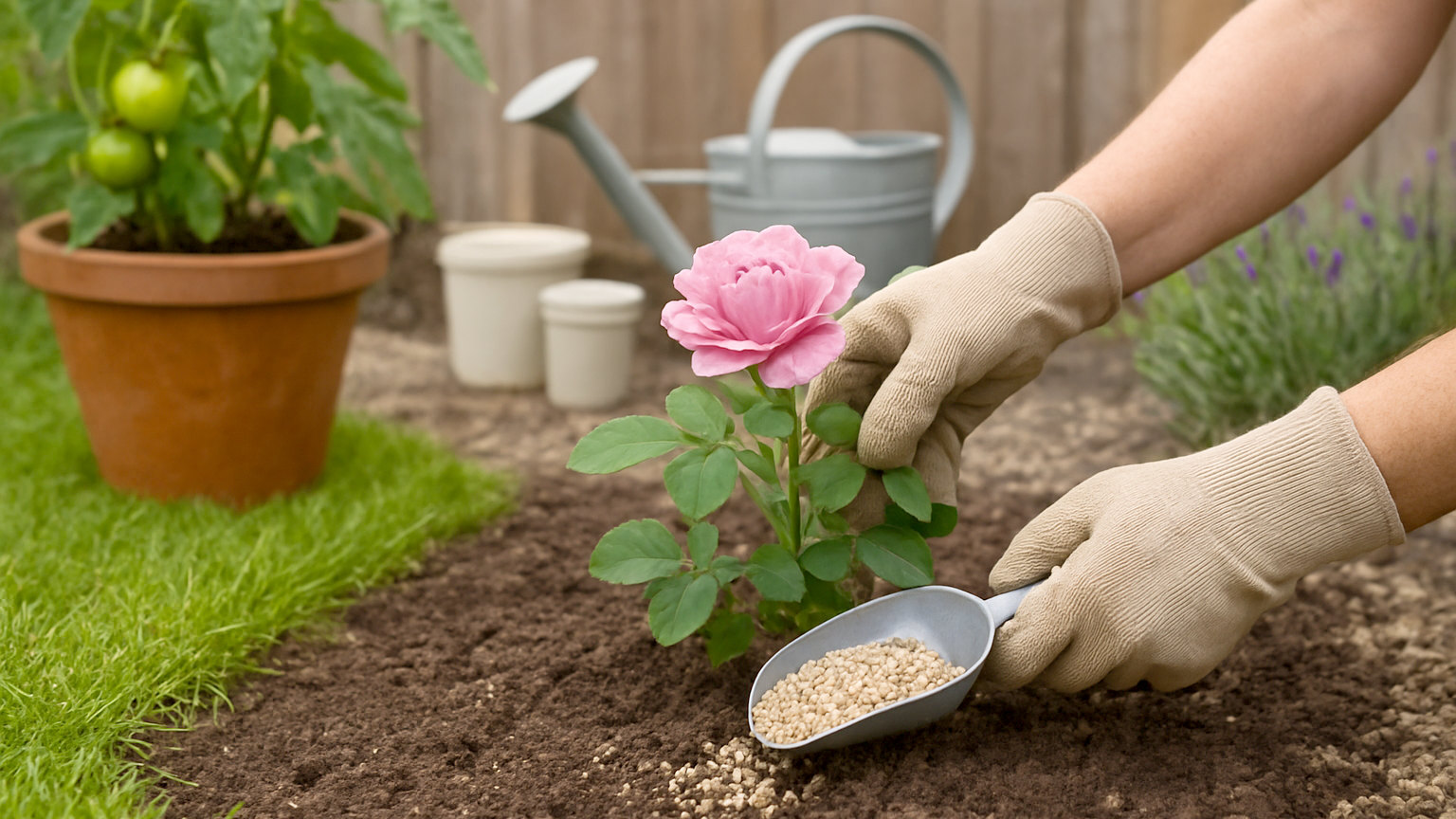
Feeding is frequently done by habit rather than by need. Different plants want quite different things, and several are better with nothing at all.
Roses
Hungry, and they repay feeding.
A balanced or rose fertiliser in early spring as growth starts, and again after the first flush in midsummer.
Stop feeding by about the end of July, since late feeding produces soft growth damaged by frost.
Mulch generously with well-rotted manure or compost, keeping it clear of the stems.
Tomatoes and fruiting vegetables
Begin feeding once the first truss has set, not before, since early feeding produces leaf at the expense of fruit.
Use a high-potash tomato feed, weekly, following the dilution exactly.
The same applies to peppers, chillies, aubergines and cucumbers.
Regular watering matters as much as feeding, since irregular watering causes splitting and blossom end rot regardless of the feed.
Leafy vegetables
Want nitrogen for growth: lettuce, spinach, chard, brassicas.
Well-manured ground and a nitrogen-rich feed such as pelleted poultry manure or a liquid nettle feed.
Do not overfeed brassicas late in the season, since soft growth is more vulnerable to pests and frost.
Root vegetables
Do not manure ground for carrots and parsnips, which fork and become misshapen. Grow them on ground manured for a previous crop.
Potatoes are the exception among roots and are hungry, wanting well-manured ground and a balanced feed.
Fruit trees and bushes
Feed in late winter or early spring, before growth starts.
Sulphate of potash for fruiting, and a balanced feed where growth is poor.
Mulch with compost or manure annually, kept clear of the trunk.
Established trees in reasonable soil frequently need very little.
Containers
The plants most dependent on feeding, since compost is exhausted within about six weeks.
Mix slow-release granules into the compost at planting.
Add a weekly liquid feed from midsummer, high potash for anything flowering or fruiting.
Topdress permanent container plants each spring with fresh compost and slow-release fertiliser.
Lawns
A spring or summer feed high in nitrogen for growth and colour.
An autumn feed that is low in nitrogen and higher in potassium and phosphorus, which toughens the grass for winter rather than pushing soft growth.
Do not use a spring feed in autumn, which is a common and damaging mistake.
Apply to moist grass and water in if no rain is expected.
Bulbs
Feed after flowering, while the leaves are still green, which is when next year's flower is being formed.
A high-potash feed, and leave the foliage for at least six weeks rather than cutting or tying it.
What not to feed
Mediterranean and gravel garden plants: lavender, rosemary, cistus, santolina, thyme. Rich conditions produce soft growth, less scent, fewer flowers, reduced hardiness and a shorter life.
Naturalistic and prairie plantings, where fertility produces tall floppy growth that needs staking.
Wildflower meadows, where low fertility is the whole point and feeding favours grasses over flowers.
Alpines and anything adapted to poor thin soil.
Established trees and shrubs in reasonable soil, which find what they need.
Legumes, which fix their own nitrogen.
When not to feed
In autumn and winter, when growth has stopped and soft growth would be damaged.
A plant suffering from drought, waterlogging or root damage, where feeding adds stress.
A newly planted specimen, which needs water and time rather than fertiliser.
Dry soil, without watering first.
The general rule
Feed what is cropping, flowering hard or growing in a container.
Improve the soil for everything else, and let it look after itself.
Signs a plant needs feeding
Pale yellowing leaves overall with weak growth, usually nitrogen.
Yellowing between the veins, usually magnesium on older leaves or iron on younger ones.
Plenty of leaf and few flowers, frequently too much nitrogen and not enough potash.
Poor flowering and scorched leaf margins, often potassium.
Check watering and root health first, since these symptoms have several causes and feeding is not always the answer.
A plant in dry or waterlogged soil cannot take up nutrients however much is present in the ground.
Overfeeding
Produces soft sappy growth that attracts aphids, flowers poorly and is damaged by frost.
It can scorch roots, and excess nutrients leach into watercourses.
Follow the rate on the packet, and remember that doubling it does not double the growth.


