
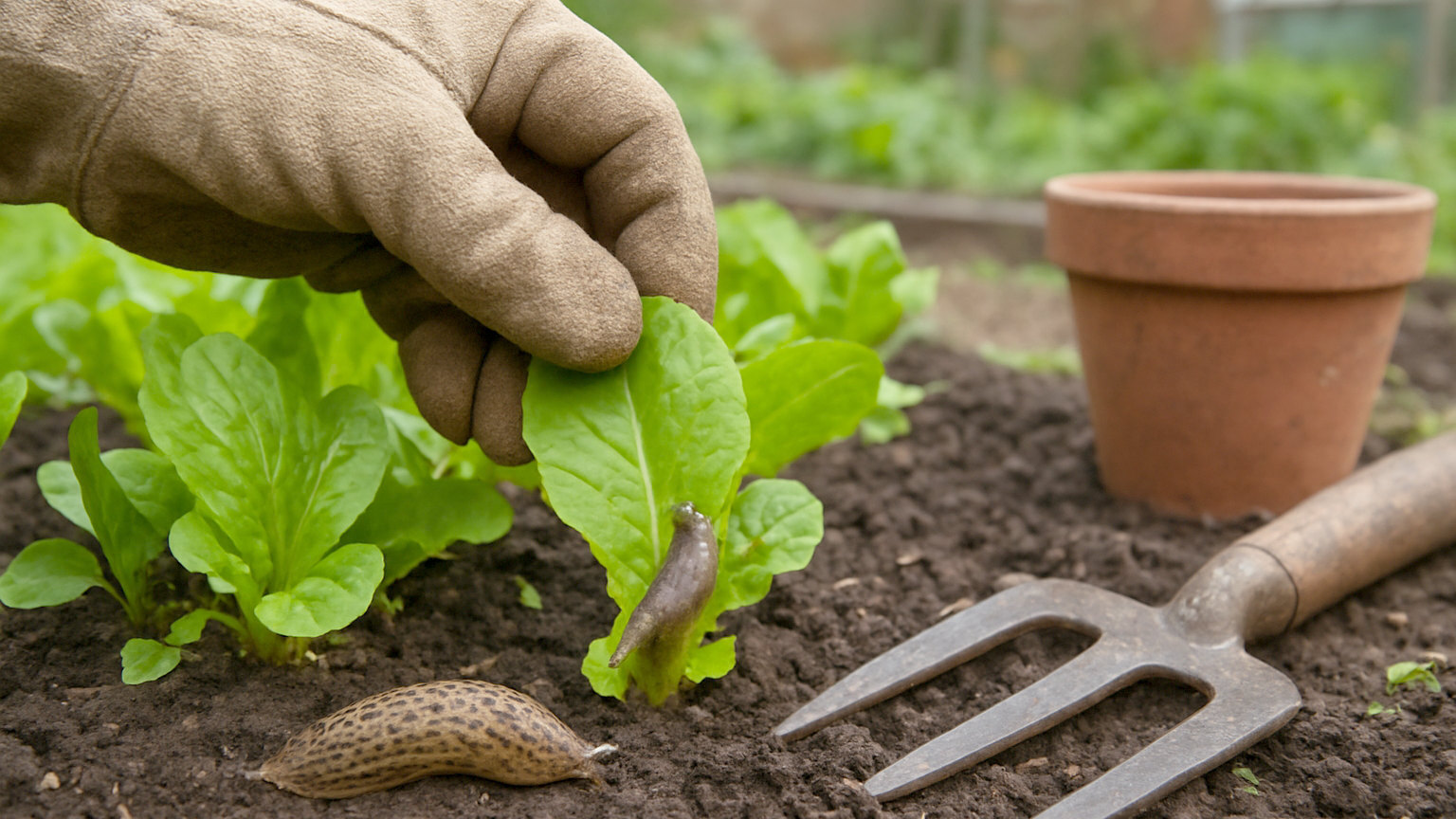
Britain has well over forty species of slug, and the great majority feed on decaying material, fungi and algae rather than on living plants. A small number cause almost all the damage.
The main offenders
Netted or grey field slug. Small, pale grey to fawn with a fine net-like pattern, and by some margin the most damaging species in gardens. Feeds above ground, is active at lower temperatures than most, and breeds rapidly.
Garden slug. Small, dark, with an orange or yellow sole. Feeds on leaves and roots and is common in beds and borders.
Keeled slugs. Slender, with a ridge running along the back. These live and feed largely below ground, and are responsible for the holes in potato tubers, bulbs and root crops. Surface treatments miss them almost entirely.
Garden snail. The familiar large brown-shelled snail. Damages soft growth and shelters in walls, under pots and among ivy in numbers.
Banded snails. Yellow or pink shells with dark bands, and less damaging than the garden snail.
The ones to leave alone
Leopard slug. Large, pale grey with dark spots and blotches, growing to twenty centimetres. It eats decaying material, fungi and other slugs, including the damaging species. It is an ally and should never be killed.
Ash-black slug. Very large, dark, and a woodland species feeding on lichens and fungi. Harmless.
Yellow slug. Often found in cellars and greenhouses, feeding largely on algae, fungi and decaying material.
Black slug. Large, and despite its size mostly a scavenger on dead material, doing far less damage than its appearance suggests.
Most small slugs in compost heaps and leaf litter, which are doing the useful work of breaking material down.
Why the distinction matters
Killing everything with a shell or a slime trail removes the species that eat the damaging ones and the ones recycling organic matter.
It also removes food for hedgehogs, thrushes, frogs, toads and slow worms, which is the mechanism that would otherwise keep numbers down.
The Royal Horticultural Society no longer classifies slugs and snails as pests, on the basis that most species are beneficial or neutral and that a garden depends on them.
Identifying what is eating a plant
Ragged holes with irregular edges, worst on soft young growth, with slime trails nearby.
Damage appearing overnight, particularly after rain or in humid weather.
Seedlings and hostas vanishing entirely.
Go out after dark with a torch, which is the only reliable way to see what is actually feeding. What you find is frequently not what you assumed.
Snails leave a coarser trail and shelter in dry crevices, walls and pot rims. Slugs shelter in damp soil, under stones and in leaf litter.
Damage below ground
Holes in potatoes, bulbs, tulips and carrots are usually keeled slugs feeding underground.
Pellets, barriers and night patrols do very little against these.
Lift potatoes promptly rather than leaving them in the ground, choose less susceptible varieties, and use nematodes, which are watered into the soil where the slugs actually are.
Woodlice and millipedes
Both are regularly blamed for slug damage.
Woodlice feed on decaying material and usually enlarge damage that something else started.
Millipedes feed largely on dead plant material, though some attack seedlings and damaged tubers.
Centipedes, which are faster, flatter and have one pair of legs per segment, are predators and useful.
What follows from this
Target the few damaging species, at the times and places they cause problems, and leave the rest of the population alone.
A garden with no slugs at all has no thrushes, hedgehogs or slow worms either.
Snails and thrushes
Song thrushes smash snails against a stone to break the shell, and the accumulated fragments around a favoured stone are called an anvil.
Leaving a suitable stone in a border encourages the behaviour, and thrush numbers have declined sharply, partly through loss of food supply.
Getting to know your own population
Turn over a few stones and lift a plank left on damp soil, and see what is actually present.
Most gardens have a mixture, and the proportion of genuinely damaging species is usually smaller than expected.
Knowing which you have determines the response: keeled slugs underground need nematodes, surface feeders respond to night collection, and snails need trapping rather than soil treatment.


