
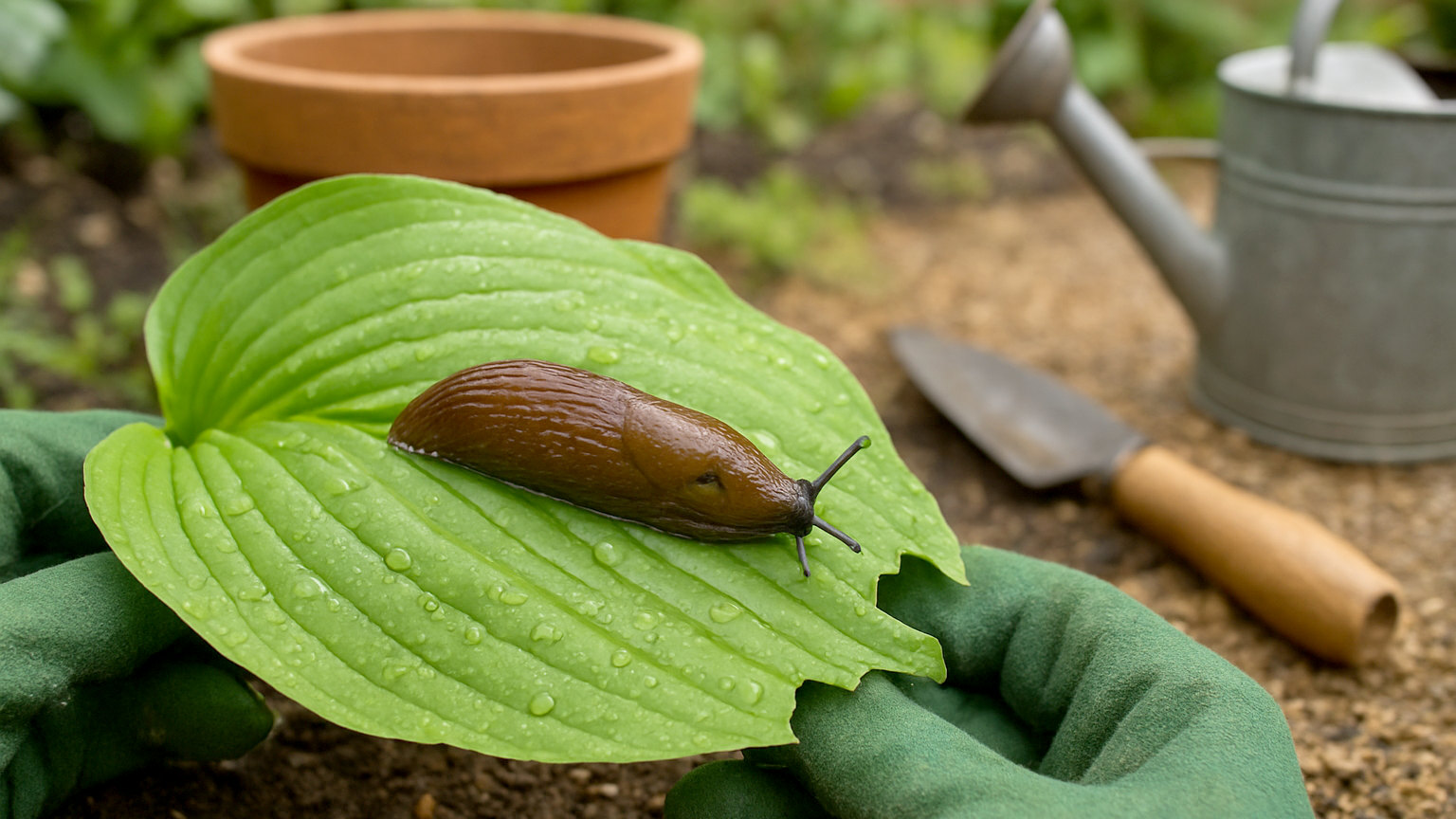
Slug damage is not evenly spread through the year. Understanding when they feed makes every control measure several times more effective, because effort applied at the wrong moment is largely wasted.
Time of day
Slugs and snails feed almost entirely at night, and during the day in wet weather.
They avoid daylight because they lose water rapidly through their skin, and shelter in soil, under stones, in leaf litter and among dense planting.
Peak activity is usually a couple of hours after dark, and again before dawn.
This is why a plant can be untouched in the evening and gone by morning, and why daytime searching finds so little.
Weather
Moisture matters more than temperature.
A warm damp night is the worst combination, and activity rises sharply after rain or heavy dew.
Dry, windy and cold conditions suppress them, and a dry spell reduces damage noticeably.
They are active whenever temperatures are above about five degrees, which in Britain means most of the year rather than only summer.
A mild wet winter allows continuous feeding and breeding, which is why some years are far worse than others.
The critical period
Damage matters most in spring, from about March to June.
Seedlings, young transplants and the emerging shoots of hostas, delphiniums, lupins and dahlias are all soft, small and highly vulnerable, and losing the growing point kills the plant outright.
The same slugs feeding on an established plant in August do cosmetic damage that the plant grows through.
Concentrate effort in spring. Protection applied for six weeks at the right moment achieves more than a whole season of half-hearted measures.
Breeding
Slugs lay clusters of small pearly eggs in soil, under stones and in compost, mostly in spring and autumn.
Turning these up while digging or weeding and leaving them exposed to birds and drying air is a useful incidental control.
Numbers build through the season, so a large population in autumn means a large one the following spring.
Autumn control therefore reduces spring pressure, which is frequently overlooked.
Timing the methods
Night patrols: a couple of hours after dark, on a damp evening, in spring. Two or three consecutive nights make a substantial difference.
Nematodes: from spring once soil temperature is reliably above about five degrees, on moist soil, repeated every six weeks or so through the vulnerable period.
Barriers and protection: in place before plants go out, not after damage appears.
Pellets, where used: sparingly, at the point plants are vulnerable, rather than scattered routinely.
Cultivation: in autumn and winter, exposing eggs and hiding places.
Practical consequences
Plant out larger, sturdier plants rather than small seedlings, and harden them off properly, since a soft plant straight from a greenhouse is far more attractive.
Plant out in a dry settled spell rather than immediately before rain.
Water in the morning rather than the evening, so the surface is drier at the time slugs are active.
Delay planting vulnerable things until they are big enough to survive some damage.
Protect for a few weeks and then relax, since most plants outgrow the danger.
A yearly pattern
Autumn: reduce numbers going into winter, cultivate, and clear shelter near vulnerable beds.
Late winter: check for early activity in mild spells, and clear debris from around vulnerable perennials before shoots emerge.
Spring: the main effort, protecting seedlings and emerging perennials.
Summer: much less critical, and hot dry weather does a good deal of the work for you.
Why some years are terrible
A mild wet winter followed by a wet spring produces a large population meeting vulnerable plants in ideal feeding conditions.
A cold dry spring does the opposite.
This is largely outside anyone's control, and it explains why the same garden and the same methods give quite different results from one year to the next.
Judge a method over several seasons rather than one, since a good year can make a useless measure look effective.
Where they shelter
Within a short distance of where they feed: under stones, planks, pots and low dense foliage, in leaf litter and long grass, and in the top few centimetres of moist soil.
Clearing shelter immediately around vulnerable plants makes a real difference, while leaving cover elsewhere in the garden for their predators to use.


