
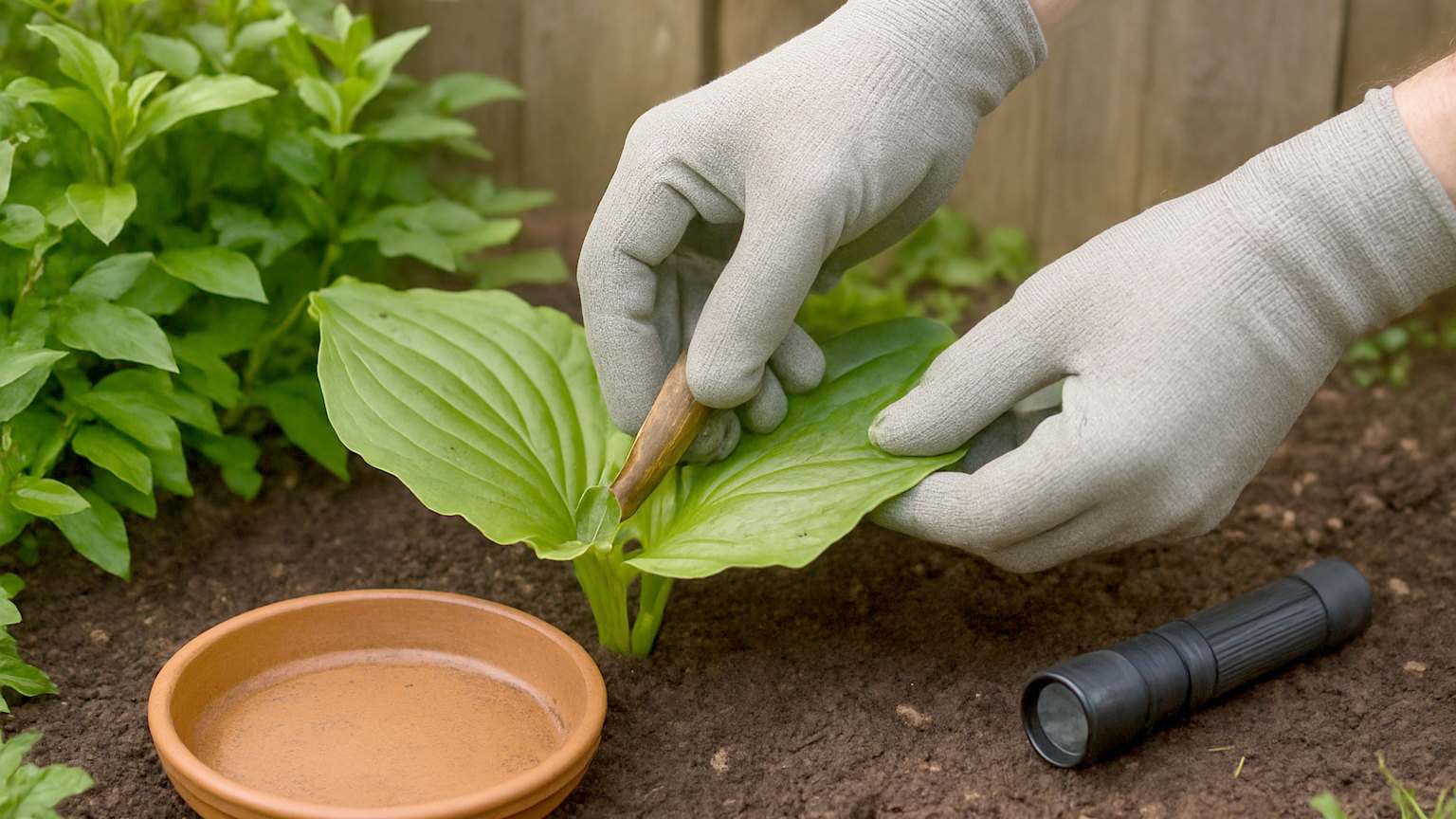
Collecting slugs by hand sounds laborious and is by some distance the most effective thing an ordinary gardener can do. It also targets exactly the species causing damage and harms nothing else.
Night patrols
Go out about two hours after dark with a torch, on a damp mild evening, in spring.
This is when slugs are feeding in the open and can be seen and collected easily.
Work along the vulnerable beds, checking leaf undersides, the soil surface, plant bases and the edges of paths.
Two or three consecutive nights around the time plants go out removes a substantial proportion of the local population.
A head torch leaves both hands free, and gloves or a pair of tongs make it more agreeable.
Half an hour on three nights in April is worth more than a whole summer of scattered measures.
Daytime shelter traps
Slugs and snails need somewhere damp and dark to spend the day, and providing it makes them easy to collect.
Lay a plank, a piece of slate, a roof tile, an old carpet tile or a cabbage leaf on damp soil near vulnerable plants.
Upturned grapefruit or orange halves work particularly well and can be composted afterwards.
An upturned flowerpot propped slightly open gives the same shelter.
Lift them each morning and clear what has gathered underneath.
This is the least effort of any method, since the slugs come to you.
Where else to look
Under pot rims and container feet, which are a favourite daytime refuge.
In the crevices of walls and among ivy, particularly for snails.
Under stones, logs and dense low foliage.
At the edges of the compost heap.
Around the base of hostas and other favoured plants.
Beer traps
Effective at catching slugs and with two real drawbacks.
A container sunk into the soil and part-filled with beer attracts slugs, which fall in and drown.
They also catch ground beetles, which are significant slug predators, along with other useful invertebrates. Killing predators to kill slugs is self-defeating.
Setting the rim a couple of centimetres above soil level reduces the number of beetles caught considerably, since ground beetles run along the surface while slugs climb.
Use a container with a lid or a cover to keep rain out and reduce non-target catches.
Empty and refill regularly, since the contents become unpleasant quickly.
They attract slugs from the surrounding area, so place them away from vulnerable plants rather than beside them.
What to do with what you collect
This is a matter of personal choice, and there are practical points.
Moving them elsewhere rarely works. Slugs have a homing ability over surprising distances, and released slugs frequently return or simply become someone else's problem.
Releasing them in the wild is inadvisable, since garden populations may carry disease and it moves the problem rather than solving it.
Where they are killed, do it quickly.
Some gardeners collect them for chickens or ducks, which deals with them and produces something useful.
Do not use salt, which is a slow and unpleasant death and damages the soil where it is applied.
Keeping it proportionate
The aim is to reduce numbers at the point and time damage occurs, not to eliminate them.
Concentrate on the spring weeks when seedlings and emerging perennials are vulnerable, and on the specific beds that matter.
By midsummer most plants can tolerate what is left, and the effort is better spent elsewhere.
Making it easier
Keep a torch and a bucket by the back door through spring so a patrol takes five minutes rather than requiring preparation.
Combine it with a last look round the garden, which is no hardship on a mild evening.
What it achieves
Hand collection is the only method that is entirely specific, harms nothing else, costs nothing, and works on both slugs and snails.
It is also the method most people dismiss without trying, which is a pity, since three evenings in spring genuinely changes the outcome for a whole season.
Combined with raising sturdy plants and clearing shelter near seedlings, it handles most slug problems in an ordinary garden without any product at all.
The one thing it will not reach is the keeled slugs feeding underground on potatoes and bulbs, which need nematodes.


