
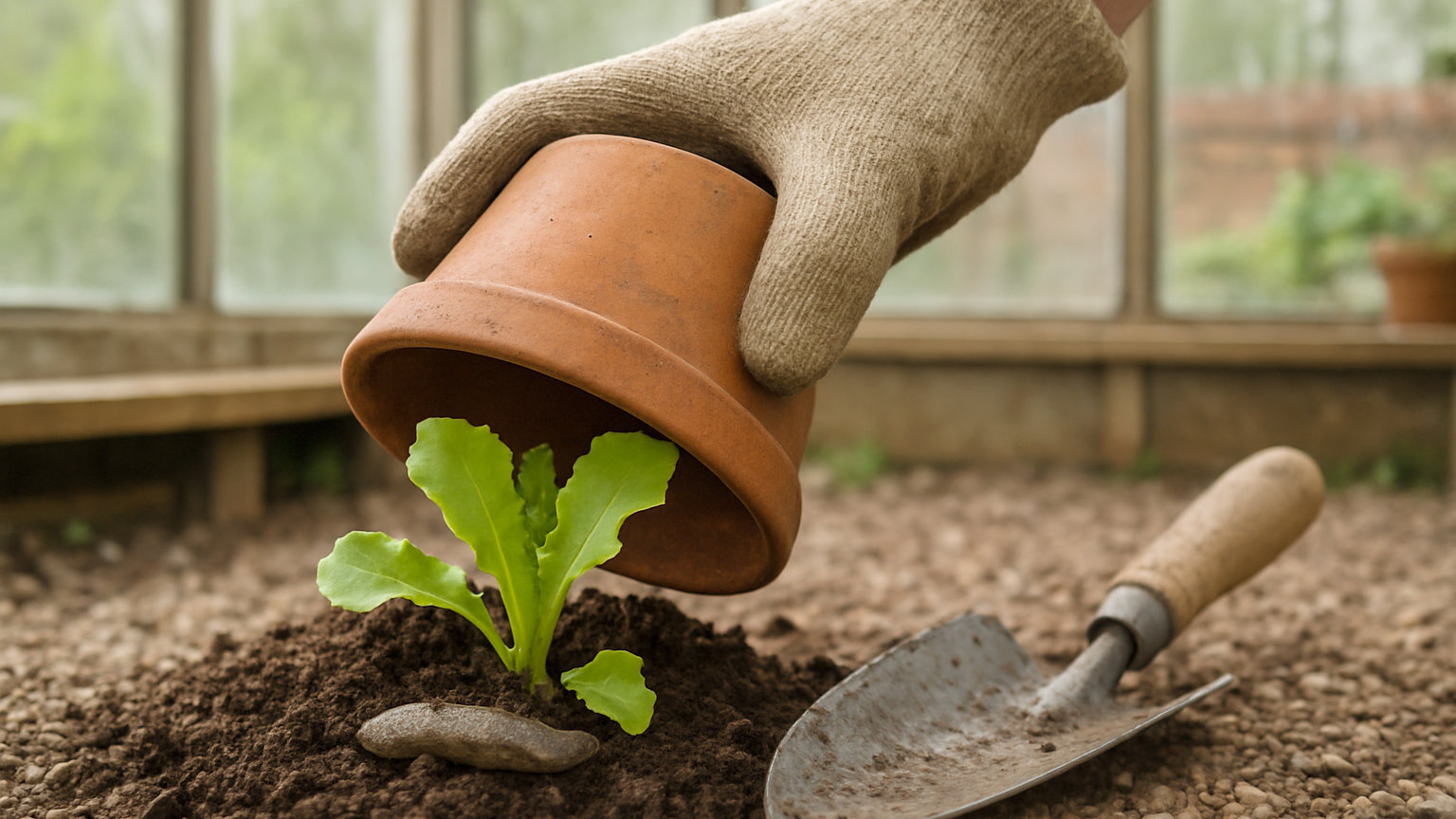
Containers and greenhouses concentrate the problem. A single slug in a pot of seedlings destroys the lot overnight, and a greenhouse provides shelter, warmth and damp through the winter.
How they get in
They are frequently already there. Slugs and eggs arrive in compost, in the rootball of a bought plant, and in the base of a pot that has stood on soil.
Under the rim of a pot is a favourite daytime refuge, as is the gap between a pot and its saucer, and the underside of pot feet.
They climb the legs of staging and the sides of containers readily, and snails climb walls and glass with no difficulty.
They enter greenhouses through open doors, vents, and gaps at the base of the frame.
Checking and clearing
Look under every pot rim and under every pot regularly. This alone finds a large proportion of them.
Check the base of pots when moving them, and the drainage holes.
Inspect the rootball of any new plant before it joins the others.
Turn over the surface of the compost in a container occasionally and remove eggs, which appear as clusters of small pearly spheres.
Store compost bags closed and off the ground rather than open in a shed.
Container measures
Raise pots on feet with a clear gap beneath, which removes the shelter and makes checking easy.
Copper tape around the rim is most useful here, since the barrier can be continuous and easily inspected. Make sure no leaf or stem bridges it to the ground.
Keep the outside of pots clear of trailing foliage that reaches the soil.
Stand vulnerable seedlings on a table or staging well away from the ground.
A tray of water beneath standing pots is an effective barrier for slugs, though it waterlogs the compost if the pots sit in it, so use a raised platform within the tray.
Greenhouse hygiene
The main defence, and it works.
Clear plant debris, dead leaves and old compost, which provide both food and shelter.
Keep the floor clear and swept, and avoid permanently damp corners.
Remove weeds growing under staging and along the edges.
Check the gap between the frame and the base, and along glass overlaps, where they shelter.
Clear the greenhouse out thoroughly in autumn or late winter, washing down the staging and frame.
Night checks
A greenhouse is the easiest place of all to do this, being small, enclosed and reachable in slippers.
Go in after dark with a torch, particularly in spring when seedlings are at risk, and check the staging, under trays, the floor and the frame.
A few minutes several nights running clears a greenhouse almost entirely.
Traps under glass
A piece of slate, an upturned pot or a cabbage leaf on the floor gives daytime shelter that can be lifted and cleared each morning.
These work particularly well in a greenhouse, where alternative shelter is limited.
Nematodes in containers
Effective, since a known volume of compost can be treated thoroughly and kept moist.
Apply as directed once compost is above about five degrees, in the evening, and keep it moist afterwards.
They reach slugs in the compost that no surface measure will.
Protecting seedlings under cover
Raise seed trays on staging rather than the floor.
Cover trays with a propagator lid or fleece, which excludes slugs as well as retaining warmth.
Check every morning, since damage is done overnight and one slug clears a tray.
Do not leave watering cans, trays and pots stacked on the floor, which is ideal shelter.
The advantage of an enclosed space
Unlike an open garden, a greenhouse or a group of containers can genuinely be cleared and kept clear, because the area is small and the routes in are limited.
Three or four evenings with a torch in spring, combined with hygiene and raised staging, usually settles the problem for the season.
Cold frames
The same applies, and they are more exposed since they sit on the ground.
Stand pots on a layer of gravel or a raised grid rather than directly on soil, and check under trays and around the frame edges regularly.
Close the lid at night in spring, which excludes a good deal.


