
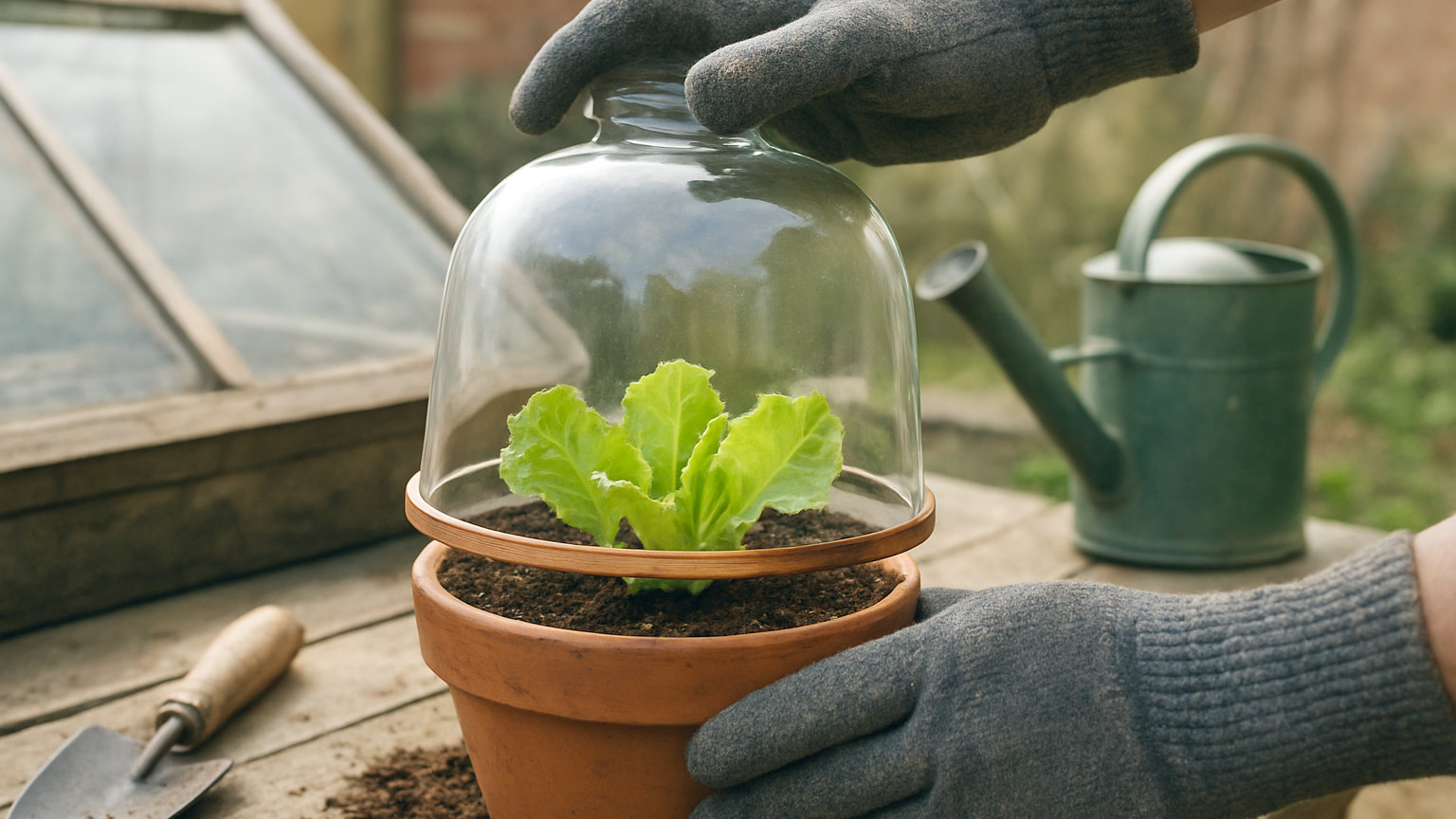
Almost all serious slug damage happens to plants in their first few weeks in the ground. An established plant loses some leaf; a seedling loses everything.
Raise plants rather than sowing in situ
The single most effective change most gardeners can make.
Sowing directly into open ground means seedlings emerge one at a time, tiny and undefended, in exactly the conditions slugs like.
Raising plants in modules, pots or a seed tray under cover produces a sturdy plant with real roots and several sets of leaves.
Plant it out at that size and it can lose a leaf without dying.
This applies to lettuce, beans, brassicas, courgettes, sweetcorn and most annuals, and it converts a plant from vulnerable to resilient.
Plant out at the right size and moment
Harden plants off properly over a week or two. Soft growth straight from a greenhouse is far more attractive and less able to withstand damage.
Plant into warm soil so growth is fast, since a plant that sits and sulks is exposed for longer.
Choose a dry settled spell rather than planting the evening before rain.
Water in the morning rather than the evening, so the surface is drier at the time slugs feed.
Plant a few more than you need and accept some losses rather than trying to protect every individual.
Physical protection
Cut-off plastic bottles pushed into the soil around individual plants are cheap, effective and reusable. Remove the cap for ventilation, and push the bottle in far enough that nothing gets underneath.
Cloches over a row do the same job and warm the soil, speeding growth through the vulnerable period.
Collars of card, plastic or copper tape around a transplant.
Remove all of these once plants are established, since they restrict air movement and can encourage disease.
Check inside regularly, since a slug or snail enclosed with the plant is worse than none at all.
Clearing the approach
Slugs shelter within a short distance of where they feed.
Keep the ground immediately around vulnerable plants clear of debris, weeds, stones and dense low cover.
Do not mulch heavily right up to a newly planted seedling, since a thick moist mulch is ideal shelter.
Leave the surface of the soil rough and open, which dries faster and is harder to cross.
Night patrols
The most effective single method during the critical weeks.
Go out with a torch a couple of hours after dark, on a damp evening, and collect what you find.
Two or three consecutive nights around planting time removes a substantial proportion of the local population.
Check under pots, along edges and beneath leaves.
Sacrificial planting and trapping
A ring of something more attractive around a valued plant draws slugs away from it.
Upturned grapefruit halves, a slate laid flat, or a wet plank near a seedling bed give a shelter that can be lifted each morning and cleared.
This is trapping rather than deterrence, and it works because it exploits their need for daytime shelter.
Where nothing else works
Some plants and some gardens simply cannot support direct sowing.
Grow the vulnerable stages in pots on a table, staging or a windowsill entirely out of reach, and plant out only when substantial.
Consider whether a particular plant is worth the effort at all, since several alternatives will grow untouched in the same position.
The window closes
Most plants become far less vulnerable within four to six weeks of planting out.
Protect intensively for that period and then stop, rather than treating the whole garden all season.
That concentration of effort is what makes the difference, and it is a far smaller task than it first appears.
Direct sowing where it is unavoidable
Carrots, parsnips and beetroot resent transplanting and must be sown in place.
Sow a little thicker than needed, sow when the soil is warm enough for fast germination, and keep the surrounding ground clear of shelter.
Fleece or a cloche over the row protects the seedlings through the first few weeks, which is when they are most at risk.
Thin to the strongest plants once they are past the vulnerable stage rather than before it, so losses are absorbed by the surplus.
Remove thinnings from the bed rather than leaving them lying, since they attract slugs to exactly the wrong place.


