
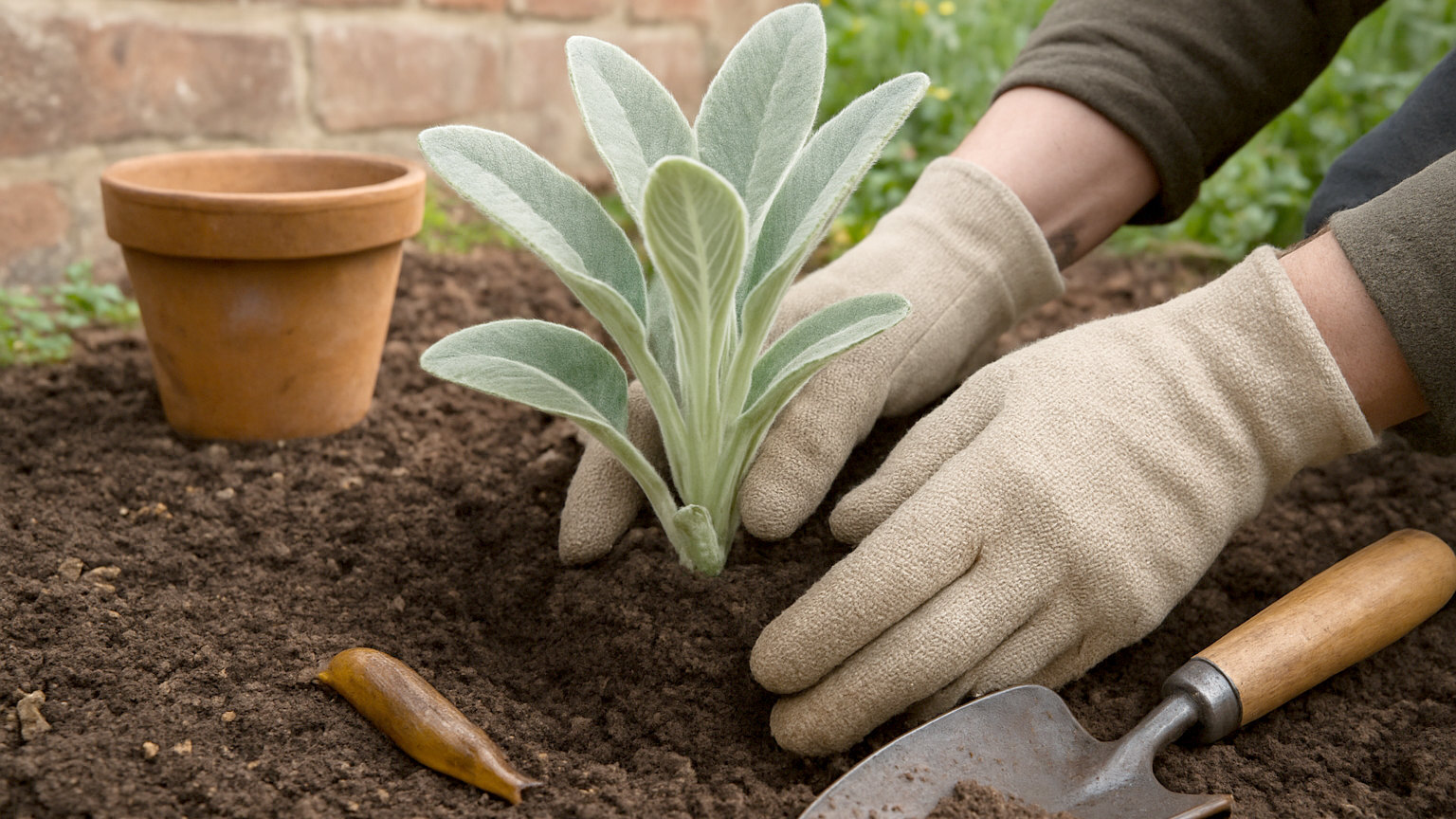
If a plant has been eaten to the ground twice, the useful response is to stop replacing it and grow something else in that spot. Slugs and snails have clear preferences, and working with those preferences is far less effort than fighting them every spring.
What they avoid, and why
Slugs and snails rasp at soft tissue with a tongue-like radula. Anything tough, leathery, hairy, aromatic or containing milky sap is unappealing to them, which gives you a reliable way of predicting what will survive.
Perennials they generally leave
- Hardy geraniums - almost indestructible, in sun or shade
- Euphorbia - milky sap deters them, though it irritates skin so wear gloves
- Astrantia, alchemilla and aquilegia - reliable and self-seeding
- Hellebores and epimedium - leathery foliage, good in shade
- Foxgloves - hairy leaves, and they seed themselves about
- Pulmonaria, brunnera and lamium - rough or hairy leaves
- Achillea, penstemon and agapanthus - all fairly untouched
- Ferns - tough foliage, almost entirely ignored
- Ornamental grasses - rarely troubled at all
Aromatic and Mediterranean plants
Lavender, rosemary, sage, thyme, oregano and most of that group are left alone almost entirely. The oils that give them their scent are what deters grazing, and the same plants want the sharp drainage and open sun that slugs dislike anyway.
Bulbs are largely safe too, with daffodils, alliums and most spring bulbs untouched, though emerging tulip and lily shoots can be grazed.
What they target
Predictably, the opposite characteristics: soft, sappy, new growth.
Hostas are the classic casualty. Delphiniums, lupins, dahlias, young sunflowers and most bedding are all vulnerable. Among edibles, lettuce and salad leaves, young brassicas, beans, courgettes, celery and strawberries all suffer, and any seedling of anything is at risk.
The most vulnerable stage is the first few weeks after planting out. A small soft transplant set into damp ground at dusk is close to an ideal meal, whereas the same plant six weeks later and twice the size may shrug off the same damage entirely.
Working around them
Grow the vulnerable things in pots on a hard surface, which cuts losses dramatically. Hostas in containers are perfectly practical where hostas in a border are not.
Grow plants on to a larger size before planting out, and plant on a dry morning rather than a damp evening. Sow a fortnight later into warmer soil, which produces faster, tougher growth that passes through the vulnerable stage quickly.
Keep vulnerable planting away from long grass, dense ground cover, upturned pots and other daytime shelter.
Annuals and bedding
Among annuals, the ones generally left alone include nasturtium, calendula, cosmos, nigella and antirrhinum. Marigolds, petunias, busy lizzies and young sunflowers are all taken readily, and sunflower seedlings in particular rarely survive without protection.
Hosta varieties that resist
If you want hostas, the thicker-leaved blue varieties with a waxy coating are noticeably more resistant than thin-leaved green or yellow ones. Varieties derived from Hosta sieboldiana, such as Halcyon and Big Daddy, stand up considerably better.
Vegetables and the vulnerable weeks
Among edibles, the reliable survivors are onions, garlic, leeks, sweetcorn, squash once past the seedling stage, and most root crops. Tomatoes and beans are largely left alone once they are climbing.
The crops needing protection are salad, brassicas, celery and anything at seedling stage. Concentrating effort on those few beds for a few weeks in late spring achieves far more than treating the whole garden.
Protecting a hosta you cannot move
Copper tape around a pot works if the pot has been checked for slugs already inside it and no leaf bridges the gap to the ground. In a border, going out with a torch on damp evenings for a week as the shoots emerge does more than anything applied to the soil.
What this is not
No plant is entirely slug-proof, and a hungry slug in a bad year will eat things it normally ignores. These are strong tendencies rather than guarantees.
Equally, some damage is not worth acting on. Holes in the leaves of an established shrub in July affect appearance and nothing else, and slugs are a significant part of the garden's food web, with many species eating decaying material rather than living plants.
The aim is to protect the few weeks and the few plants that matter, not to remove slugs from the garden, which is neither achievable nor desirable.


