
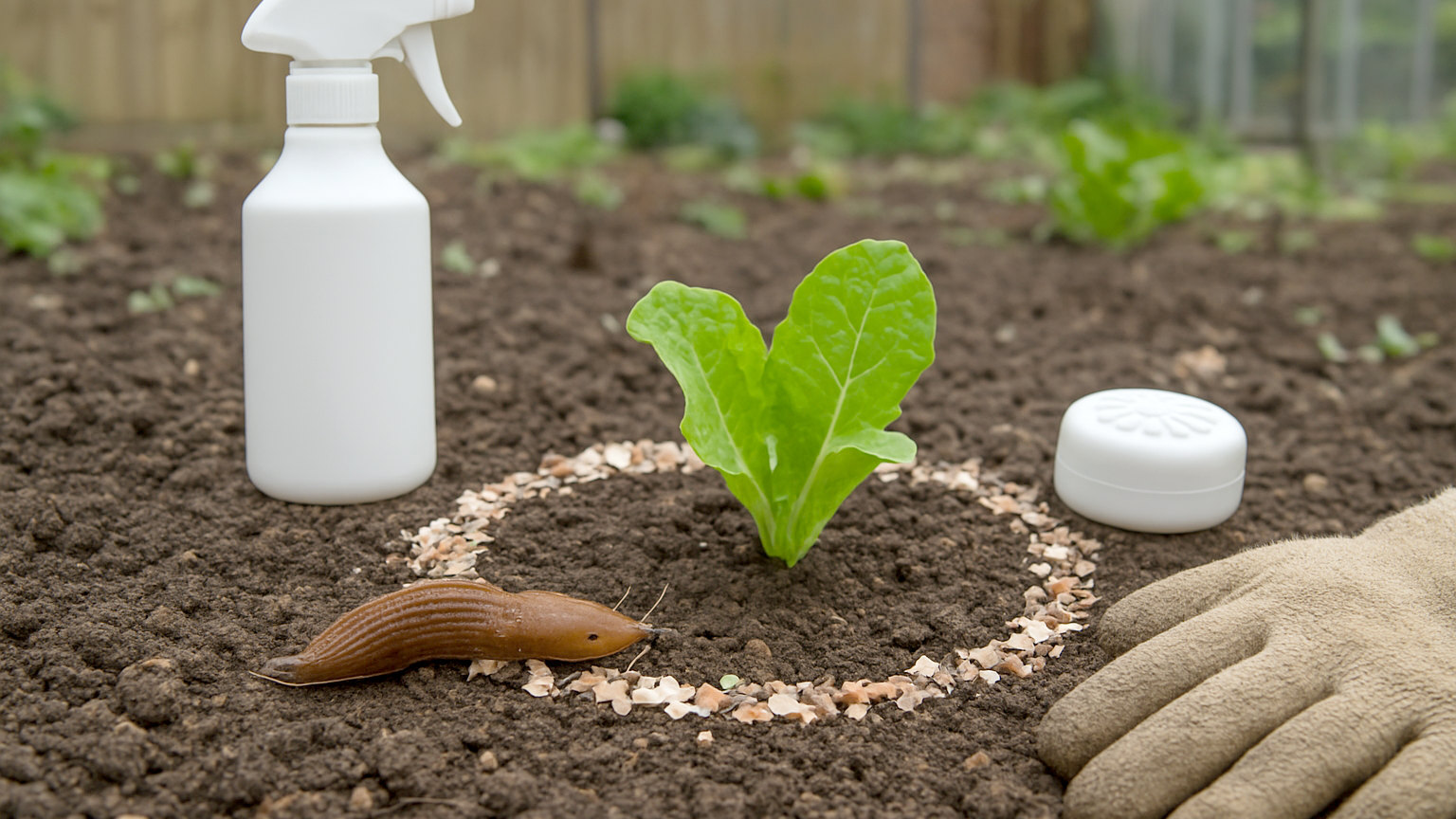
Slug control attracts more folk remedies than any other garden problem. Several have been tested properly, and the results are worth knowing before spending time or money.
Crushed eggshells
Perhaps the most widely repeated garden advice there is.
Trials have repeatedly failed to show any useful barrier effect. Slugs cross crushed eggshell without apparent difficulty, protected by their mucus.
Eggshells are useful in compost and add a little calcium to soil very slowly. They do not protect a hosta.
Coffee grounds
Suggested both as a barrier and as a toxin.
Concentrated caffeine solutions do kill slugs in laboratory conditions, at concentrations far higher than anything in used coffee grounds.
As a garden barrier the evidence is weak.
They are a useful addition to a compost heap and nothing more.
Ultrasonic and electronic devices
Sold as repellents for slugs and various other garden animals.
There is no good evidence that they work. Slugs do not have the hearing apparatus these devices assume, and independent testing of similar devices for other species has generally been unfavourable.
Electric fence products around a pot are a different matter and do deter, at the cost of batteries and reliability.
Garlic and other sprays
Garlic wash has some limited experimental support as a deterrent, and results in gardens are inconsistent.
It needs reapplying after every rainfall, which in a British spring is frequent.
It is not likely to do harm and should not be relied on for a valued plant.
Salt
Kills slugs and should not be used.
It is a slow and unpleasant death, and salt in soil damages structure and harms plants and soil organisms. Salt barriers around plants are actively harmful.
Sharp sand and grit barriers
Widely recommended and poorly supported by controlled testing.
Slugs cross most sharp materials readily. Any benefit from a gravel mulch probably comes from keeping foliage off damp soil and reducing shelter rather than from the sharpness.
Copper, with qualifications
Better supported than most, and the evidence is genuinely mixed.
It works only where the barrier is complete and unbridged, and it tarnishes.
Useful on a container rim, unreliable elsewhere.
Beer traps, with qualifications
These do catch slugs effectively.
The problem is that they also catch ground beetles, which are significant slug predators, and they attract slugs into the area.
Set the rim above soil level and site them away from vulnerable plants.
Companion planting
Various plants are said to repel slugs. The evidence is thin, and slugs eat a very wide range of plants.
Sacrificial planting, offering something more attractive nearby, has better support than repellent planting.
What the evidence supports
Physical exclusion: bottles, cloches, raised staging.
Hand collection at night: the most effective method available to a gardener.
Shelter traps lifted each morning.
Nematodes, applied in the right conditions.
Ferric phosphate pellets, used sparingly and per the label.
Raising sturdy plants before planting out.
Encouraging predators.
Cultural changes: morning watering, clearing shelter, timing plantings.
Testing for yourself
Treat half a row and leave half untreated, and compare after a fortnight.
Judge over more than one season, since a dry spring makes almost anything look effective and a wet one makes everything look useless.
Most of the folk remedies survive because gardens vary and weather varies, and a good year is easily mistaken for a successful method.
Why it matters
Time and money spent on measures that do not work is time and money not spent on measures that do.
More seriously, relying on an ineffective barrier means a valued plant is unprotected at the moment it is most vulnerable.
Crushing eggshells around a newly planted hosta feels like action and leaves the plant just as exposed as doing nothing at all.
How the myths persist
A method tried in a dry spring appears to work. The same method in a wet spring appears to fail, and is blamed on doing it wrong rather than on the method.
Nobody runs a control, so there is nothing to compare against.
Advice is then passed on in good faith, which is why several of these have circulated for generations.
Being fair to them
None of the barrier materials does any harm, and eggshells and coffee grounds are useful in compost.
The objection is only to relying on them.


