
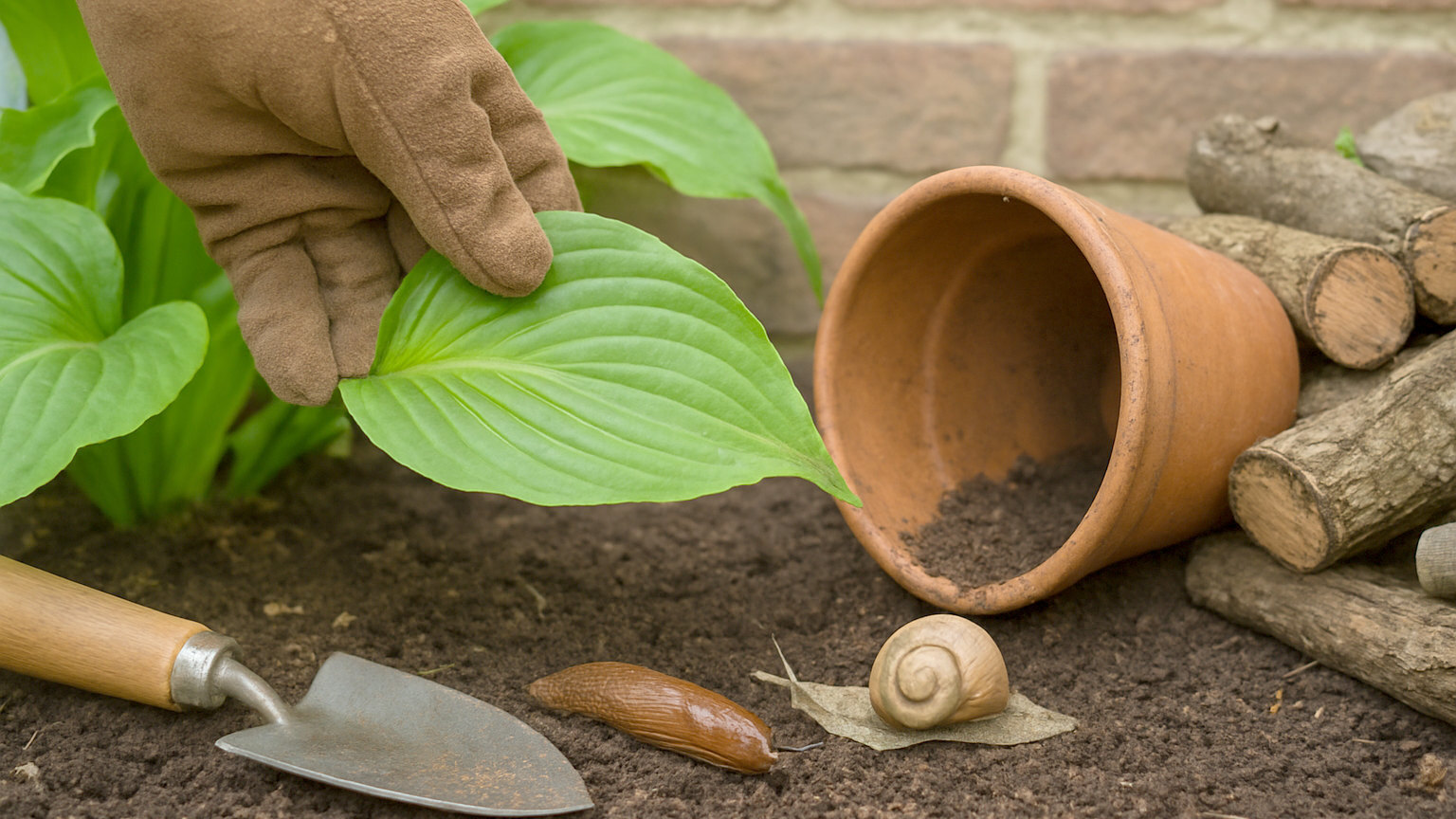
No garden will ever be free of slugs and snails, and a garden without them would support very little else. The useful question is not how to eliminate them but where the damage actually matters.
What matters and what does not
Matters: seedlings and young transplants destroyed outright; emerging shoots of hostas, delphiniums and dahlias eaten before they can grow; a whole tray of seedlings lost overnight; potatoes and bulbs holed underground.
Does not matter: holes in the leaves of an established plant in midsummer; damage to the outer leaves of a mature vegetable; a few marks on a hosta in August; anything on a plant that is growing away strongly.
The distinction is whether the plant's survival or productivity is affected, or only its appearance.
A proportionate strategy
Concentrate on the few weeks in spring when plants are small and vulnerable, and on the specific plants that suffer.
Raise plants to a robust size before they go out.
Do night patrols for two or three evenings around planting time.
Use nematodes on the beds that matter.
Clear shelter immediately around vulnerable plants.
Then stop, and leave the rest of the garden alone.
Building a garden that copes
Choose plants that are not eaten for most of the planting, and treat the vulnerable ones as a small managed exception.
Ferns, euphorbia, hardy geraniums, alchemilla, astrantia, hellebores, aquilegia, pulmonaria, grasses, sedums, achillea, lavender, rosemary and most shrubs and bulbs are largely left alone.
Grow hostas and other favourites in containers where they can be protected easily.
Support predators, which is the only measure that improves year on year.
The predator argument
Hedgehogs, thrushes, frogs, toads, slow worms, ground beetles and leopard slugs all eat slugs continuously and for nothing.
All of them need a slug population to sustain them.
A garden treated heavily every season removes the predators along with the pest and stays dependent on treatment. A garden that supports predators reaches a balance within a few years.
The Royal Horticultural Society no longer classifies slugs and snails as pests, reflecting that most species are beneficial or neutral and that they are part of how a garden functions.
What they actually do
Most species break down dead plant material, fungi and algae, returning nutrients to the soil.
Leopard slugs eat other slugs.
They are a major food source for a considerable range of animals.
Only a handful of species out of more than forty do meaningful damage to living plants.
A season by season plan
Late winter: clear debris and old mulch from around vulnerable perennials before shoots emerge. Order nematodes.
Spring: the main effort. Night patrols, nematodes as soil warms, protection over transplants, morning watering.
Early summer: continue protecting anything newly planted, and relax as plants harden.
Late summer: tolerate cosmetic damage. Keep an eye on new plantings only.
Autumn: a nematode application reduces numbers overwintering. Cultivate vegetable ground. Clear shelter near beds that will be used in spring.
Through the year: maintain the habitat that supports predators.
Expectations
Some years will be bad regardless, particularly after a mild wet winter.
Some plants will be lost. Planting a few spare and accepting losses is less trouble than defending every individual.
Judge any method over several seasons, since weather varies more than technique does.
A garden that has some slug damage and plenty of birds, frogs and hedgehogs is working correctly.
Changing how you see it
The gardener who inspects every leaf and treats every hole has set an impossible standard and will be permanently disappointed.
The one who protects the seedlings in April and then looks at the garden as a whole finds the damage largely invisible by July.
It is worth being clear that this is not a lower standard of gardening. It is a more accurate view of what actually affects how a garden grows.
The one thing worth doing
If you take nothing else from this, raise plants to a decent size before they go out and protect them for the first month.
That single change removes most slug damage in most gardens, costs nothing, and requires no product, no barrier and no killing at all.
Everything else in this section is refinement on top of it.


