
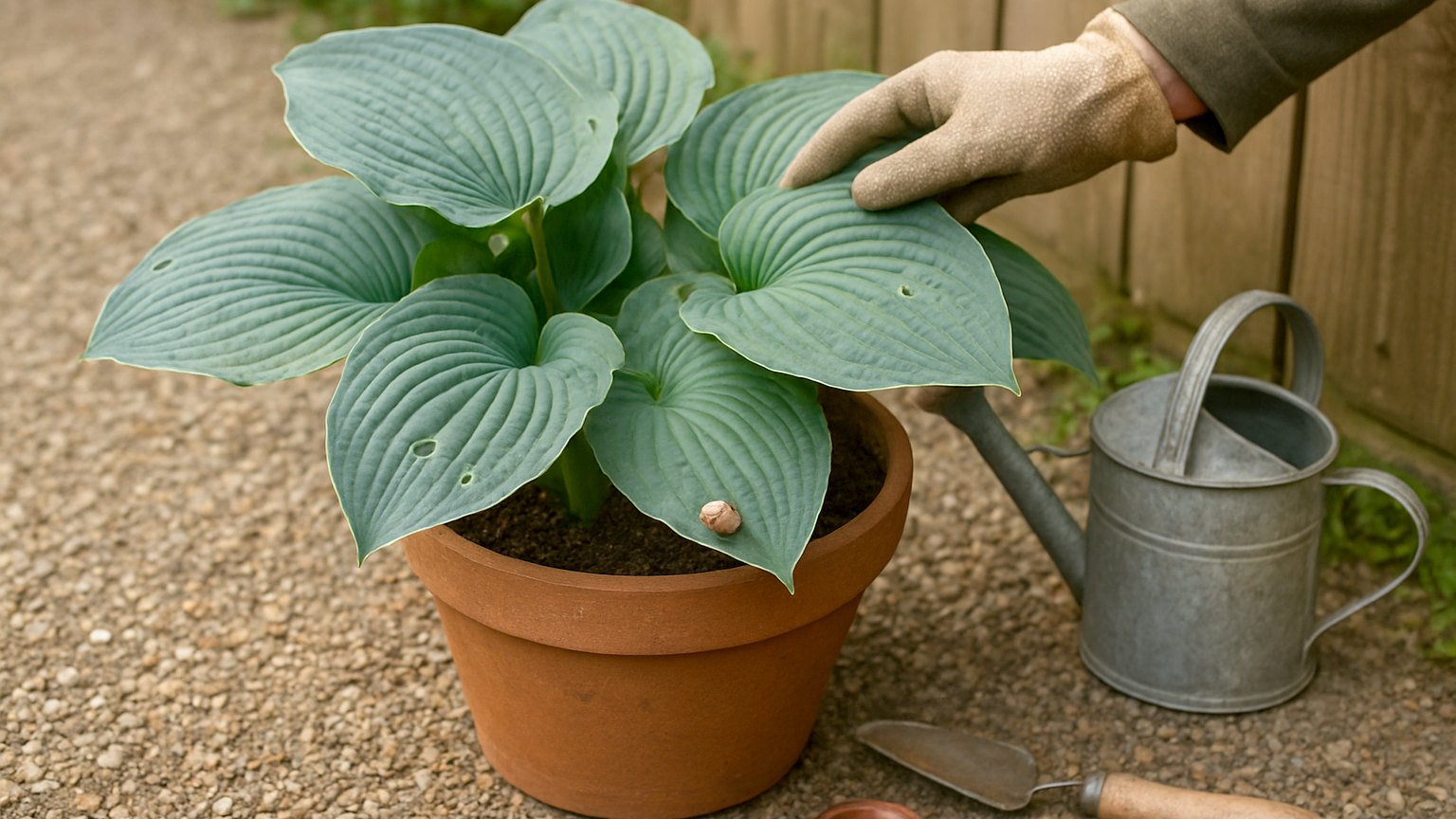
A handful of garden plants are so reliably eaten that many gardeners give up on them. In most cases the problem is concentrated into a few weeks in spring, and it is manageable.
The usual casualties
Hostas, above all, whose emerging shoots and soft leaves are exactly what slugs prefer.
Delphiniums and lupins, whose young shoots are frequently destroyed as they emerge.
Dahlias, particularly newly planted tubers and young growth.
Ligularia, rodgersia and other soft-leaved moisture lovers, which grow in exactly the damp conditions slugs like.
Lettuce, beans, courgettes and most vegetable seedlings.
Sweet peas, marigolds, zinnias and most soft annuals when newly planted.
Tulips and other bulbs, damaged below ground by keeled slugs.
Hostas specifically
Leaf thickness is what determines resistance.
Thick, heavily textured, puckered and blue-leaved varieties are markedly more resistant than thin, smooth, glossy or yellow-leaved ones.
The blue colouring comes from a waxy coating, which adds to the toughness.
Large-leaved varieties with substantial corrugated foliage are the ones to choose where slugs are bad. Thin-textured varieties in an open border are a losing proposition.
Ask at the nursery which varieties are regarded as slug resistant, since the difference between them is substantial.
Sieboldiana and its forms, and the thick blue-leaved varieties generally, are among the most reliable in a slug-prone garden.
A thin yellow-leaved hosta in a damp shaded border is likely to be eaten whatever else you do.
Growing hostas in pots
Frequently the most practical answer.
A pot raised on feet, away from overhanging planting, with copper tape around the rim, is far easier to protect than a plant in a border.
Check under the rim and beneath the pot regularly.
Use fresh compost, and check the rootball of any new plant before potting.
Hostas grow well in containers and can be moved into the best position, which suits their preference for shade and moisture.
Protecting emerging shoots
The critical moment is when growth first appears, from about March.
Clear away all mulch, leaf litter and debris from around the crown in late winter, which removes both shelter and overwintering slugs.
Apply nematodes to the surrounding soil as it warms.
Do night patrols for the few weeks while shoots are emerging and expanding.
Once the leaves have hardened, the risk drops sharply and the plant needs little further attention.
Plants that are left alone
Tough, aromatic, hairy, leathery, waxy or poisonous foliage is generally avoided.
Ferns, euphorbia, hardy geraniums, alchemilla, astrantia, foxgloves, hellebores, aquilegia, pulmonaria, lavender, rosemary, sage, thyme, grasses, sedums, achillea, penstemon, most shrubs and most bulbs other than tulips and lilies.
Building a border largely from these and treating the vulnerable plants as a small managed exception is a practical strategy.
Where to put vulnerable plants
In a raised bed or a container rather than at ground level.
Away from walls, dense ground cover, log piles and other shelter.
In a drier, more open position rather than a damp shaded corner.
Where you will walk past them regularly and notice damage early.
Accepting some damage
A few holes in a mature hosta in August is cosmetic. The plant is unaffected and will be as good next year.
The damage worth preventing is the destruction of emerging shoots in spring, which sets a plant back a whole season or kills it.
Concentrating protection on that window, and relaxing afterwards, is far less work than trying to keep a plant pristine all summer.
Vegetables worth protecting
Lettuce, beans, courgettes and brassicas at the transplant stage repay protection, and all of them are far safer raised in modules and planted out at a good size.
Potatoes need a different approach, since the damage is underground from keeled slugs. Lift them promptly rather than leaving them in the ground, choose less susceptible varieties, and treat the ground with nematodes.
Recovering a damaged plant
A perennial eaten to the ground in spring will usually produce a second flush if it is watered, fed and protected from further damage.
Clear the shelter around it, apply nematodes, and check it at night for a week or two while the new growth is soft.
An annual or a seedling destroyed at that stage will not recover and should simply be replaced, which is why planting a few spare is worthwhile.


