
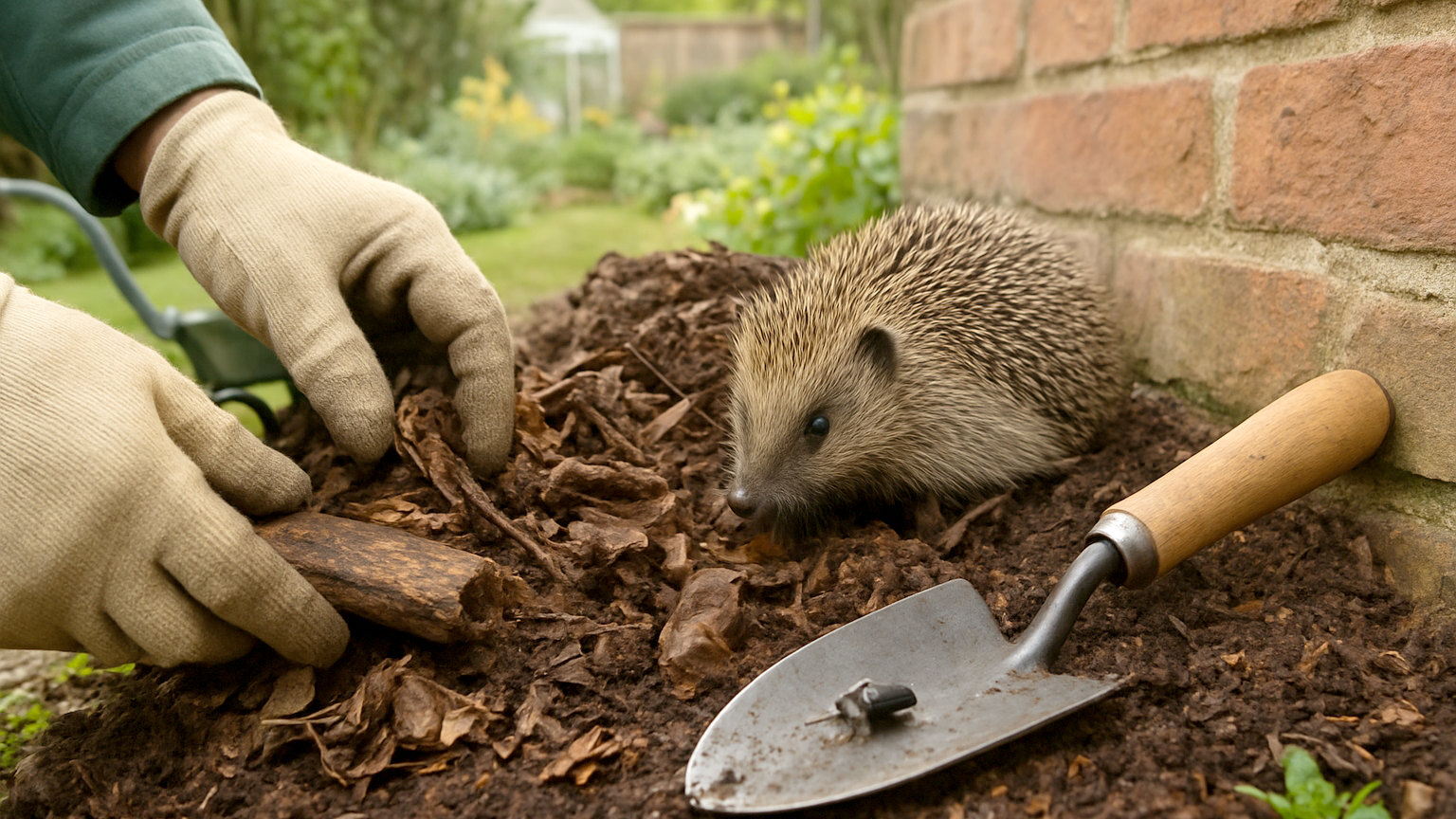
Every garden has a population of animals that eat slugs continuously and free of charge. Supporting them is the only approach that gets better over time rather than needing repeating every season.
Hedgehogs
Substantial slug and snail eaters, along with beetles, caterpillars and worms.
Cut a gap of about thirteen centimetres square at the base of fences. Hedgehogs travel a kilometre or more in a night and a sealed garden is useless to them.
Provide cover: a log pile, dense planting, a wild corner, or a purpose-made hedgehog house in a quiet spot.
Leave a shallow dish of water out, particularly in dry weather.
Check long grass before strimming and check bonfire heaps before lighting, since both cause serious injuries.
Cover drains and gullies, and provide a sloping ramp out of any pond.
Avoid slug pellets, since hedgehog numbers have declined sharply and food supply is part of it.
Thrushes and blackbirds
Song thrushes specialise in snails, smashing them against a stone to break the shell. The accumulated fragments are called an anvil.
Leave a suitable flat stone in a border to encourage the behaviour.
Blackbirds and starlings take slugs from the surface, particularly in spring when feeding young.
Provide dense shrubs and hedges for nesting, water for drinking and bathing, and avoid disturbing hedges between March and August.
Frogs and toads
Both eat slugs, and toads in particular take large numbers.
A pond is the single most effective addition for this, and even a container pond helps.
They spend most of the year on land, so damp cover matters as much as the water: long grass, log piles, dense planting and a compost heap.
Provide a shallow sloping edge so they can get in and out.
Ground beetles
Frequently overlooked and genuinely significant, eating slugs, slug eggs, cutworms and root fly larvae.
Fast-moving black beetles found under stones, logs and mulch.
They need undisturbed cover and are removed by constant tidiness, frequent digging and bare soil.
Leave a permanent mulched border, an uncut edge, a stone or two, and something to shelter under.
Beer traps set flush with the soil catch large numbers of them. Setting the rim a couple of centimetres proud avoids most of that.
Slow worms
Legless lizards that feed heavily on small slugs.
They favour warm undisturbed places: a compost heap, long grass, a sheet of corrugated iron or a piece of roofing felt laid on the ground.
They are protected by law and should not be disturbed or harmed.
A compost heap turned frequently in summer is a common place to find them, so check before forking it over.
Others
Centipedes, which are predators, unlike the slower rounded millipedes.
Some birds, including ducks and chickens where they can be given access.
Leopard slugs, which eat other slugs and should never be killed.
What supports all of them
Stop using pellets and insecticides. This is the largest single factor.
Leave a corner untidy. Long grass, leaf litter, a log pile, standing stems over winter.
Add water. A pond of any size transforms what a garden supports.
Connect the garden with gaps at the base of boundaries.
Mulch borders rather than leaving bare soil, which shelters ground beetles.
Cut perennials back in February rather than autumn, so overwintering insects survive.
The trade-off
Predators need prey to sustain them, so a garden supporting hedgehogs and thrushes will always have slugs in it.
The aim is a population held in check rather than eliminated, with intensive protection reserved for the few weeks when seedlings are vulnerable.
This takes two or three seasons to establish and then requires nothing further.
Ducks and chickens
Both eat slugs and snails in quantity, and ducks in particular are effective.
They also eat seedlings, trample beds and need proper housing and daily care, so they suit a large plot or an orchard rather than a small garden.
Where they can be given supervised access to a bed before planting, they clear it thoroughly and quickly.
What predators will not do
They will not protect a tray of seedlings on a particular night, which is why spring protection is still needed.
Predators reduce the background population rather than defending individual plants on a given night.


