
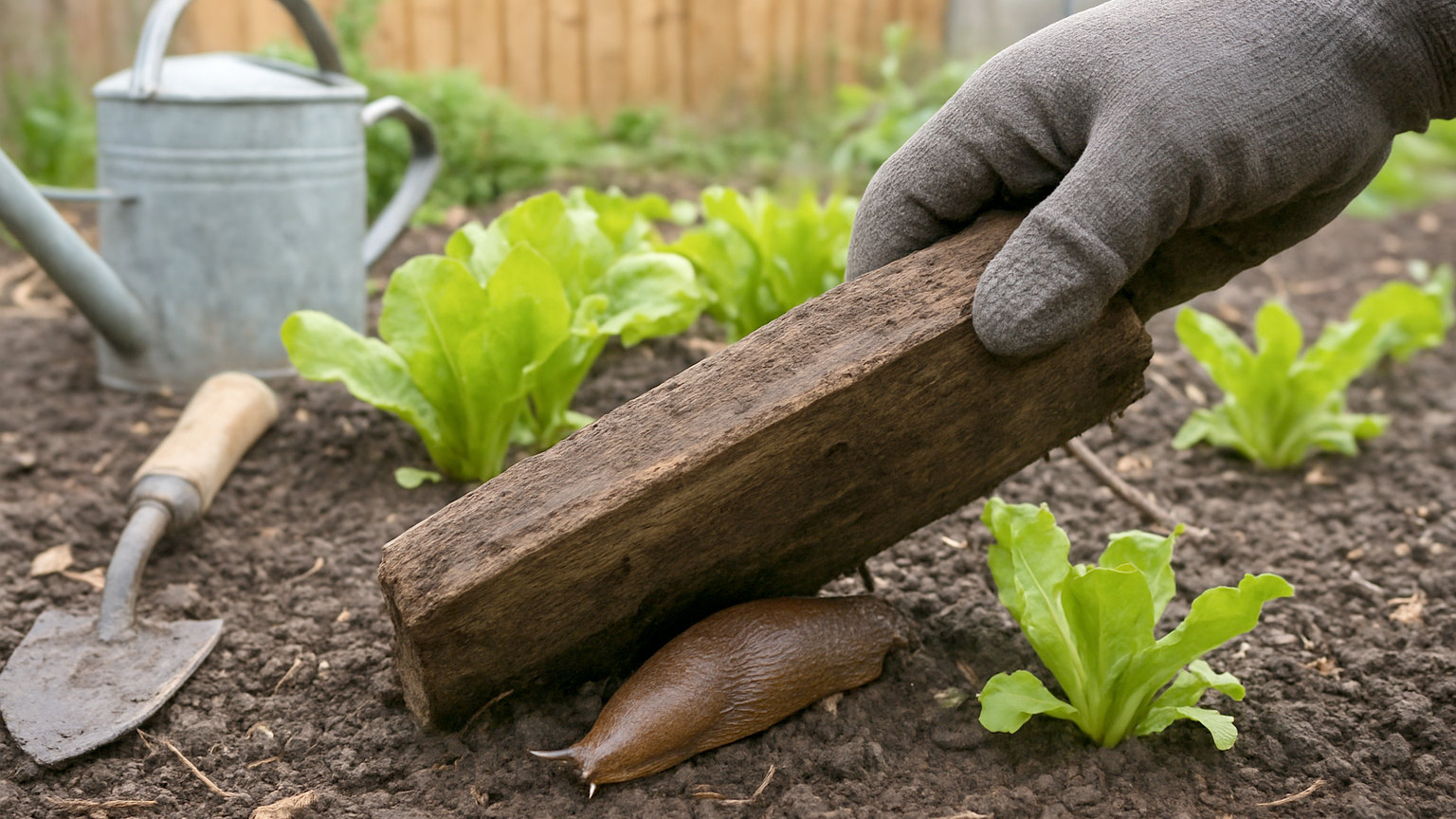
How a garden is managed affects slug damage more than any treatment applied to it. None of what follows costs anything, and together it makes a substantial difference.
Water in the morning
Slugs feed at night and need moisture to move.
Watering in the evening leaves the surface damp at exactly the time they are active. Watering in the morning lets the surface dry before dusk.
Water the soil around plants rather than the foliage, and use a can or a targeted hose rather than a sprinkler.
Water thoroughly and less often, which encourages deep roots and leaves the surface dry between times.
Think about mulch
Mulching is valuable for moisture, weeds and soil health, and a thick damp mulch is also ideal slug shelter.
The resolution is placement rather than avoidance.
Keep mulch clear of the immediate base of vulnerable young plants, leaving a small open collar of bare soil.
Use a coarser, drier mulch such as gravel or bark rather than a fine moist one near seedlings.
Mulch established borders freely, where the benefits outweigh the shelter provided.
Clear shelter selectively
Slugs shelter within a short distance of where they feed.
Remove debris, stones, weeds, old pots and dense low cover from immediately around vulnerable beds.
Leave shelter elsewhere in the garden, since the same features support ground beetles, frogs, toads and hedgehogs, which is a net gain.
The aim is a clear zone around seedlings, not a sterile garden.
Cultivation
Turning soil in autumn and winter exposes slug eggs and resting slugs to birds, frost and drying wind.
A single pass with a fork before a cold spell is worth doing on a vegetable bed.
This has to be balanced against the benefits of no-dig methods, which improve soil considerably. On a no-dig bed, other measures carry the load.
Timing plantings
Plant out into warm soil so growth is rapid and the vulnerable stage is short.
Choose a dry settled spell rather than the evening before rain.
Delay planting anything vulnerable until it is large enough to survive some damage.
Sow a little thicker than needed where direct sowing is unavoidable, and thin later.
Plant strongly
A well-grown plant in good soil, watered and fed, tolerates damage that would kill a struggling one.
Harden plants off properly, since soft growth is more attractive and more easily destroyed.
Avoid excessive nitrogen, which produces soft sappy growth.
Tidy at the right time
Clear debris and old mulch from around hostas, delphiniums and other vulnerable perennials in late winter, before shoots emerge.
This removes overwintering slugs and eggs at the point it matters most.
Leave general tidying of the wider garden until late February, so overwintering insects and predators survive.
Manage the compost heap
A compost heap harbours slugs and also harbours slow worms, ground beetles and other predators.
Site it away from vegetable beds and seedling areas rather than beside them.
Check before forking it over, since slow worms are protected and easily injured.
Spacing and airflow
Crowded planting stays damp at soil level and gives continuous cover.
Space plants so air moves between them and the surface dries.
Remove lower leaves that lie on the soil, particularly on brassicas and lettuce.
Choose plants sensibly
Where a plant is destroyed every year in the same position, the position or the plant is wrong.
Move it, grow it in a container, choose a resistant variety, or grow something else.
This is not defeat. A border built largely from plants that are not eaten leaves the time and effort available for the few that are worth protecting.
Ground cover and edges
Dense low ground cover against a path or a lawn edge provides a continuous damp corridor.
Where slug damage is persistent along one edge, opening it up and letting light and air in usually helps more than any treatment.
What to do first
If you change only one thing, raise plants in modules and plant them out sturdy rather than sowing small seedlings into open ground.
If you change two, add night patrols for three evenings in spring.
Between them those two account for most of the damage in an ordinary garden, and neither costs anything beyond a little time.
Everything else is refinement.


