
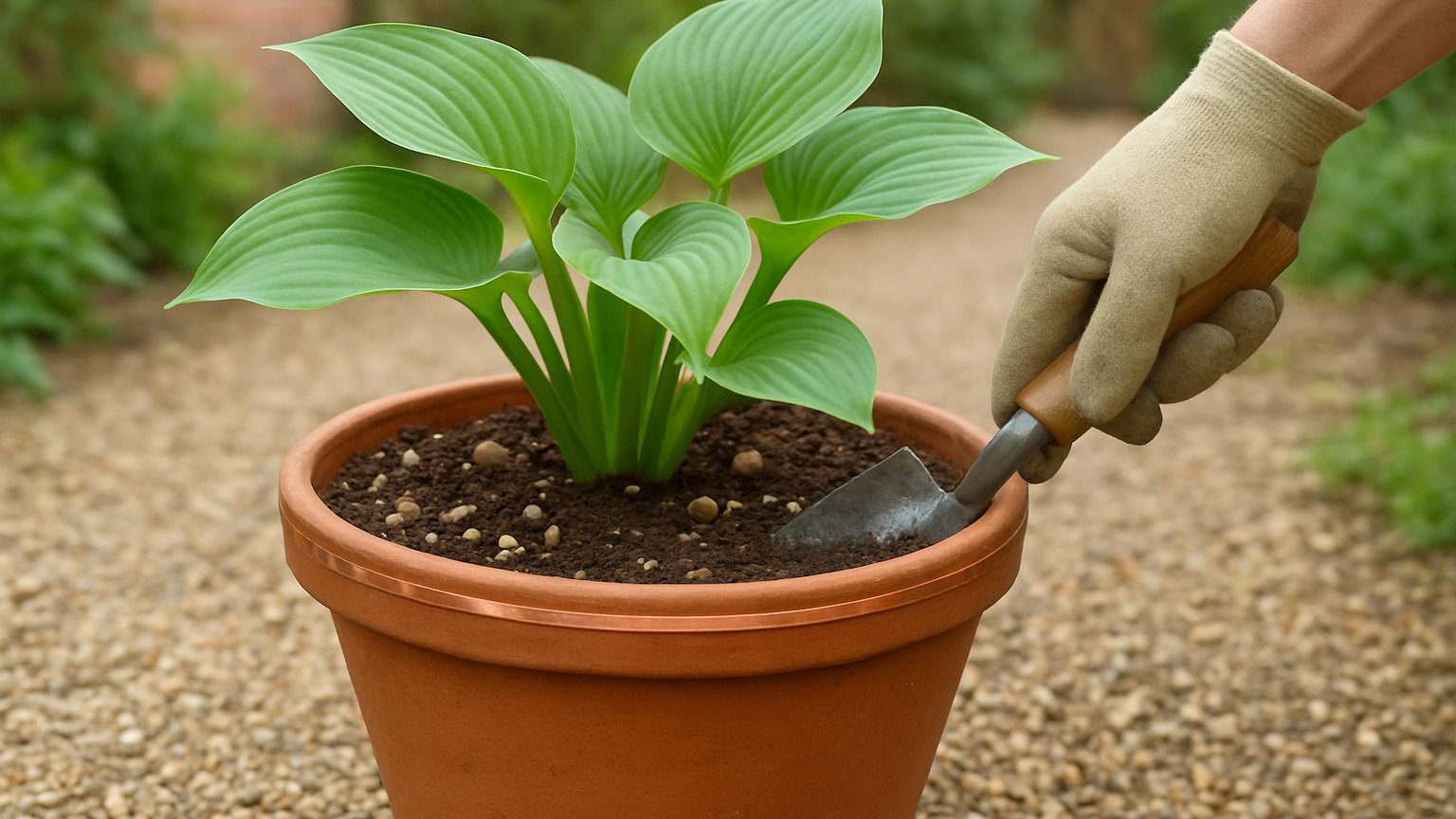
Barriers are the most commonly suggested response to slugs and the area where enthusiasm most exceeds evidence. Some help in particular situations; several do very little.
Copper
Copper tape and rings are said to give a small electrical charge when a slug crosses them.
The evidence is mixed. Some trials show a deterrent effect, others show little, and results in gardens vary considerably.
Where it does work, it works only if the barrier is complete and unbridged. A leaf touching the ground, a stem hanging over the rim or a trail of compost across the tape provides a route past it.
Copper tarnishes, which reduces any effect, so it needs cleaning or replacing.
It is most useful on a container rim, where the barrier can be continuous and easily checked.
It does nothing about slugs already inside the pot or in the compost.
Grit, sand and sharp materials
Sharp grit, crushed shell, gravel and similar materials are supposed to be uncomfortable to cross.
In practice slugs produce mucus and cross most of them without much difficulty, and controlled trials have generally found little effect.
They may deter to a modest degree when dry and fresh, and lose any effect once wet or once organic debris settles on them.
A gravel mulch has real value for other reasons, keeping foliage off damp soil and reducing shelter, which is probably where any benefit lies.
Eggshells and coffee grounds
Two of the most persistent garden myths.
Crushed eggshells do not form an effective barrier. Trials have repeatedly failed to show a benefit, and slugs cross them readily.
Coffee grounds have been suggested as a deterrent, and the evidence for a barrier effect at garden concentrations is weak. They are useful added to compost.
Neither does any harm, and neither should be relied on to protect anything valuable.
Wool pellets
Made from compressed wool waste, expanding into a felted mat when watered.
They have somewhat better evidence than most barriers, with the fibres and the texture appearing to deter crossing.
They also act as a mulch and release nitrogen slowly as they break down.
They need topping up, and they lose effect once well weathered or once debris covers them.
Barriers that genuinely work
Physical exclusion is far more reliable than deterrence.
A cut-off plastic bottle over a seedling, pushed into the soil, prevents access outright.
A cloche over a row does the same.
Raising vulnerable plants on staging or a table, well away from the ground, keeps them out of reach entirely while they establish.
Container feet with a clean gap, and a smooth barrier a slug must cross in the open, both help.
Why barriers disappoint
Slugs are frequently already present in the soil or compost inside the barrier.
Snails climb walls and drop from above.
Any bridge, from a leaf to a cane to a splash of soil, defeats the whole arrangement.
Rain, debris and weathering degrade most materials within weeks.
Where to put the effort instead
Raising sturdy plants before planting out, night patrols with a torch during the few critical weeks, nematodes on vulnerable beds, clearing shelter near seedlings, and encouraging predators.
All of these have better evidence behind them than any barrier material.
If you use barriers
Use them as one element rather than the whole strategy, check them regularly for bridges and gaps, and clear the enclosed area of slugs and eggs before installing anything.
Testing a method yourself
Try a barrier on half a row and leave the other half untreated, and compare the damage after a fortnight.
This is the only way to know whether something works in your garden, and it frequently produces a surprise.
Judge over more than one season, since a dry spring makes almost any method look effective.
Why they remain popular
Barriers are appealing because they require no killing, no chemicals and no going out in the dark.
That is a reasonable preference, and it is worth being clear that most of them are a modest help at best rather than a solution on their own.
Physical exclusion, which is a barrier in a different sense, is the exception and genuinely works, because it removes access rather than relying on discomfort.
A cut-off bottle over a seedling is the cheapest and most reliable protection there is.


