
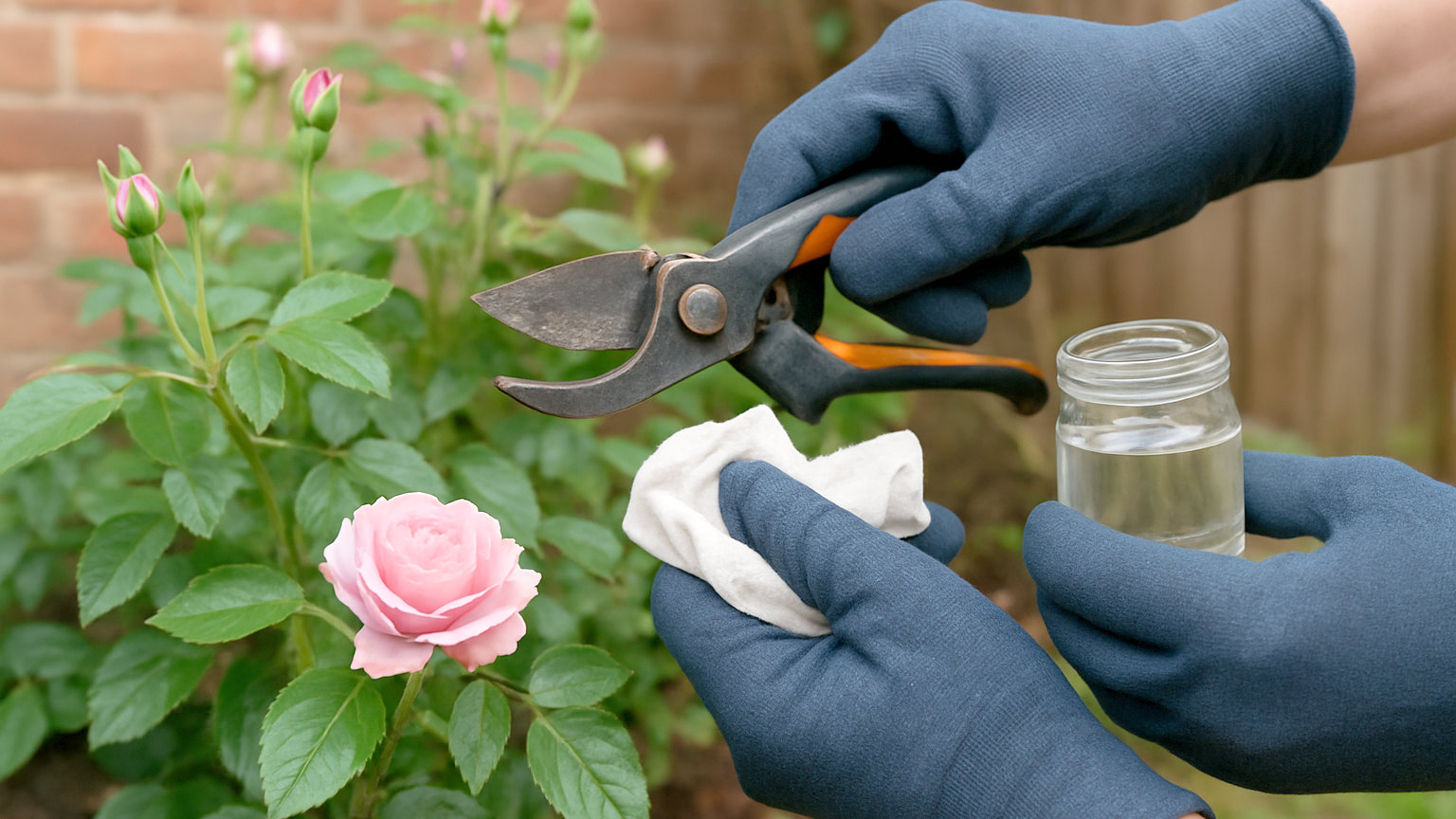
Pruning tools move sap, and sap carries pathogens. A pair of secateurs used on a diseased plant and then on a healthy one transfers the problem directly.
When it matters most
Pruning anything with a known disease, particularly canker, bacterial canker, silver leaf, coral spot, fireblight and wilts.
Cutting out diseased material, where the tool passes through infected tissue and then healthy wood.
Handling plants prone to virus: tomatoes, peppers, dahlias, chrysanthemums, soft fruit.
Taking cuttings and propagating, where a knife passes between many plants.
Working in a greenhouse or among a collection.
Between different gardens or plots, particularly on an allotment where soil-borne problems move between plots.
Clean before disinfecting
An important and frequently missed step.
Organic matter deactivates most disinfectants. Applying a disinfectant to blades caked in sap and soil achieves very little.
Scrape and wipe off soil and sap first, using wire wool or a cloth, then disinfect.
Sap sets hard on secateur blades and holds moisture, so wipe blades after every use before it dries.
What to use
Several options, all effective when used on clean blades.
Household disinfectant diluted according to its instructions, which is cheap and readily available.
Proprietary horticultural disinfectants, formulated for the purpose.
Surgical spirit or isopropyl alcohol, which evaporates quickly and needs no rinsing, making it convenient for working between plants.
Bleach solutions are effective and corrode metal, so rinse and dry thoroughly and oil afterwards if you use one.
Allow adequate contact time rather than a quick wipe. Follow the product instructions.
Rinse and dry, then oil the blades to prevent rust.
Practical routine
Keep a jar of disinfectant or a container of wipes with you when pruning anything diseased.
Disinfect between plants, and between cuts when cutting out canker or dieback.
Work from healthy plants to diseased ones, not the other way round.
Cut well below the visible damage into clean wood, and check the cut surface. If it is stained, cut lower.
Dispose of the prunings rather than leaving them on the ground.
Boots and gloves
Soil-borne diseases travel on footwear.
Clean soil off boots between an infected area and clean ground, and work the clean areas first.
This matters particularly for clubroot, white rot, honey fungus and Phytophthora.
Clean boots before and after visiting woodland, nurseries, other gardens and allotments, which slows the spread of tree diseases.
Wash gloves regularly, and use disposable ones when handling anything seriously diseased.
Pots, trays and equipment
Wash in hot soapy water and rinse, since old compost and root debris harbour damping off organisms.
Clean canes, labels and propagator lids between uses.
Clean barrows and tools that have moved soil from an infected area.
Keeping tools sharp
Relevant to hygiene as well as ease of use.
A sharp blade makes a clean cut that heals quickly. A blunt one crushes and tears, leaving damaged tissue that is far more readily invaded.
Sharpen secateurs, loppers and saws regularly, following the existing bevel.
Replace blades on secateurs designed for it rather than persisting with a damaged one.
Timing of pruning
As important as tool hygiene for preventing infection.
Prune in dry weather, when spores are less mobile and wounds dry quickly.
Prune stone fruit in summer, never in winter, because of silver leaf and bacterial canker.
Prune apples and pears when dormant.
Do not dress wounds, which hinders the tree's own sealing.
The habit
Wipe blades after every use, sharpen regularly, oil before storing, and keep a disinfectant to hand whenever pruning something diseased.
None of it takes long, and it prevents the commonest way disease moves around a garden.
Shared tools
Tools borrowed or lent between plots and gardens carry soil and sap with them.
Clean them before and after, particularly on an allotment where clubroot and white rot move readily between plots on tools and boots.
Storing tools
Clean, dry and oiled, hung up rather than standing on a damp floor.
Sap and soil left on blades over winter corrode them and hold pathogens until spring, when they go straight back onto the plants.
An annual overhaul
In winter, strip down secateurs, clean the blades and springs, sharpen everything, and oil before reassembling.
It takes an afternoon and means everything works properly when the season starts.


