
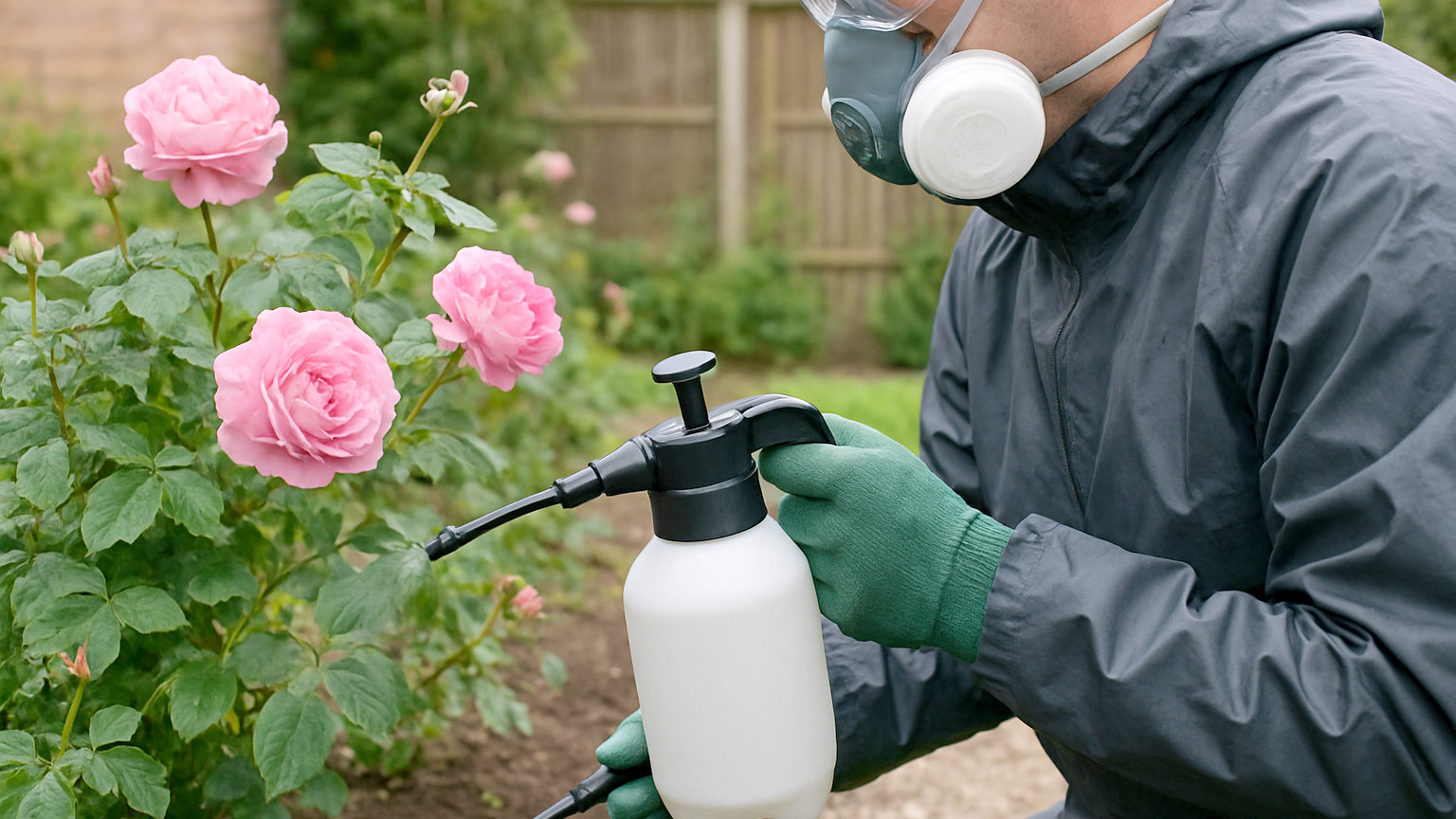
Where a garden chemical is genuinely needed, the way it is applied determines whether it does its job and whether it causes harm. All of it is set out on the label.
The label is legally binding
It is an offence to use a pesticide other than in accordance with its label.
That covers the plants and situations it may be used on, the rate, the timing, the maximum number of applications, the protective equipment required and any harvest interval.
Read it before buying, since many products are approved only for specific uses.
Read it again before mixing, since dilution rates vary between products and between uses.
Protective equipment
Wear what the label specifies, which typically includes:
Gloves, of a type resistant to the product rather than gardening gloves.
Eye protection, particularly when mixing concentrate, which is the most hazardous stage.
Long sleeves and trousers, and stout footwear.
A respirator where specified.
Do not eat, drink or smoke while handling or applying anything.
Wash hands, face and any exposed skin thoroughly afterwards, and wash the clothing separately.
Mixing
Mix outdoors, in a ventilated place, away from drains, gullies and water sources.
Measure accurately. More is not better, and exceeding the rate is both unlawful and damaging.
Mix only what you will use.
Keep children and pets away entirely.
Conditions
Calm weather. Spray drift damages neighbouring plants, a neighbour's garden and anything downwind, and can give rise to a claim.
Use a coarse spray at low pressure, or a watering can with a dribble bar for accuracy.
Do not spray in hot sun, which can scorch foliage and increase vapour movement.
Do not spray before rain, which washes the product off and into drains.
Do not spray when the plant is drought stressed.
Protecting pollinators
Never spray open flowers, and never spray when bees and other pollinators are active.
Where treatment of a flowering plant is unavoidable, apply in the evening once foraging has stopped, and check the label for specific warnings.
Many products carry explicit restrictions on use during flowering.
Remember that weeds in flower beneath a treated plant are also visited.
Protecting water
Never apply anything in or near a pond, ditch or watercourse without the specific approval required. Most garden products are not approved for use near water.
Do not apply where run-off could reach a drain, since surface water drains discharge to watercourses.
Do not wash out equipment near a drain or a water source.
Never pour surplus or washings down any drain or gully.
Separate equipment
Keep a sprayer and a watering can for weedkiller only, clearly and permanently marked.
Residues are extremely difficult to remove and will damage plants watered from the same can afterwards.
This is a common and avoidable cause of unexplained plant damage.
Rinse equipment three times after use, applying the rinsings to a treated area listed on the label.
Afterwards
Keep children and pets off treated areas for the period stated on the label.
Observe the harvest interval on any edible crop, which is the minimum time between application and picking.
Do not compost the first cuts of clippings after a lawn weedkiller, checking the label for how many.
Note what was applied, where and when, since this matters if a problem appears later.
Before spraying at all
Identify the problem, since the wrong product achieves nothing and kills predators.
Consider whether it needs treating, and whether a physical or biological method would do.
Treat only the affected plant rather than the whole garden.
Most garden problems do not require spraying, and most gardens manage entirely without any of it.
Neighbours
Tell them before treating anything along a shared boundary, particularly where they grow food.
You may not apply anything to a plant or a fence you do not own.
Spray drift damaging a neighbour's garden may give rise to a claim, and vapour can move further than droplets in warm conditions.
Recording applications
Note the product, the date, the plant treated and the rate used.
This matters if a problem appears afterwards, and it prevents exceeding the permitted number of applications in a season, which is a condition of the label.
Note the harvest interval alongside, so there is no doubt when a crop can be picked.


