
This is usually presented as a design principle. It is more useful understood as the single most effective pest and disease measure available, because a stressed plant is a vulnerable one.
Why stress causes problems
A plant in unsuitable conditions is working continuously to survive rather than to grow.
It produces weaker growth, has fewer reserves to recover from damage, and defends itself less effectively.
Specific examples are consistent.
Powdery mildew is far worse on plants with dry roots, which is why it appears first against a wall or in a dry summer.
Root rots attack plants sitting in ground that is too wet for them.
Aphids are drawn to the soft sappy growth produced by excessive feeding or shade.
Honey fungus and canker take hold more readily on plants already weakened.
Lime-hating plants on chalk yellow and decline whatever is done for them.
None of these is fixed by treatment. All are fixed by position.
Assess the conditions honestly
Aspect and light. Track where the sun falls through the day and through the seasons. Shade in February is quite different from shade in June.
Soil type. Do the hand texture test, and dig a hole to see what is actually there.
pH. Test it, in several places.
Drainage. Fill a hole with water and time how long it takes to drain.
Exposure. Note the prevailing wind and where it funnels, and identify frost pockets.
Moisture. Note where the ground is dry, particularly the rain shadow at the base of walls and under trees.
Choosing accordingly
Match the plant to what you have rather than trying to change the site.
Read labels properly. Sun or shade, moist or free draining, hardiness, and eventual size all matter.
Look at what grows well locally and in neighbouring gardens, which tells you more than any label.
Check eventual size and plant at that spacing. A shrub cut back three times a year to fit its position is in the wrong position, and repeated hard pruning weakens it.
Consider the microclimate: a sheltered courtyard is warmer, a frost pocket colder, a north wall cooler and damper.
Where a plant is struggling
Diagnose before treating.
Ask whether the position suits it, since that explains more failures than pests and diseases combined.
Move it rather than nursing it. Most shrubs and perennials transplant successfully in autumn or early spring if lifted with a good rootball and watered afterwards.
Where it cannot be moved, improve what can be improved: drainage, shelter, mulching, watering.
Where neither is possible, replace it with something suited. This is not failure; it is the correct response.
Working with difficult sites
Dry shade: epimedium, Geranium macrorrhizum, bergenia, dryopteris ferns, cyclamen hederifolium.
Wet ground: hornbeam, willow, dogwood, astilbe, ligularia, iris sibirica.
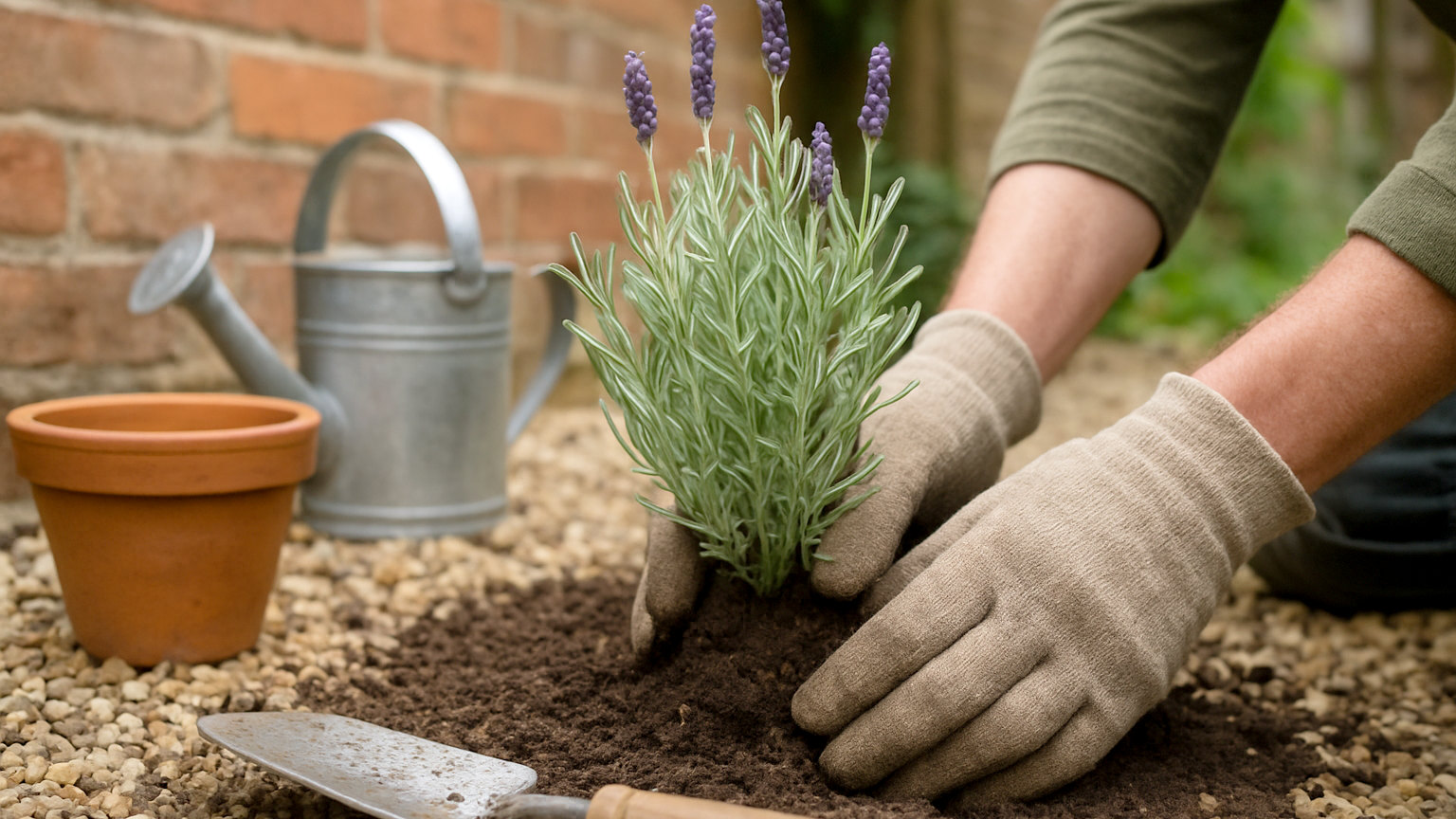
Hot dry sun: lavender, cistus, eryngium, sedum, grasses.
Exposed and windy: hawthorn, elaeagnus, escallonia, tough grasses.
Chalk: clematis, lilac, buddleja, scabious, dianthus, box, yew.
Every difficult condition has plants that thrive in it.
Containers as the exception
Where a plant genuinely will not suit the ground, a container gives complete control over compost, drainage and position.
This is the practical answer for lime-haters on alkaline soil, and for anything wanting sharp drainage on heavy clay.
The compound benefit
A garden of well-suited plants needs less watering, less feeding, less pruning and less intervention of every kind.
It also looks better, because plants growing happily look quite different from plants merely surviving.
Buying to suit
Take the conditions to the nursery rather than the plant to the garden.
Know your aspect, soil type, pH and drainage before choosing, and ask staff what suits them.
Resist buying whatever is flowering on the day, which is how unsuitable plants enter gardens.
Giving it time
A newly planted specimen looks unhappy for a season regardless, and needs water and patience rather than a diagnosis.
Judge whether a plant suits its position after two full growing seasons, not after two months.
The commonest mismatches
Sun lovers in shade, which grow drawn and leggy and flower poorly.
Moisture lovers against a wall, which is the driest ground in any garden.
Lime haters on chalk, which yellow and decline.
Mediterranean plants on wet clay, which rot over winter.
Plants sold at ten-year size that reach three times that.


