
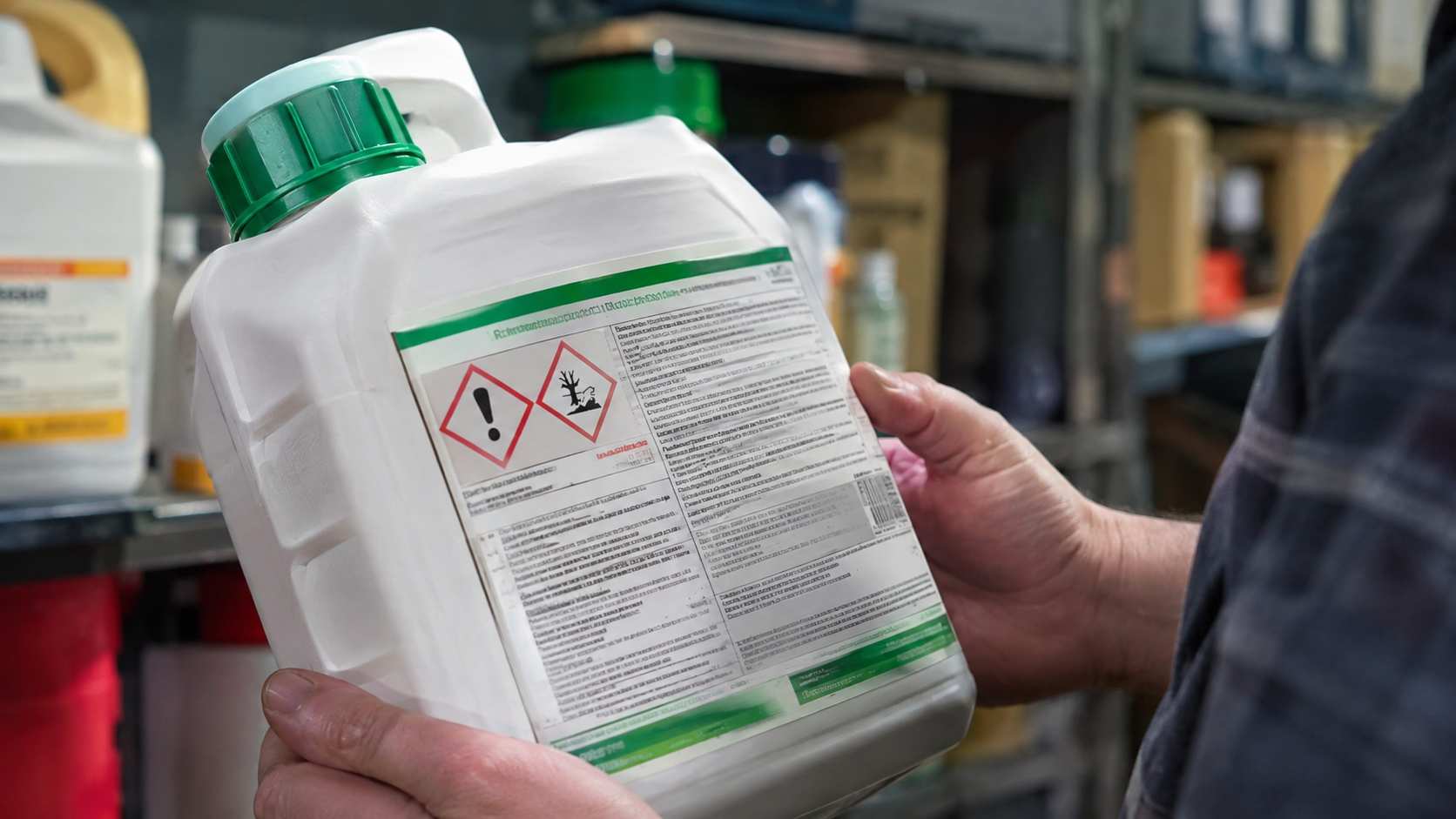
If you use any pesticide, herbicide or fungicide in a garden, the label is the most important thing about it. It is a legal document rather than a set of suggestions, and using a product in a way its label does not permit is an offence.
Before you buy
Check that the product is approved for the use you have in mind. Approval is specific: a product may be cleared for ornamental plants but not for edible crops, or for one crop and not another. The label states which.
Check it is an amateur product. Professional products require certification to use and are not for garden use.
Look at the active ingredient rather than the brand name, since the same active appears under many names at different prices. It also tells you whether you already have something equivalent.
Consider whether you need it at all. Most garden problems are better addressed by barriers, timing, resistant varieties and tolerance, and a great deal of what is bought each spring sits unused in sheds for years.
What to read on the label
- Which plants it may be used on, and any specifically excluded
- The dilution rate, which is not a range to be improved on
- The maximum number of applications per season and the interval between them
- The harvest interval for edible crops, being the minimum days between application and eating
- Protective equipment required, typically gloves and eye protection
- Any restriction on use near water
- Re-entry periods for children and pets
The harvest interval is the one people most often overlook. Some products require a fortnight or more between spraying and picking, and eating a treated crop before that has elapsed defeats the entire safety assessment behind the approval.
Stronger is not better
Mixing at a higher concentration than the label states is both illegal and counterproductive. It can scorch the plant, damages beneficial organisms, leaves higher residues, and accelerates the development of resistance.
Never mix two products together unless the label explicitly permits it.
Mix only what you need for the job. Disposing of surplus diluted product is a nuisance and pouring it down a drain is not acceptable.
Protecting bees and other insects
Never spray open flowers, and never spray when bees are flying. Spraying in the evening, once foraging has stopped, substantially reduces harm.
Read any bee warning on the label carefully. Remember that a broad-spectrum insecticide kills the ladybirds, hoverflies and lacewings controlling the pest as well as the pest itself, which frequently makes the second infestation worse than the first.
Never near water
Do not use pesticides or herbicides near a pond, stream, ditch or drain. Many are extremely toxic to aquatic life at very low concentrations, and a small quantity entering a watercourse does disproportionate damage.
Do not rinse equipment into a drain. Rinsings should be diluted heavily and applied to the treated area.
Weather and timing
Do not spray in wind, which carries product onto plants you want to keep and onto neighbouring gardens. Do not spray if rain is expected within the period the label specifies, since it washes off and runs into drains.
Do not spray in strong sun or high temperatures, which increases the risk of scorching foliage.
Records
Note what you applied, where, at what rate and on what date. It is required practice professionally and useful domestically, since it tells you when a harvest interval has elapsed and stops you exceeding the maximum applications per season without realising.
Storage and disposal
Store in the original container with the label intact, locked away, out of reach of children and pets, away from food, and where frost will not affect it. Never decant into a drinks bottle, which has caused serious poisonings.
Approvals are withdrawn regularly, and products that were legal to use a few years ago may no longer be. Metaldehyde slug pellets and neonicotinoid insecticides are both examples of products withdrawn from amateur garden use.
Do not use out-of-date or withdrawn products, and do not put them in the bin or down the drain. Take them to a household hazardous waste facility, which every local authority provides, and check first whether they need advance notice.
If a product has lost its label, treat it as unidentifiable and dispose of it, since you cannot use it lawfully or safely without knowing what it is or at what rate it should be applied.


