
A greenhouse concentrates everything: warmth, humidity, still air and plants growing close together. It is the most productive space in a garden and the one where problems establish fastest.
Why it matters
Red spider mite, whitefly, mealybug and scale insects all overwinter in a greenhouse and reappear the following season.
They shelter in crevices, in the frame, under staging, in leaf litter and in old compost.
Botrytis, downy mildew and damping off all thrive in still humid air.
A greenhouse that is never emptied carries its problems from one year to the next, which is why the same pests appear every season.
The annual clean
Best done in autumn or late winter, on a mild dry day, when the greenhouse is emptiest.
Move everything out, including plants, pots, trays, canes and equipment.
Sweep out debris, dead leaves, old compost and spilt material from the floor and under the staging.
Wash the glass inside and out. Clean glass admits considerably more light, which matters in a British winter, and washing removes algae and overwintering pests from the overlaps.
Use a proprietary greenhouse disinfectant or hot soapy water, and rinse.
Push a thin plastic label or a strip of card between overlapping panes to clean out the algae and debris trapped there, which is a favourite refuge.
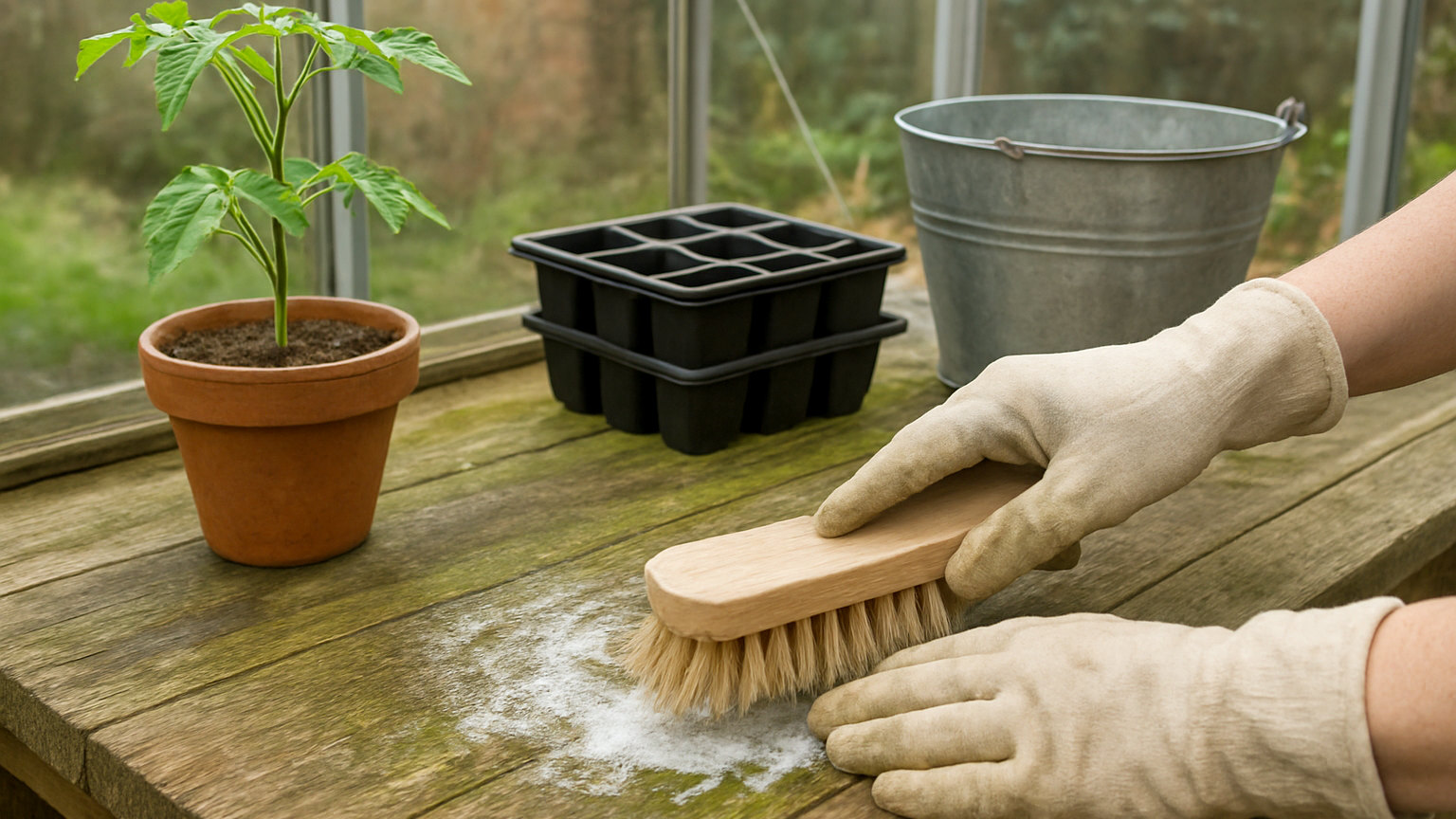
Scrub the frame, staging and shelving, paying attention to joints, corners and the underside.
Wash the floor and any gravel or matting.
Clean pots, trays and seed trays before they go back in.
Let everything dry thoroughly and ventilate well.
Through the season
Ventilate generously. Open vents and doors even in cool weather, and particularly in the afternoon so the air is drier overnight. This is the single most useful daily habit.
Remove dead and yellowing leaves promptly, since botrytis enters through dying tissue.
Clear fallen leaves and debris from the floor and staging.
Remove faded flowers.
Space plants so air moves between them.
Remove lower leaves on tomatoes and cucumbers to open the base of the plant.
Sweep the floor regularly.
Avoid damping down late in the day, since dry air at night is what suppresses botrytis and mildew.
Water
Use mains water for seedlings and cuttings rather than water butt water, which carries the organisms causing damping off.
Keep hose ends and can roses off the floor.
Clean out water butts and any tanks periodically.
Remove standing water and puddles.
Compost and pots
Use fresh compost each year for annual crops.
Do not reuse compost from a crop that succumbed to disease.
Store compost bags closed and off the floor.
Wash pots and trays between uses, since old root debris harbours damping off organisms.
Monitoring
Hang yellow sticky traps to detect whitefly early, and remove them before releasing any biological control.
Turn a few leaves over whenever you water, which catches red spider mite and whitefly at the point they are easy to deal with.
Inspect and quarantine new plants for two to four weeks before they join the others, since this is how most greenhouse infestations arrive.
Soil borders
Where crops are grown in a greenhouse border year after year, soil-borne diseases and eelworm build up.
Rotate what is grown, or replace the border soil periodically, or grow in containers and growbags with fresh compost.
Overwintering plants
Inspect anything brought in for winter, since it carries pests into a warm environment where they will breed.
Reduce watering, ventilate on mild days, and remove dead material promptly, since a cool damp greenhouse full of dormant plants is where botrytis does most damage.
The payoff
A thorough clean once a year and a few minutes of tidying each week prevents most of the problems that otherwise recur annually.
It also lets in more light, which matters a great deal for winter growing.
Safety when cleaning
Ventilate while using any disinfectant, and wear gloves and eye protection.
Take care on glass and on wet surfaces, and never stand on staging.
Check for overwintering wildlife before clearing out corners and log piles nearby, since amphibians and hedgehogs shelter in them.
Cold frames and propagators
The same applies at a smaller scale.
Clean them out annually, wash the covers, ventilate on mild days, and remove dead material promptly.


