
Hygiene is genuinely effective against a range of problems, and taken too far it removes the wildlife that would otherwise do the work. The skill is in knowing what to clear.
What to clear
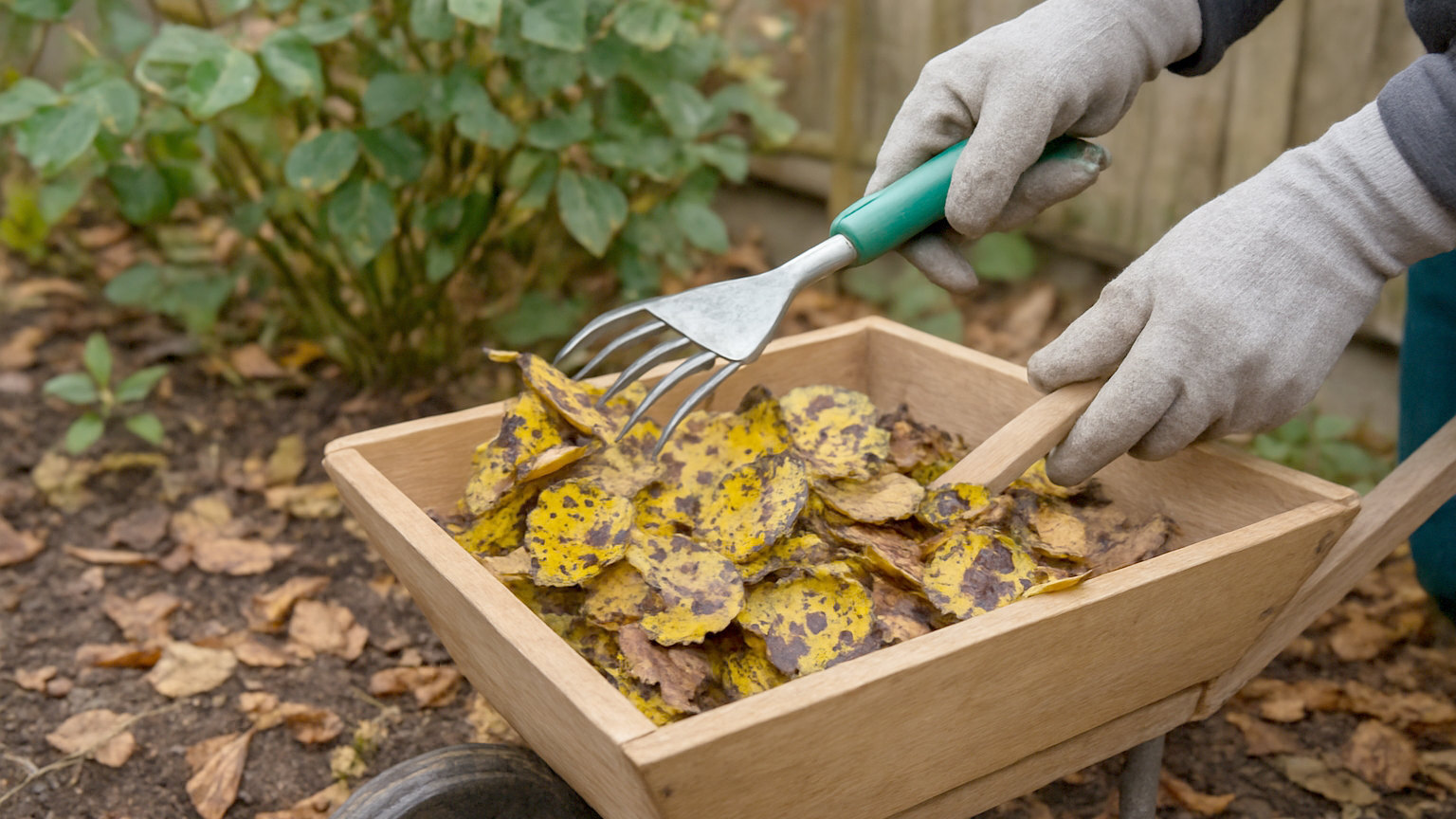
Fallen leaves of diseased plants. Rose black spot, apple scab, rust and many leaf spots overwinter on fallen leaves and reinfect in spring. Rake up and dispose of these rather than composting them.
Fallen and mummified fruit under trees, which carries brown rot and provides for codling moth and wasps.
Dead and diseased wood on trees and shrubs, which is where canker, coral spot and silver leaf establish.
Old crop debris in the vegetable garden: brassica stumps, tomato plants, potato haulm and bean stems, which harbour pests and diseases over winter.
Anything showing a persistent soil-borne disease: clubroot roots, white rot bulbs, wilted plants with vascular staining.
Debris around vulnerable plants: mulch and litter around hostas and delphiniums in late winter, which shelters slugs and their eggs at exactly the wrong moment.
Algae, moss and old compost from greenhouse surfaces and staging.
What to leave
Seedheads and hollow stems through winter, which shelter overwintering insects, feed birds and look superb under frost. Cut back in late February instead of autumn.
Fallen leaves in borders, where they rot down, feed the soil and shelter invertebrates. Clear them only from lawns and paths.
Log piles, long grass and a wild corner, which shelter ground beetles, hedgehogs, frogs, toads and slow worms, all of which eat pests.
Leaf litter under hedges and shrubs.
A garden cleared to bare soil in autumn removes almost all of the overwintering predators along with the pests.
The timing question
The traditional autumn tidy-up conflicts with wildlife.
The resolution is selective: clear diseased material and crop debris in autumn, and leave general herbaceous growth until late winter.
That gets the disease benefit without the ecological cost.
Disposal
This matters as much as the clearing.
Do not compost diseased material, perennial weed roots, weeds in seed, or anything with a persistent soil-borne disease. A domestic heap rarely reaches a temperature that kills them.
Options: municipal green waste collection, where material is composted at high temperature; burning where permitted and where local rules allow; or a household waste facility.
Listed invasive plants are controlled waste and must go to a licensed facility.
Never tip garden waste over a fence, into a hedgerow, a ditch or a watercourse, which is how most invasive plants escaped.
Containers and pots
Wash pots and trays between uses in hot soapy water, and rinse.
Old compost and root debris in a reused tray is a common source of damping off.
Do not reuse compost that has grown a diseased crop.
Water
Use mains water for seedlings and cuttings rather than stored rainwater, which can carry the water moulds causing damping off and root rots.
Keep the hose end and can rose off the ground.
Clean out water butts periodically.
Handling plants
Work among dry plants rather than wet ones, since many fungal and bacterial diseases spread in water films and on hands.
Deal with healthy areas before diseased ones.
Wash hands between handling diseased and healthy plants, particularly with tomatoes and viruses.
A proportionate routine
Clear diseased leaves and fruit as they appear rather than in one autumn effort.
Clear crop debris at the end of each crop.
Clean pots and the greenhouse annually.
Leave the borders standing until February.
Keep a corner untidy on purpose.
That combination gets almost all of the disease benefit while keeping the predators that deal with the pests.
Handling infected material
Carry it in a bag or a barrow rather than across the garden in your arms, which scatters spores and fragments.
Wash hands afterwards, and disinfect tools used on diseased plants.
Do not shred diseased prunings for use as mulch, which distributes the problem across the garden.
Fallen leaves in autumn
Clear them from lawns and paths, where they kill grass and cause slips.
Leave them in borders unless the plant they came from was diseased.
Rake up rose and apple leaves specifically, since black spot and scab overwinter on them and reinfect in spring.
Dispose of those rather than composting them in a domestic heap.


