
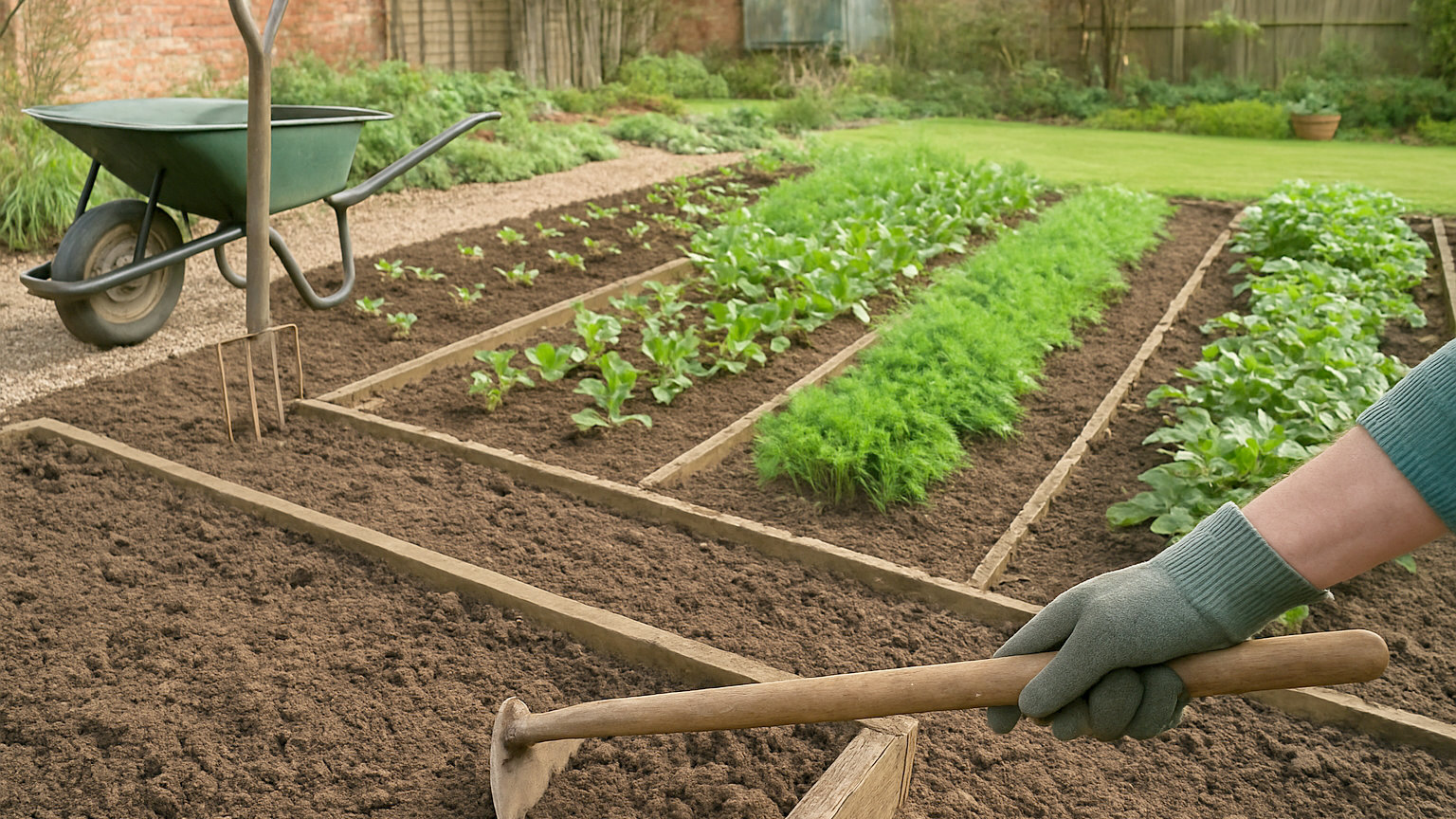
Growing the same crop in the same ground year after year allows its specific pests and diseases to build up, and depletes the same nutrients. Rotation addresses both.
The groups
Crops are grouped by family, since related plants share problems.
Legumes: peas, broad beans, French and runner beans. They fix nitrogen, leaving the ground enriched.
Brassicas: cabbage, sprouts, kale, broccoli, cauliflower, swede, turnip, radish, rocket. Share clubroot, cabbage root fly and caterpillars.
Roots and umbellifers: carrots, parsnips, celery, celeriac, parsley, fennel. Share carrot fly.
Potatoes and tomatoes: the potato family, sharing blight and eelworm.
Alliums: onions, garlic, leeks, shallots. Share white rot and allium leaf miner.
Some crops sit outside the rotation: sweetcorn, courgettes, squashes, salads and most herbs, which can be fitted in where convenient.
A workable cycle
A four-year rotation is the usual recommendation, with the plot divided into four beds.
Year one: legumes, which fix nitrogen.
Year two: brassicas, which follow legumes and use the nitrogen left behind. Lime this bed if needed for clubroot.
Year three: potatoes, which benefit from manured ground and break up the soil.
Year four: roots and alliums, on ground not freshly manured, since carrots and parsnips fork in rich soil.
Then begin again.
A three-year cycle works where space is limited, and longer is better where a soil-borne disease is present.
Fitting it to reality
Few gardens grow equal quantities of each group, and a rigid plan rarely survives contact with what you actually want to eat.
The principle that matters is simply not growing the same family in the same place in consecutive years, and leaving as long as possible before returning.
Keep a plan on paper, since nobody remembers what was where two years ago.
Draw the beds and note each year's crops. This takes minutes and is the whole administrative burden.
What rotation prevents
Build-up of soil-borne pests and diseases specific to a crop group.
Depletion of particular nutrients.
Some benefit from different rooting depths breaking up the soil in different ways.
Weed problems, since different crops and their cultivation suppress different weeds.
What rotation will not fix
This is important and frequently overstated in gardening advice.
Clubroot persists in soil for up to about twenty years, far longer than any garden rotation. Rotation slows the build-up and does not solve it.
Onion white rot persists for fifteen years or more.
Verticillium and fusarium wilts persist for years and have wide host ranges.
Airborne problems including blight, mildews and most insect pests are unaffected by rotation, since they arrive each year regardless.
In a small garden, spores and soil move between beds easily, so the separation is less complete than the plan suggests.
Where a persistent soil-borne disease is present, the answers are resistant varieties, raising plants in pots, liming for clubroot, and growing in containers or fresh compost.
Practical measures alongside
Raise plants in modules and plant out sturdy specimens.
Use resistant varieties, which are increasingly available.
Remove crop debris at the end of each crop rather than leaving it.
Clean boots and tools between an infected area and clean ground.
Buy plants from a clean source, or raise your own.
Green manures in the cycle
Fit a green manure into any bed that would otherwise stand empty, particularly over winter.
Note that mustard and fodder radish are brassicas and must fit the rotation accordingly.
In a very small plot
Full rotation may be impossible, and doing what you can still helps.
Move crops as far as space allows, use containers for the most vulnerable, and rely more heavily on resistant varieties and good hygiene.
Growing a wide range in small quantities is itself a protection, since no single problem takes the whole plot.
Manure and the cycle
Manure the bed for potatoes and brassicas, and avoid manuring the bed that will grow carrots and parsnips, which fork in rich ground.
Lime the brassica bed if the pH needs raising, and not in the same season as manuring, since the two react and waste nitrogen.
Keeping the plan
A simple sketch of the beds each year, kept with the seed tin, is all that is required.
Note what was grown, what was manured or limed, and any problem that appeared, which makes the following year's plan straightforward.


