
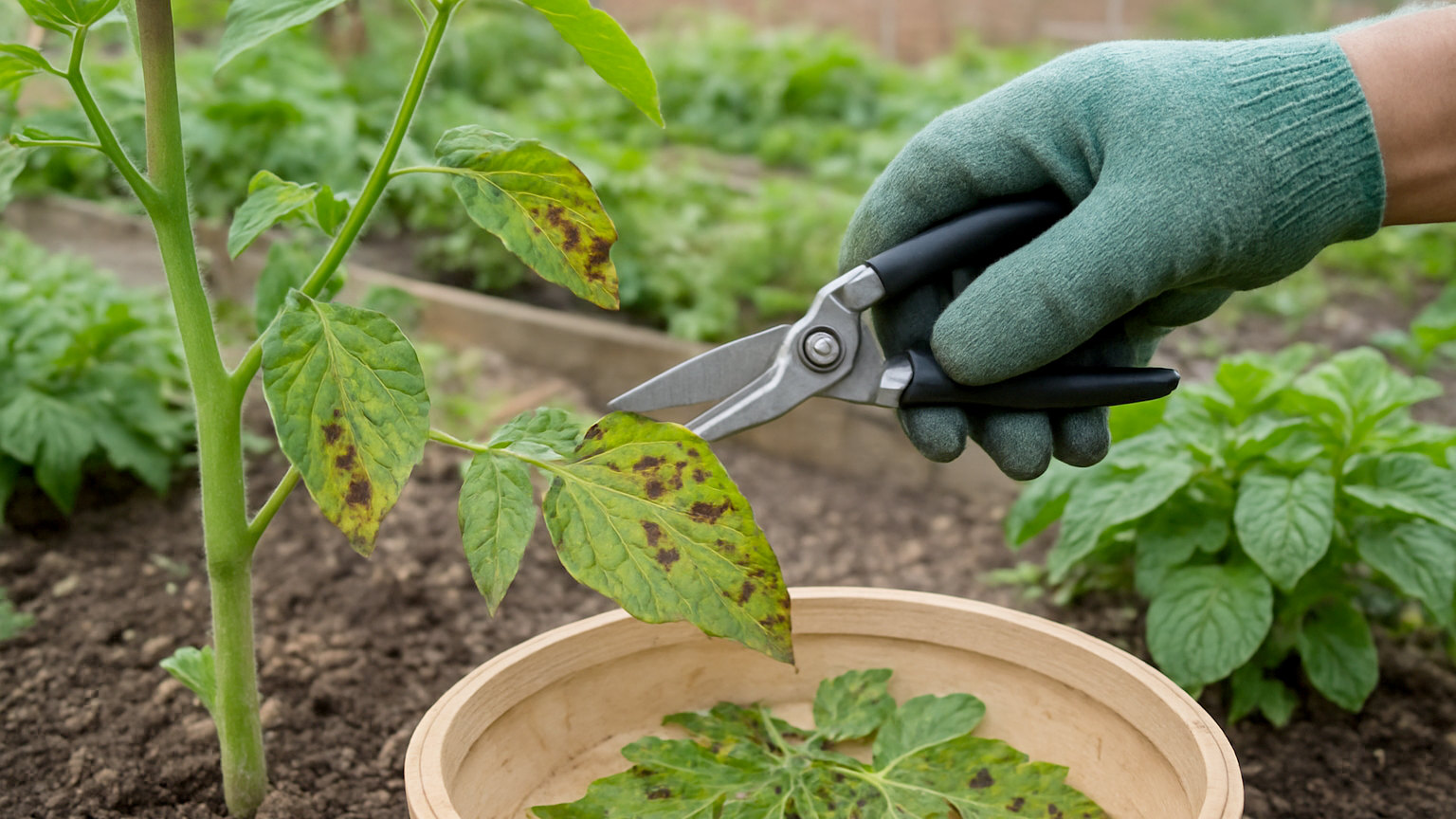
Late blight is the same organism on both potatoes and tomatoes, it arrives in warm humid weather from about July, and it moves fast. There is no cure once it takes hold in a garden, so everything useful is about recognition, prompt action and avoiding it next time.
Recognising it
On potato foliage, dark brown or black patches appear on the leaves, often starting at the tips and edges, sometimes with a pale yellowish halo. In humid conditions a fine white mould may show on the leaf undersides. Within days the patches spread, the stems blacken and the whole plant collapses.
On tomatoes the leaf symptoms are similar, and the fruit develops firm brown patches that spread and eventually rot. Stems develop dark lesions.
Potato tubers show reddish-brown staining under the skin and rot in storage, often taking the rest of the sack with them.
It moves remarkably quickly. A crop can go from healthy to collapsed within a week in the right weather.
What to do immediately
Cut all the potato foliage off at ground level the day you identify it, and remove it. This stops spores washing down into the soil and infecting the tubers.
Then leave the tubers in the ground for two or three weeks before lifting, which allows any spores on the soil surface to die. Lift on a dry day, and store only completely undamaged tubers.
For tomatoes, remove and destroy affected plants entirely. If fruit is nearly ripe and only the foliage is affected, picking it immediately and ripening indoors may save some.
Never compost blighted material. Bin it or burn it, since a home compost heap will not reach a temperature that destroys the spores, and spreading that compost the following year reintroduces the problem.
Avoiding it
Timing does most of the work with potatoes. First and second earlies are lifted in June and July, before blight is usually a problem, and largely escape it. Maincrop potatoes sit in the ground through the blight season, which is a substantial argument for growing earlies in a small garden.
For tomatoes, growing under cover is the most effective measure by a distance. Greenhouse tomatoes very largely avoid blight because the foliage stays dry, whereas outdoor tomatoes in a wet British summer frequently succumb.
Resistant varieties
Blight-resistant varieties have improved enormously and are worth choosing deliberately. The Sarpo potato varieties are well known for resistance, and several resistant outdoor tomato varieties are now available.
Resistance is not immunity, and it can be overcome by new strains of the disease, but it makes a large practical difference in a wet summer.
Cultural measures
- Space plants generously so air moves through and foliage dries quickly
- Water at the base, never over the foliage, and preferably in the morning
- Remove lower leaves on tomatoes to improve airflow
- Earth up potatoes well, since a good depth of soil over the tubers protects them from spores washing down
- Rotate, and never plant potatoes or tomatoes where either grew last year
- Remove every potato tuber at harvest, since volunteers left in the ground carry infection into the next season
Blight warnings
Blight requires specific conditions to develop, historically described as two consecutive days with a minimum temperature above ten degrees and high humidity for a sustained period.
Blight warning services publish alerts when those conditions occur in your area, and subscribing gives you a few days' notice. That is enough time to lift earlies, pick tomatoes or make a decision about cutting foliage.
Storing potatoes after a blight year
Check stored tubers every few weeks and remove any showing rot immediately, since one infected potato will spoil an entire sack. Store only completely sound, undamaged tubers in paper or hessian somewhere cool, dark and frost free, and never store anything lifted from a plant that had blight on the foliage without inspecting it carefully first.
Chemical control
The protectant fungicides once available to amateur gardeners have largely been withdrawn from home garden use in the UK. In practice this means cultural control and resistant varieties are the realistic options, which is why they receive so much emphasis here.
Anything remaining in a shed from previous years should not be used and should go to a household hazardous waste facility.


