
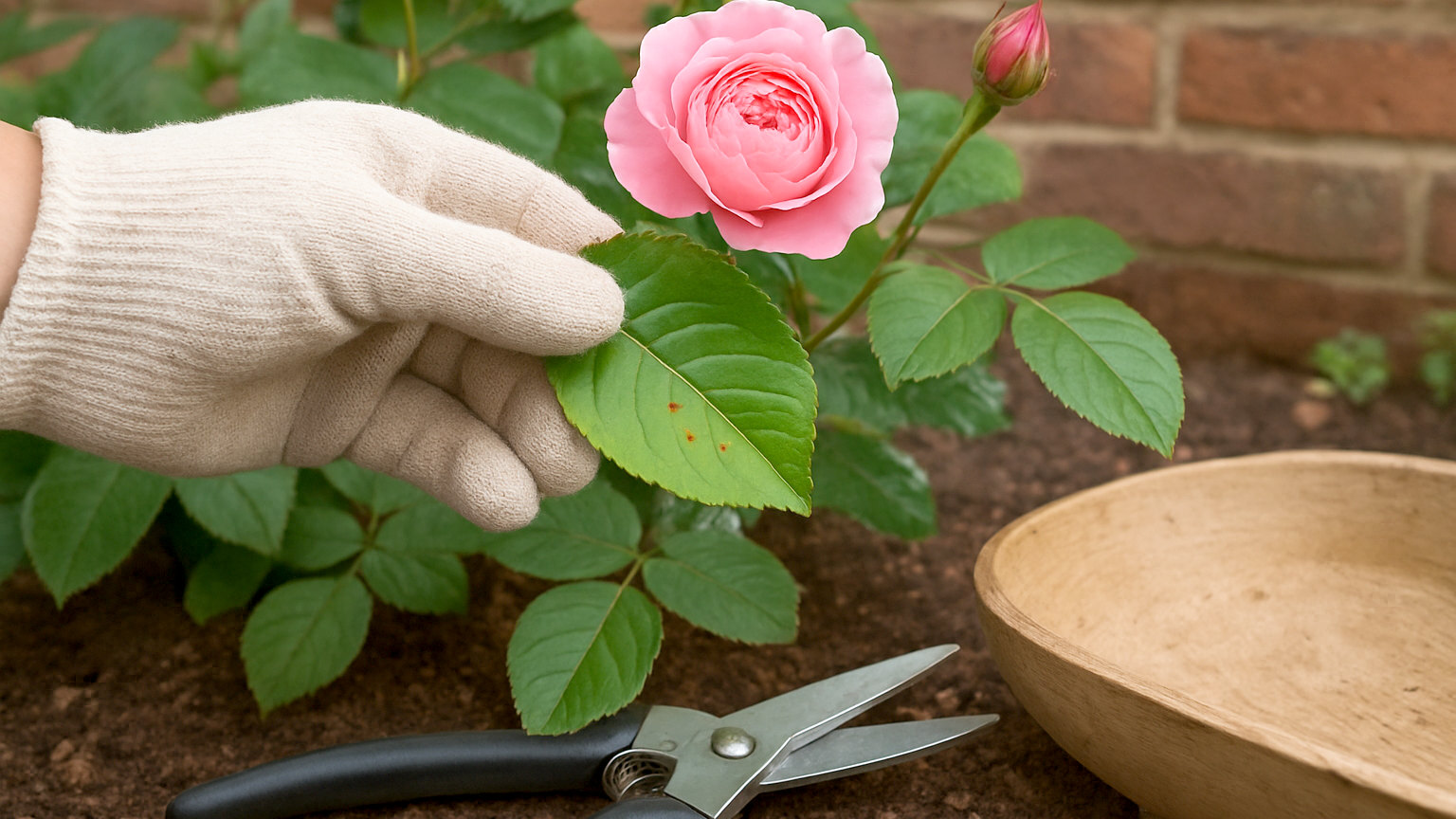
Rusts are among the most recognisable plant diseases: raised pustules of orange, brown or yellow spores, usually on the undersides of leaves, with corresponding pale spots above.
Recognising rust
Powdery pustules that rub off onto a finger, usually on leaf undersides.
Pale yellow or orange spots on the upper surface directly above them.
Colours vary from bright orange through brown to almost black late in the season, since many rusts produce different spore stages.
Heavy infection causes yellowing, early leaf fall and weakened growth.
Host specificity
Rusts are highly specific. The rust on your hollyhocks will not infect your roses, and leek rust will not affect anything outside the onion family.
This matters practically: a rusted plant is not a threat to unrelated plants nearby.
Some rusts require two different host species to complete their life cycle, which is why removing an alternate host occasionally helps.
Common garden rusts
Hollyhock rust is almost universal and can defoliate plants entirely. Remove affected leaves as they appear, clear all material in autumn, and treat hollyhocks as short-lived, replacing them regularly.
Leek and onion rust produces bright orange pustules on the leaves. Usually cosmetic on leeks unless severe, and the crop is still edible. Avoid high nitrogen feeding, space plants well and rotate.
Rose rust is less common than black spot and causes orange pustules and leaf fall. Remove affected leaves and clear fallen material.
Mint rust distorts and kills shoots. It persists in the roots, so affected plants are best destroyed and replaced with fresh stock in a new position.
Pear rust produces bright orange spots on pear leaves and requires juniper as its alternate host. Removing nearby junipers can help, and is often impractical.
Fuchsia, antirrhinum, chrysanthemum, plum and blackberry rusts all occur regularly.
Conditions that favour it
Warm humid weather with wet foliage.
Crowded planting with poor air movement.
Soft sappy growth from excessive nitrogen.
Overhead watering and prolonged leaf wetness.
Cultural control
Remove affected leaves as soon as they appear, which slows the build-up considerably.
Clear all fallen leaves and affected material in autumn, since most rusts overwinter on debris or on the plant.
Cut down and dispose of affected herbaceous growth rather than leaving it standing.
Do not compost heavily rusted material in a domestic heap.
Improve air movement by spacing plants properly and thinning congested growth.
Water the soil rather than the foliage, and water in the morning.
Avoid high-nitrogen feeds, which produce susceptible growth. A balanced or high-potash feed is better.
Rotate vegetable crops, particularly alliums.
Choose resistant varieties where they are available, which is increasingly the case for roses, antirrhinums and some vegetables.
How serious is it
Rusts rarely kill established plants.
They reduce vigour, cause early leaf fall and spoil appearance, and a plant defoliated repeatedly year after year will decline.
On leeks and other crops the produce remains perfectly edible.
The judgment is whether the plant is worth the annual effort. Hollyhocks and mint in particular are frequently easier to replace than to treat.
Treatment
Most fungicides formerly available to amateurs have been withdrawn, and cultural measures are the main option.
Where any product is used, the label is a legal document and must be followed exactly.
Living with it
Accept a degree of rust on plants that reliably get it, remove the worst leaves, feed and water well so the plant grows through it, and clear up thoroughly in autumn.
Where a plant is ruined every year, replace it with something that is not susceptible, which is usually the better answer.
Rust on lawns
Grass rust appears as orange dust on the leaf blades, coming off on shoes and mower.
It usually indicates grass under stress: drought, poor nutrition or a late-season slowdown.
Feed, water and mow regularly, and collect clippings while it is present. It generally disappears once the grass is growing strongly again.
Why removing leaves works
Each pustule produces enormous numbers of spores, and infection builds through the season from a small start.
Removing the first affected leaves as they appear cuts the source before it multiplies, which is far more effective than acting once the whole plant is covered.
Dispose of them rather than dropping them beside the plant.


