
Root rots kill more garden shrubs and container plants than any leaf disease, and the symptoms above ground look so much like drought that plants are frequently watered to death.
The critical symptom
A plant wilting while the soil is wet has damaged roots.
Rotted roots cannot take up water, so the plant wilts exactly as if it were dry.
The instinctive response of watering more finishes it.
Always check the soil before watering a wilting plant. If it is moist, the problem is at the roots.
Other symptoms
Yellowing foliage, poor growth and sparse small leaves.
Dieback of shoots, starting at the tips.
Sudden collapse of an apparently healthy plant, particularly in a container.
Gradual decline over one or two seasons in a shrub or a tree.
Dark discolouration at the base of the stem, sometimes with bleeding or oozing on woody plants.
What the roots look like
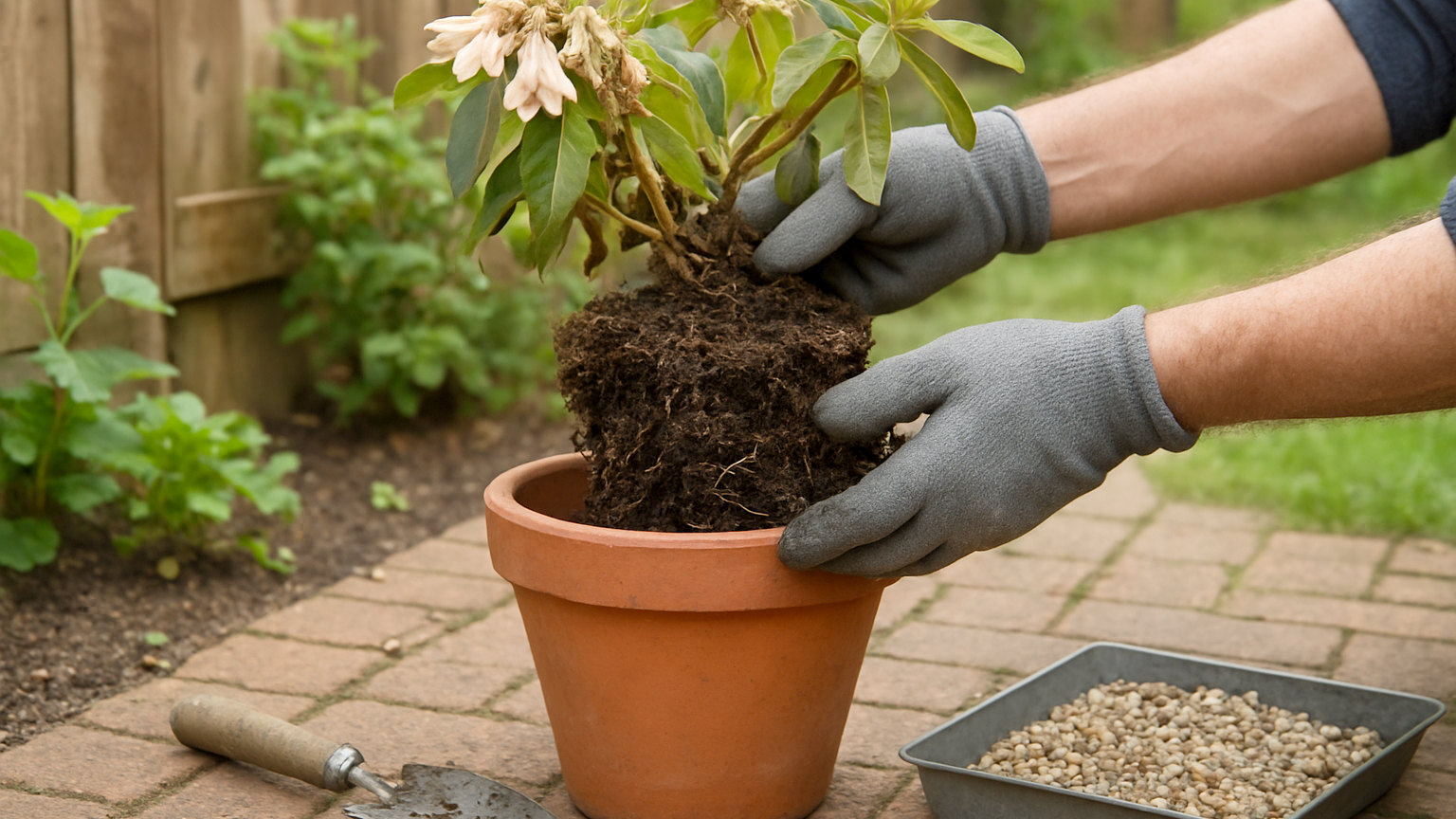
Dig or knock the plant out of its pot and look.
Healthy roots are firm, pale and well distributed, with fine white tips.
Rotted roots are dark brown or black, soft, sparse, and the outer layer slips off when pulled, leaving a thread of central tissue.
There is often a sour or foul smell.
A distinct reddish-brown discolouration where the root joins the stem is characteristic of Phytophthora on woody plants.
What causes it
Phytophthora species are water moulds with swimming spores, so they need free water in the soil to spread and infect.
Pythium causes similar rots, particularly on young plants and in containers.
Waterlogging alone kills roots by excluding oxygen, without any pathogen involved, and produces identical symptoms.
The two frequently occur together, since waterlogged soil both kills roots and enables the organism.
Drainage is the answer
Almost everything that prevents root rot comes down to keeping roots out of standing water.
Improve drainage before planting on heavy ground, and consider a raised bed where the soil is persistently wet.
Plant at the correct depth, with the root collar at soil level. Planting too deep is a very common cause of decline in trees and shrubs.
Do not create a sump: a planting hole dug in clay and backfilled with compost fills with water and holds it around the roots.
Raise containers on feet, remove saucers in winter, and check drainage holes are clear.
Use free-draining compost and add grit for anything that resents wet.
Water thoroughly and less often rather than a little every day.
Do not mulch or heap soil against stems and trunks.
Hygiene
Phytophthora spreads in water, soil and on plant material, boots and tools.
Use clean pots and fresh compost.
Use mains water for seedlings and cuttings rather than stored rainwater, which can carry these organisms.
Do not move soil from an affected area.
Clean boots and tools between areas where a problem is known.
Inspect new plants, since infected nursery stock is a common route in.
Susceptible plants
Many woody plants are vulnerable, and some notably so: rhododendron, azalea, camellia, pieris, yew, lawson cypress, beech, apple, cherry, raspberry and box.
Bedding, seedlings and container plants are vulnerable to Pythium in wet compost.
What can be done
There is no chemical control available to gardeners.
An affected plant with substantial root loss will not recover, and should be removed.
Where damage is slight, improving drainage, reducing watering and reducing the top growth to balance the reduced root system occasionally allows recovery.
Remove and dispose of affected plants and the soil immediately around the roots.
Do not replant a susceptible species in the same position, and improve the drainage before replanting anything.
Notifiable species
Some Phytophthora species affecting trees and shrubs are subject to statutory control and must be reported.
If a tree or a large shrub is dying with bleeding lesions on the trunk, seek an identification rather than assuming.
Distinguishing it from honey fungus
Both kill woody plants and produce similar decline above ground.
Honey fungus shows white mycelium beneath the bark, smelling strongly of mushrooms, and black bootlace rhizomorphs in the soil.
Phytophthora shows dark rotted roots and a reddish-brown discolouration at the root collar, and is strongly associated with wet ground.
The distinction matters, since the response and the replanting advice differ.


