
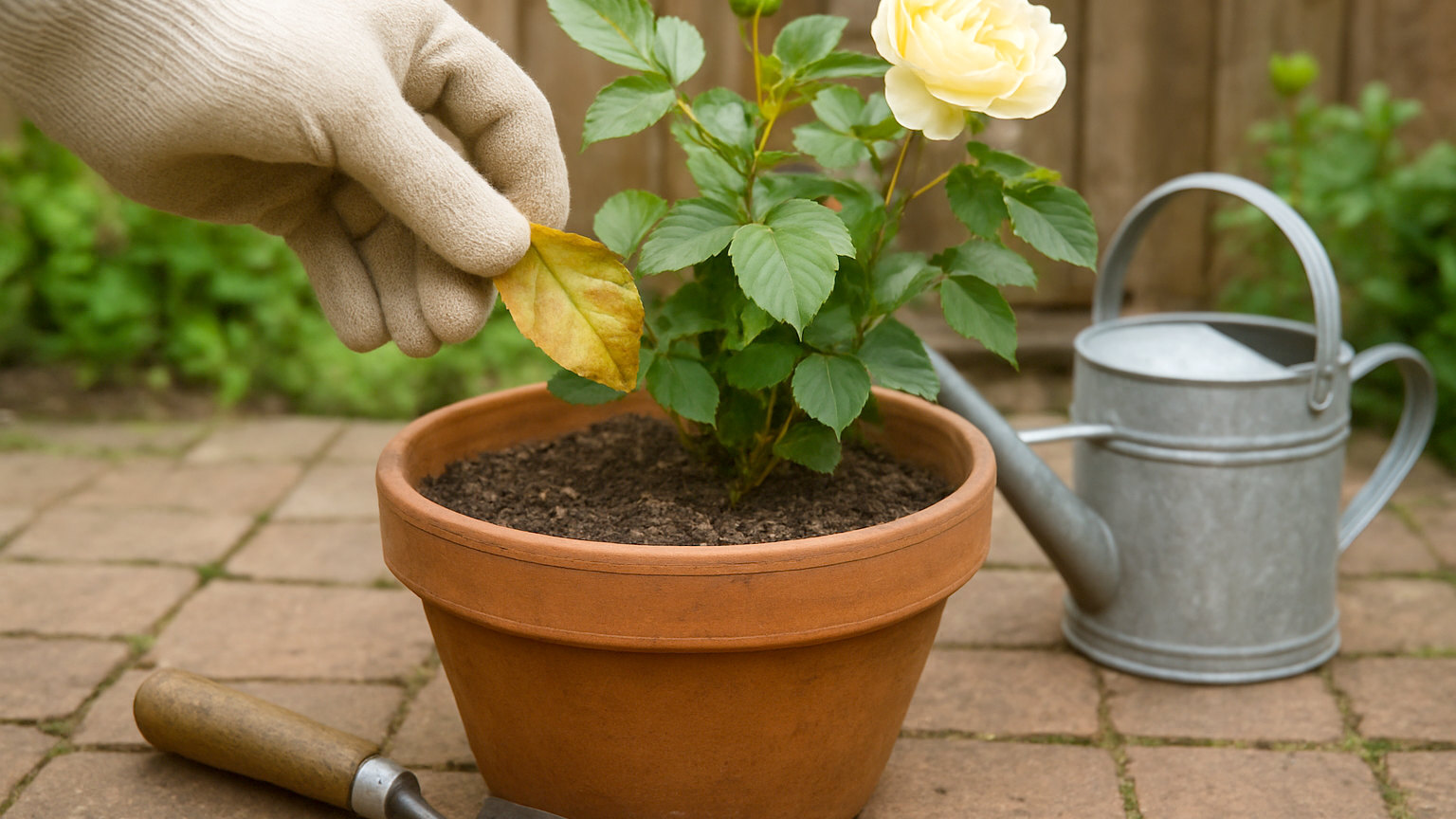
Most plant problems brought to a nursery counter turn out not to be diseases at all. Establishing what is actually wrong matters, because a cultural problem does not respond to a treatment and a treatment does not fix a cultural problem.
The first question: how is it distributed
Damage affecting many plants of different species at once, uniformly, is almost always environmental.
Pathogens are generally specific. A fungus attacking roses does not attack hostas.
So if everything in a border shows brown edges at the same time, look at the weather, the watering and the soil rather than at disease.
Damage confined to one species, spreading gradually from a starting point, suggests a pathogen.
Environmental causes that mimic disease
Drought: wilting, browning leaf edges and tips, early leaf fall, small leaves. Frequently delayed, so the damage appears weeks after the dry spell.
Waterlogging: yellowing, wilting despite wet soil, root death, sudden collapse. The symptoms resemble drought because damaged roots cannot take up water.
Frost: blackened or brown young growth, distorted leaves, damage on the exposed side only, and often on the side facing the morning sun where rapid thawing does the harm.
Wind scorch: brown leaf margins on the windward side, worst on evergreens in a cold dry spell.
Sun scorch: pale bleached patches, particularly on plants moved suddenly into full sun.
Nutrient deficiency: characteristic yellowing patterns. Yellow between green veins suggests iron or magnesium; overall pale yellowing suggests nitrogen.
Compaction and poor drainage: gradual decline over seasons rather than sudden symptoms.
Weedkiller damage
Common, frequently misdiagnosed and worth recognising.
Hormone weedkiller damage produces twisted, distorted, cupped or fan-shaped growth, with narrow strap-like leaves, usually on tomatoes, beans, roses and vines.
It can arrive by spray drift, by using a contaminated watering can or sprayer, or through manure or compost containing residues from treated pasture.
Glyphosate damage produces yellowing and distorted bleached growth from the growing points.
Damage is often on new growth only, and plants may grow out of it.
Physical and cultural causes
Ring-barking by strimmer, rabbit or vole, which kills a tree that appears healthy until midsummer.
Ties and stakes left too long, constricting the stem.
Planting too deep, which suffocates the root collar.
Root damage from digging or trenching nearby.
Container plants that are pot bound or standing in water.
When it is a disease
Look for signs of the organism itself rather than only the symptoms.
Fungal growth: powdery coatings, fluffy mould, pustules, spots with defined margins, bracket fungi, white mycelium under bark.
A spreading pattern, moving through a plant or from plant to plant of the same species.
Discolouration inside the stem when cut, which indicates a vascular disease.
Distinct lesions with clear edges rather than diffuse browning.
The questions to work through
Is it one species or many?
Is it the whole plant or one part, one side, or the newest growth?
Did it appear suddenly or gradually?
What has the weather done in the last few weeks?
Has anything been sprayed, fed, moved or planted nearby?
What are the roots and the soil like? Dig and look, since a large proportion of above-ground symptoms originate below.
Before treating anything
Most fungicides once available to gardeners have been withdrawn, and for many diseases there is no treatment available at all.
Cultural measures do the work: correct siting, good drainage, air movement, hygiene, resistant varieties and removing affected material.
Identifying correctly is therefore not a preliminary to treatment but the main thing that determines the outcome.
Photograph the symptoms, including a whole plant and a close-up, and seek an identification if uncertain.
Dig and look
A large proportion of above-ground symptoms come from below ground, and the roots are the part nobody inspects.
Knock a container plant out of its pot, or dig carefully beside a struggling plant in a border.
Healthy roots are firm and pale. Dark, soft, sparse or foul-smelling roots indicate waterlogging or a root disease, and explain symptoms that look like drought or nutrient deficiency above.
Keep a record
Note when symptoms appeared, on what, and what the weather and your own activity had been doing.
Patterns emerge over a season that are invisible in a single observation, and next year you will know when to expect it.


