
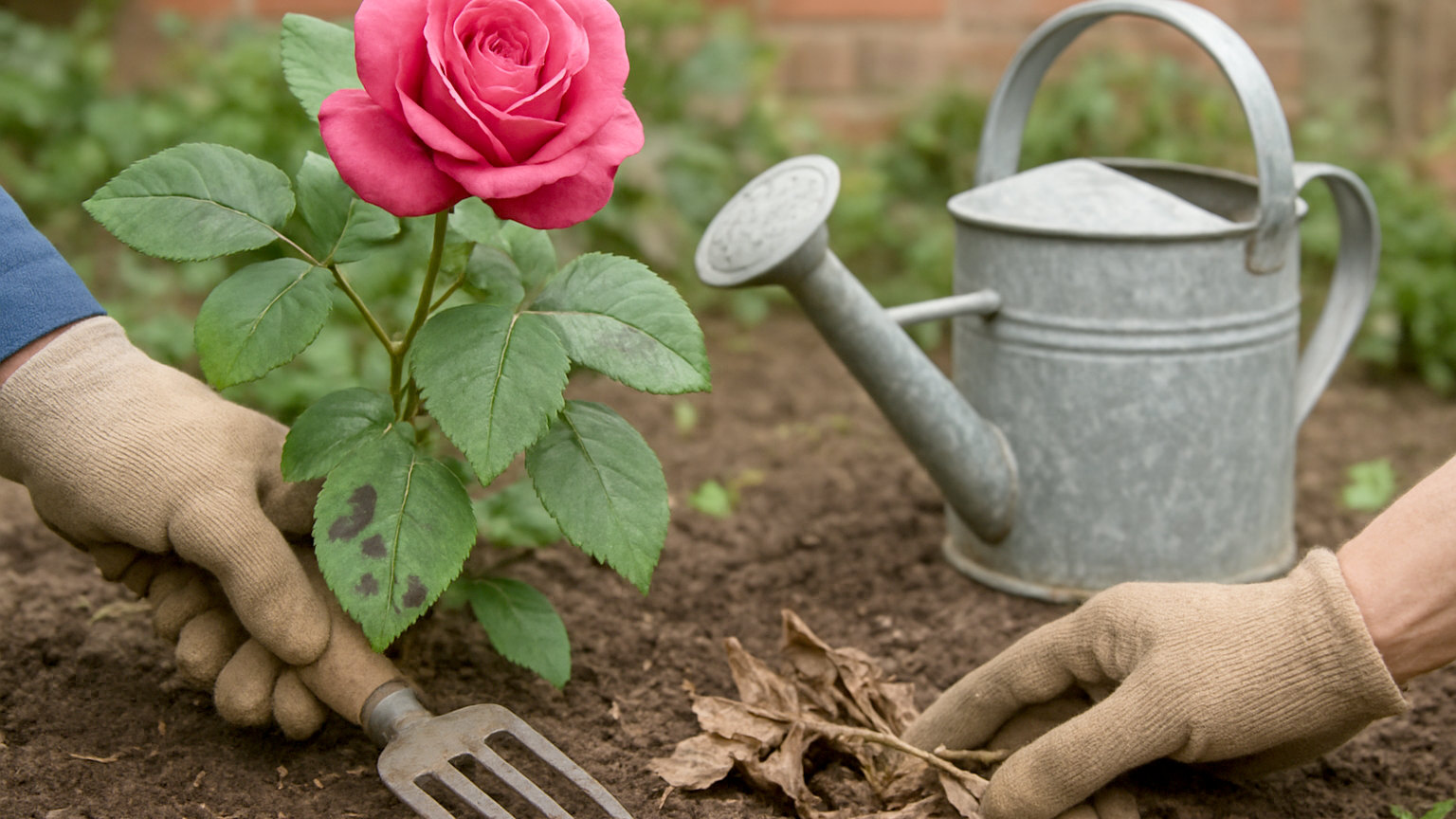
These are the two fungal problems most gardeners meet, and both respond far better to changing conditions than to anything sprayed on. The single most useful fact about mildew is that it is a symptom of dry roots, not wet ones, which is the opposite of what people assume.
Powdery mildew
A white or greyish dusty coating on leaves, stems and sometimes flowers, looking as though the plant has been lightly floured. It usually starts on the upper leaf surface and spreads.
Badly affected leaves yellow, curl and drop. It rarely kills an established plant but it weakens it, reduces cropping and looks poor from midsummer onwards.
It is common on courgettes and squash, roses, Michaelmas daisies, phlox, apples, gooseberries and honeysuckle.
Why dry roots cause it
Powdery mildew thrives where roots are dry and the air around the foliage is humid. That combination is exactly what you get against a wall, in a crowded border, or in a container that has been allowed to dry out.
The practical consequences follow directly. Water thoroughly and consistently at the base of the plant, mulch to hold moisture in the soil, and improve airflow around the foliage by spacing plants properly and thinning congested growth.
Do not water over the leaves, which raises humidity around them without helping the roots.
Black spot on roses
Black or dark purple blotches with fringed, irregular edges, usually starting on lower leaves. The surrounding leaf yellows and falls, and a bad case defoliates a rose by late summer.
It overwinters on fallen leaves and on the stems, which is why it returns to the same plant year after year.
The most effective measures are unglamorous. Clear and bin every fallen leaf from beneath the plant rather than composting them, since a home heap rarely gets hot enough to kill the spores. Prune out affected stems in late winter. Mulch in spring, which covers any spores remaining on the soil surface.
Choose resistant varieties
Rose varieties differ enormously in susceptibility, and modern breeding has improved this a great deal. Choosing a variety described as disease resistant saves far more effort than any spraying regime.
The same applies to courgettes, cucumbers, gooseberries and apples, all of which have mildew-resistant varieties available. This is the single most useful decision you make about either disease, and it is made at the point of purchase.
Practical measures for both
- Space plants at their mature spread so air can move between them
- Water at the base, thoroughly and regularly, rather than lightly and often
- Mulch to keep roots moist
- Avoid high-nitrogen feeds, which produce soft growth that is more susceptible
- Remove affected leaves promptly and bin them
- Clear fallen leaves in autumn from beneath susceptible plants
- Disinfect secateurs between plants when pruning affected material
If you decide to spray
Fungicides approved for garden use are available and are protective rather than curative, meaning they prevent new infection rather than clearing what is already there. They therefore need applying early and repeatedly, which is a considerable commitment.
Read the label and follow it, since it is a legal instrument. Never spray open flowers or when bees are active, observe any harvest interval on edible crops, and note that approvals change and products are withdrawn regularly.
For most gardens, the cultural measures plus resistant varieties give a better result for less effort.
Distinguishing from downy mildew
Downy mildew is a different organism needing a different response. It shows as yellow blotches on the upper leaf surface with a greyish fuzzy growth underneath, and unlike powdery mildew it is worse in wet conditions.
Improve drainage and airflow, avoid overhead watering, and remove affected material. It is common on brassicas, onions and impatiens.
Grey mould, which is different again
Botrytis shows as fuzzy grey growth on dying tissue, particularly in cool damp conditions and under glass. Unlike the mildews it enters through damaged tissue, so removing dead flowers and leaves promptly is the main control, along with ventilation and avoiding overcrowding.
What to accept
A courgette plant with mildew in September has usually finished cropping anyway. A rose that loses some lower leaves in August will be fine next year if you clear the debris.
Neither disease warrants losing sleep over on an established plant late in the season, and it is worth reserving effort for young plants and for anything you are growing to crop.


