
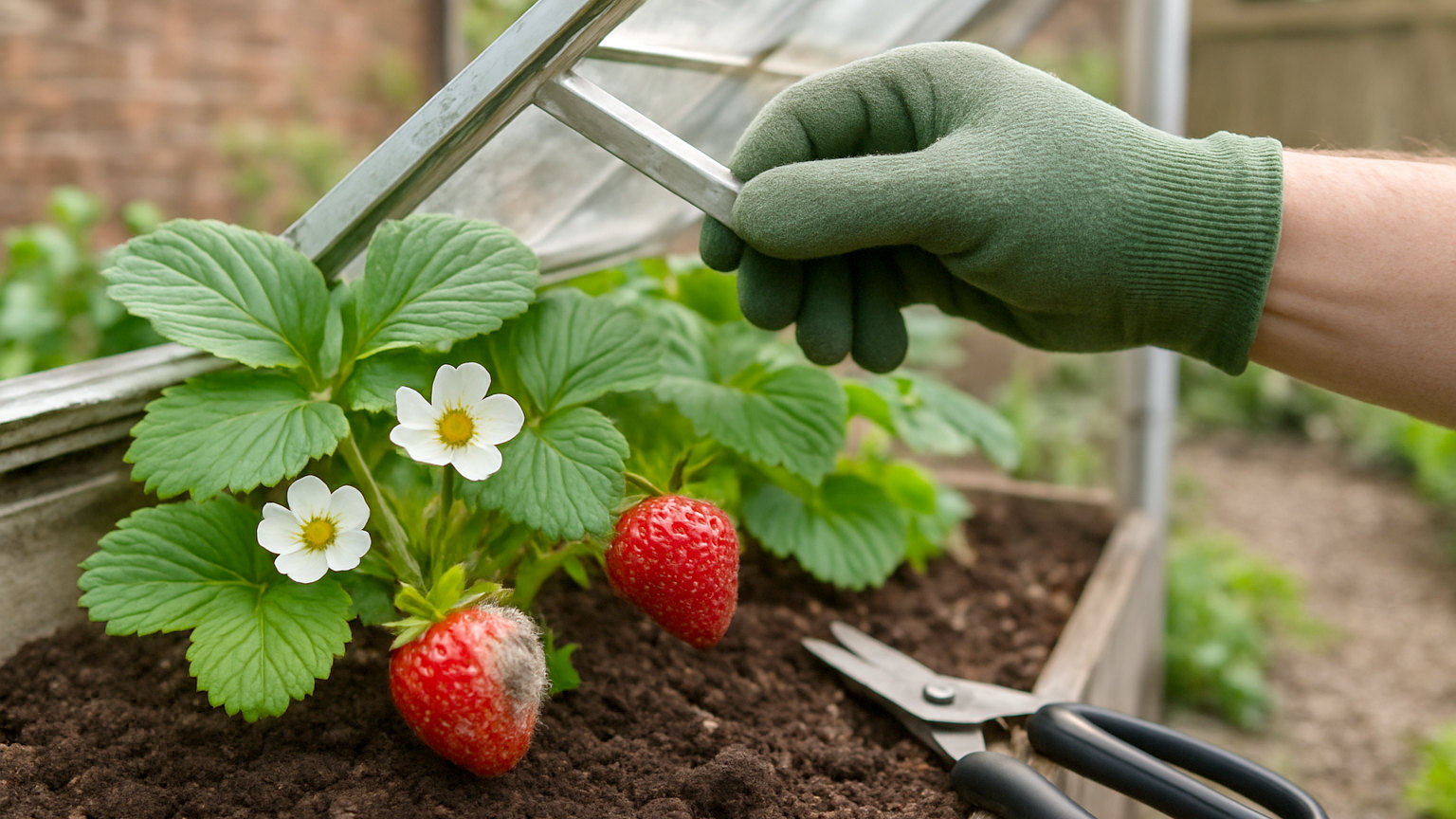
Grey mould is among the commonest fungal problems in gardens and greenhouses, and it is almost entirely a consequence of conditions rather than bad luck.
Recognising it
A fuzzy grey-brown mould on affected tissue, which puffs out clouds of spores when disturbed.
Soft brown rotting beneath the mould.
Ghost spotting on tomato fruit: pale rings on otherwise sound fruit where spores have landed and failed to develop.
Dieback of shoots from a rotted flower or a wound.
Small black resting bodies in old affected material, which carry the fungus over winter.
What it affects
Almost anything, and particularly soft tissue.
Strawberries, raspberries, grapes, tomatoes and other soft fruit.
Petals of roses, peonies, camellias and anything with dense flowers in wet weather.
Seedlings and cuttings under cover.
Lettuce, courgettes and cucumbers at the stem base.
Bulbs, corms and tubers in store.
How it gets in
It usually enters through dead, damaged or dying tissue rather than attacking healthy growth directly.
Fading petals, damaged fruit, pruning wounds, frost-damaged shoots and snapped leaves are all entry points.
Once established in dead tissue it spreads into healthy growth beside it.
This is why removing dead material makes such a difference.
The conditions it needs
High humidity and still air.
Cool damp weather, and the same conditions under glass.
Crowded planting with no air movement between plants.
Wet foliage overnight.
It is most damaging in a cool wet summer, in a closed greenhouse, and in autumn.
Ventilation and spacing
Air movement is the single most effective control.
Ventilate greenhouses and tunnels generously, opening vents and doors even in cool weather, and particularly in the afternoon so the atmosphere is drier overnight.
Space plants properly so air passes between them.
Remove lower leaves on tomatoes and cucumbers to open the base of the plant.
Thin congested growth on fruit and ornamentals.
Avoid damping down late in the day under glass, since the point is to have dry air at night.
Watering
Water the soil rather than the foliage.
Water in the morning so the surface and any splashed foliage dry before evening.
Avoid overhead watering entirely where botrytis is a problem.
Hygiene
Remove faded flowers, dead leaves and damaged fruit promptly and regularly. This removes both the entry points and the spore source.
Clear fallen debris from beneath plants and from the greenhouse floor.
Cut out affected shoots well back into healthy tissue, disinfecting secateurs between cuts.
Do not leave affected material lying about, and dispose of it rather than composting it in a domestic heap.
Clean the greenhouse thoroughly at the end of the season, including the glass, frame and staging.
Protecting fruit
Mulch strawberries with straw or mats so the fruit does not touch damp soil.
Pick promptly and remove any damaged or rotting fruit immediately, since one infected berry spreads to those touching it.
Thin grape bunches to improve air movement within them.
Handle fruit carefully, since bruising creates entry points.
Seedlings and cuttings
Sow and space thinly, ventilate propagators, and remove any seedling that collapses at once.
Use clean pots and fresh compost, and avoid watering late in the day.
Remove lower leaves from cuttings so nothing rots against the compost.
Storage
Store only sound undamaged produce, in a cool airy place, checking regularly and removing anything showing mould.
Treatment
There is little available to gardeners, and cultural measures are the whole answer.
Ventilation, spacing, careful watering and prompt removal of dead material control it in almost every situation.
Why it appears suddenly
Spores are always present in the air, and the fungus only needs the right conditions and an entry point.
A cold wet spell, a frost that damages young growth, or a period of still humid weather can produce an outbreak within days on plants that looked perfect a week earlier.
This is why the response is to change the conditions rather than to look for how it arrived.
Frost and botrytis
Frost-damaged tissue is a classic entry point, so a late frost is frequently followed by grey mould on the damaged shoots.
Cut damaged growth back to healthy tissue promptly rather than leaving it, which removes the entry point before the fungus establishes.
The same applies to snapped stems, hail damage and any wound.


