
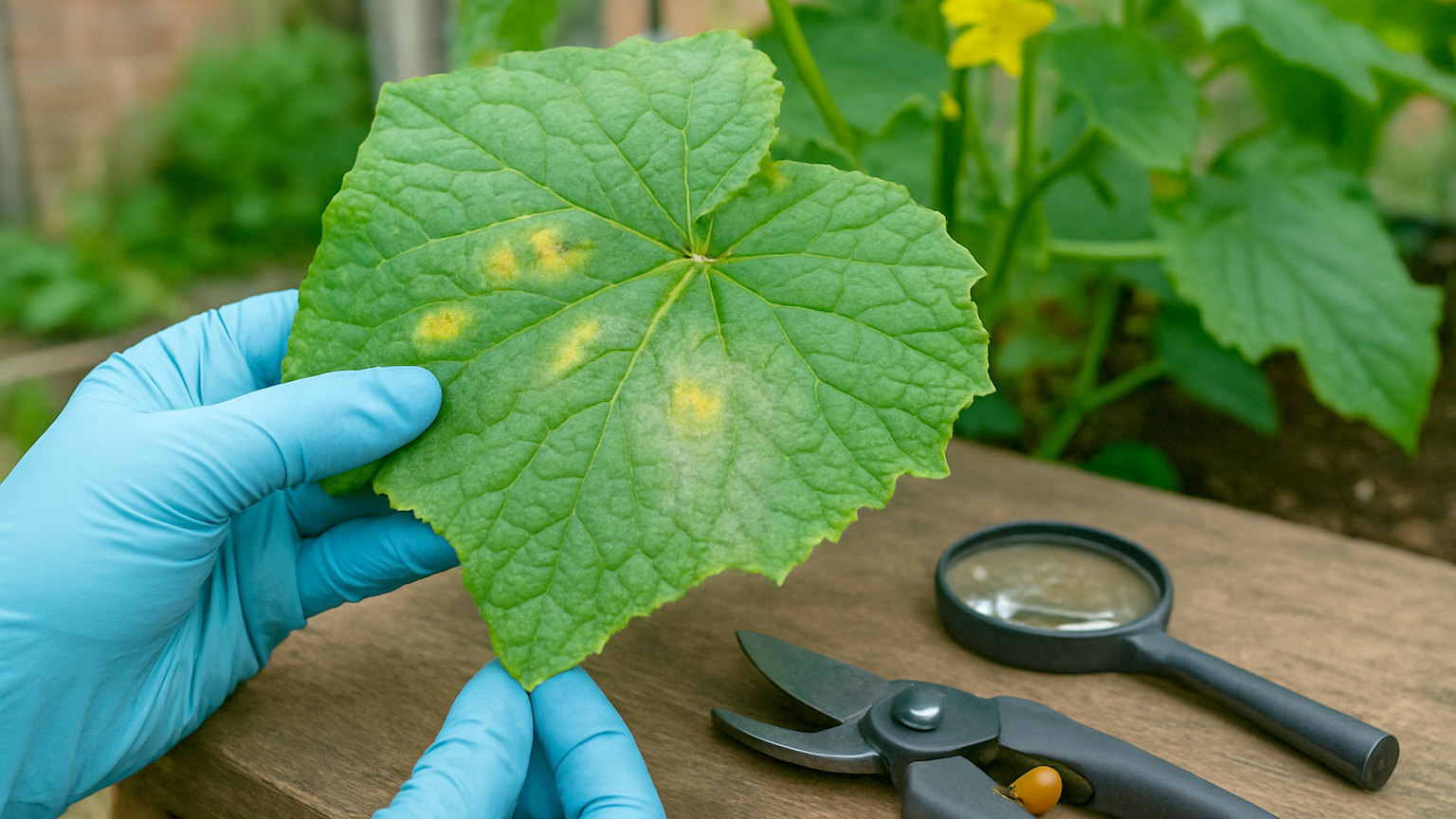
Downy mildew is regularly confused with powdery mildew, and the two are biologically different and need opposite conditions. Getting them the wrong way round leads to exactly the wrong response.
Telling the two apart
Powdery mildew is a true fungus. It appears as a white powdery coating on the upper leaf surface, and it is worst when the roots are dry and the air is humid. Watering the plant helps.
Downy mildew is a water mould. It produces pale angular patches on the upper surface, bounded by the leaf veins, with a fine grey, purplish or white fuzzy growth on the underside directly beneath. It requires wet conditions.
The angular patches limited by veins are the most reliable field character.
What it affects
Downy mildews are host-specific, so each is confined to a particular group.
Impatiens downy mildew has been severe, causing sudden collapse and defoliation of bedding busy lizzies. Resistant varieties are now available and are worth seeking out.
Lettuce, with yellow patches and grey growth beneath, particularly in autumn crops.
Brassicas, especially seedlings and young plants under cover.
Onions, which can be seriously affected in wet seasons.
Grapes, causing oily patches and fruit loss.
Hebe, pansies, foxgloves, poppies, spinach, peas and many others.
Conditions it needs
Persistent leaf wetness, which the swimming spores require in order to infect.
Cool to moderate temperatures with high humidity.
Still air and crowded planting.
Overhead watering and prolonged damp weather.
It is generally worse in a cool wet season, unlike powdery mildew.
Control
Reduce leaf wetness above everything else.
Water the soil rather than the foliage, and water in the morning so anything splashed dries quickly.
Space plants properly and thin congested growth to improve air movement.
Ventilate greenhouses generously, particularly in the afternoon so the air is drier overnight.
Improve drainage, since wet ground contributes to humidity around the plant.
Remove affected leaves promptly and clear all debris, since the organism survives on it.
Rotate vegetable crops, and avoid growing susceptible crops in the same ground in successive years.
Do not sow or plant too densely, and thin seedlings promptly.
Use resistant varieties, which are available for impatiens, lettuce, spinach and several other affected crops and represent the most effective response.
Persistence
Several downy mildews produce resting spores that survive in soil and debris for years.
This means clearing affected material thoroughly matters, and that returning a susceptible crop to the same ground is unwise.
Do not compost affected material in a domestic heap.
Under glass
Greenhouses and propagators create ideal conditions: still humid air and wet foliage.
Ventilate freely, avoid damping down late in the day, space plants and pots, remove lower leaves, and keep the floor and staging clear of debris and algae.
Sow thinly and prick out promptly.
Treatment
Little is available to gardeners, and control is cultural.
Where any product is used, the label is a legal document and must be followed exactly.
The practical response
Identify correctly first, since the treatment for powdery mildew, which is to water more, makes downy mildew worse.
Then reduce wetness, increase air movement, remove affected material and choose resistant varieties next season.
For badly affected annuals and bedding, replacing them with a resistant variety or a different plant altogether is usually the sensible decision.
Why it can be so sudden
Downy mildews multiply extremely rapidly in suitable conditions, and a spell of cool wet weather can take a planting from healthy to collapsed within a week.
By the time symptoms are obvious the infection is widespread, which is why prevention matters more than response.
Watch for it in cool damp spells, particularly in autumn and in a wet summer.
Checking the undersides
The diagnostic growth is on the leaf underside, and it is fine and easily missed.
Turn a leaf over and look with a hand lens in good light, particularly early in the morning when it is most visible.
A pale patch on the upper surface with nothing beneath it is more likely to be a nutrient problem or an unrelated leaf spot.
Buying plants
Inspect the undersides of leaves before buying bedding, lettuce plants and anything susceptible, since infected stock is the commonest way it arrives in a garden.


