
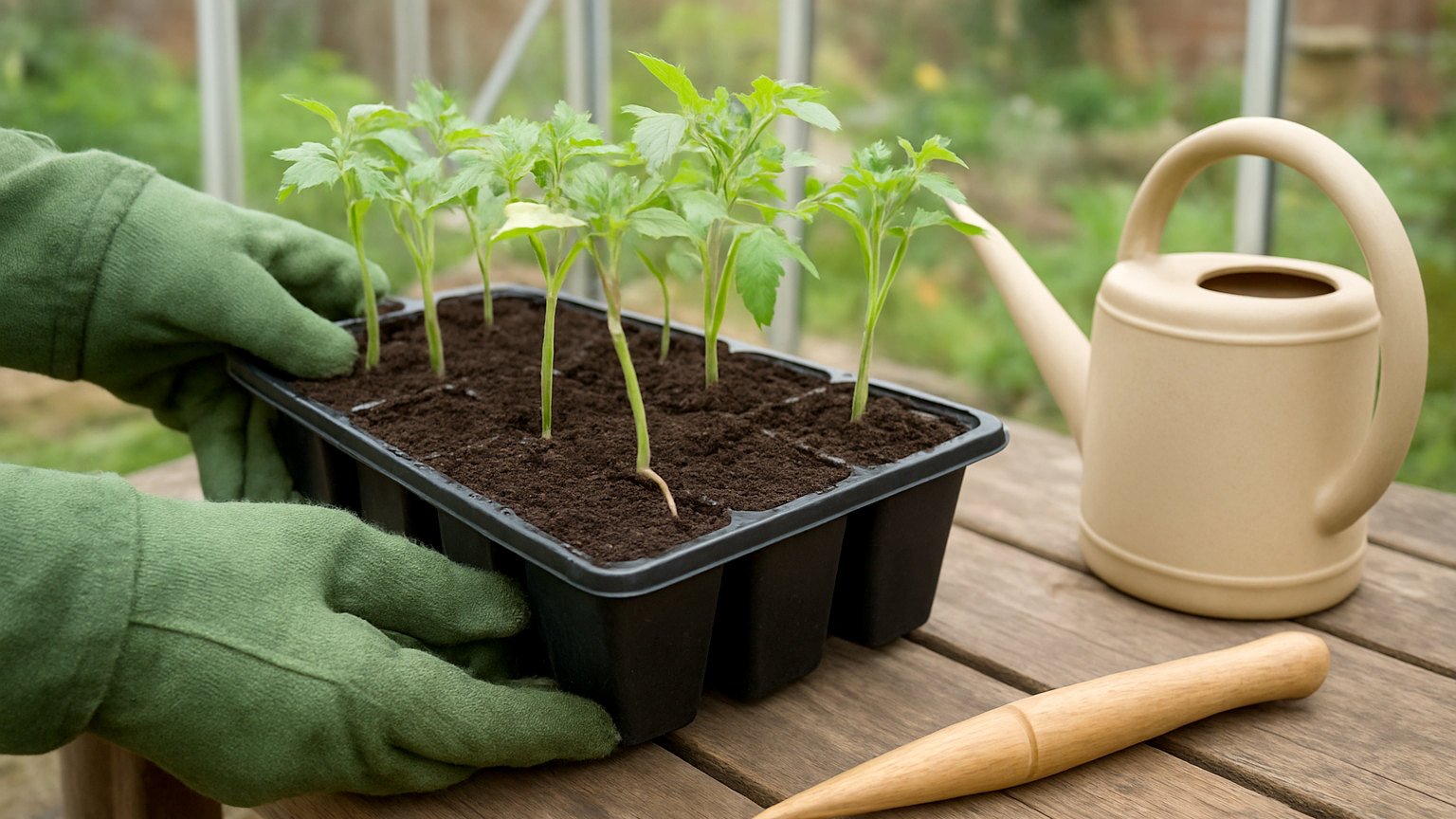
Damping off destroys seedlings faster than anything else, and it is almost entirely preventable by hygiene and watering practice.
Recognising it
Seedlings collapse at soil level, with a thin water-soaked constricted point at the base of the stem.
The top may still be green and healthy-looking when the plant falls over.
It spreads outwards from a point, so a circular patch of collapse in a tray is characteristic.
Sometimes a fine white or grey mould is visible on the compost surface.
Seed may also fail to emerge at all, rotting before it germinates.
Cuttings rot at the base in the same way.
What causes it
Several water moulds and fungi, including Pythium, Phytophthora and Rhizoctonia.
The water moulds have swimming spores, which is why wet compost and standing water are the key factor.
They are present in soil, in dirty pots, in unclean water and in old compost, and multiply rapidly in warm wet conditions with poor air movement.
Prevention
This is one problem where prevention is genuinely straightforward and complete.
Use clean pots and trays. Wash them thoroughly between uses in hot soapy water and rinse. Old compost and root debris in a reused tray is a common source.
Use fresh compost, from a bag that has been stored closed and off the ground. Do not use garden soil, and do not reuse compost that has grown a crop.
Use mains water for seedlings rather than water butt water. Stored rainwater carries these organisms, and while it is excellent for established plants it is a genuine risk for seedlings and cuttings.
Keep the hose end and can rose off the ground.
Sow thinly. Crowded seedlings create still humid air at the base and provide a continuous route for the infection to spread.
Ventilate. Remove propagator lids as soon as germination occurs, prop them open, and give as much air movement as the temperature allows.
Do not overwater. Keep compost moist rather than wet, water from below where practical, and let the surface dry slightly between waterings.
Water in the morning so the surface dries before night.
Provide adequate light, since drawn etiolated seedlings are soft and far more susceptible.
Avoid excessive warmth once germinated, since heat with humidity is the worst combination.
Once it starts
There is no effective treatment available to gardeners, and the response is containment.
Remove affected seedlings and the compost around them immediately.
Increase ventilation and reduce watering.
Move unaffected trays away from affected ones.
Prick out healthy seedlings into fresh compost in clean pots, handling them by the leaves rather than the stem.
Where a tray is badly affected, discard it entirely and resow. Persisting rarely works.
Sowing practice that helps
Sow in modules rather than a communal tray, which limits spread between seedlings.
Cover seed with vermiculite rather than compost, which drains freely and keeps the surface drier around the stems.
Firm compost lightly rather than heavily, so it drains.
Use a free-draining seed compost rather than a rich multipurpose one.
Sow at the right time rather than too early, since cold dark conditions produce weak seedlings and slow germination, which prolongs the vulnerable period.
The greenhouse
Clean staging, floors and glass at the start of the season.
Remove algae from surfaces, which harbours these organisms.
Keep the propagating area separate from the general growing area where you can.
The summary
Clean pots, fresh compost, mains water, thin sowing, good light, plenty of air and careful watering.
Together those eliminate the problem, and no product is needed.
Distinguishing it from other causes
Seedlings that dry out wilt and shrivel rather than collapsing at a constricted point.
Seedlings eaten by slugs or woodlice show chewed tissue and are frequently removed entirely.
Drawn leggy seedlings that fall over from weakness have thin pale stems throughout rather than a distinct rotted point at the base.
The water-soaked pinched stem base is what identifies damping off, together with the way it spreads outwards from a point.
Cuttings
The same organisms rot cuttings at the base.
Use clean pots, fresh gritty compost, remove the lower leaves so nothing rots against the surface, ventilate the propagator, and avoid keeping the compost saturated.
Remove any cutting that rots at once, since it will infect those beside it.


