
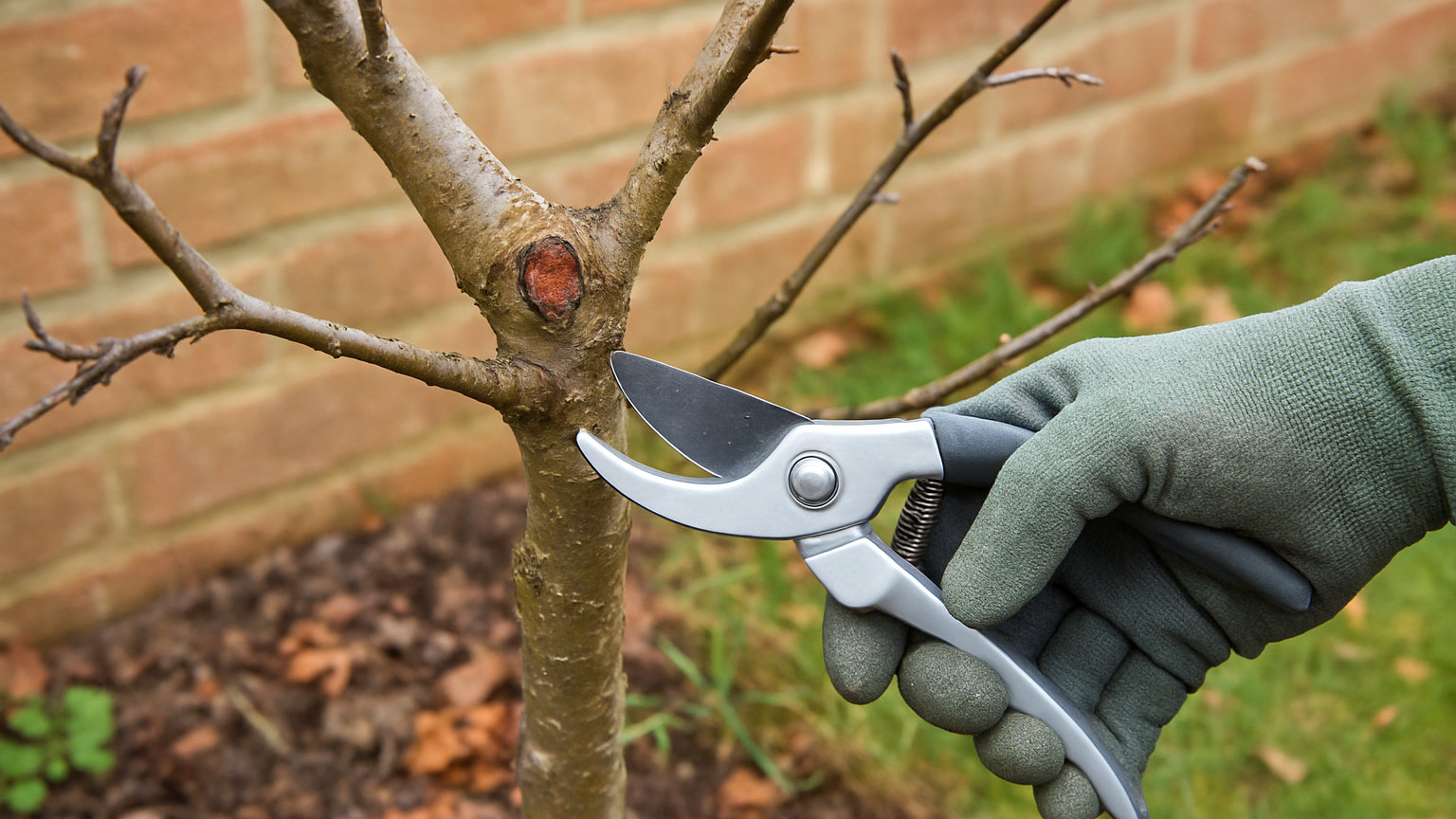
Canker is a localised lesion on bark and the wood beneath it. If it encircles a stem, everything beyond dies, which is why cankers on a main trunk are far more serious than on a side branch.
Recognising canker
Sunken, discoloured, often cracked areas of bark, sometimes with concentric rings of callus where the plant has tried to grow over it.
Dieback of shoots and branches beyond the lesion.
Oozing, gumming or bleeding in some types.
Small fungal fruiting bodies on or around the lesion.
Leaves on the affected branch wilting, yellowing or failing to appear in spring.
Apple and pear canker
A fungal disease entering through wounds, leaf scars, pruning cuts and damage.
Sunken elliptical lesions with cracked flaking bark and raised callus at the edges.
Worse on wet heavy ground and in high rainfall, and some varieties are far more susceptible than others.
Cut out affected wood well below the canker into clean tissue, or pare out the lesion back to healthy bark on a main limb.
Prune in dry weather, disinfect tools between cuts, and dispose of the prunings.
Improve drainage, which reduces susceptibility considerably.
Choose resistant varieties when planting new trees, and avoid the most susceptible ones on wet ground.
Bacterial canker
Affects cherries, plums and other Prunus.
Sunken lesions on trunk and branches with amber gum oozing from them, dieback, and small brown spots on leaves that fall out to leave shot holes.
Buds may fail to open in spring.
Prune only in summer, from about June to August. Stone fruit pruned in winter is highly vulnerable to both bacterial canker and silver leaf, since spores are abundant and healing is slow.
Cut well below the affected area into clean wood, disinfecting tools between cuts.
Avoid wounding trees, and stake and tie carefully so nothing chafes.
Some rootstocks and varieties are more resistant.
Coral spot
Bright coral-pink pustules on dead and dying wood, on a very wide range of woody plants.
Once regarded as purely a saprophyte on dead wood, it also invades living tissue through wounds and dead stubs, causing dieback.
Remove dead wood, stubs and prunings promptly, since these are where it establishes.
Cut back affected branches well into healthy wood.
Do not leave pruned material lying about the garden.
Prune properly to a bud or a branch collar rather than leaving snags, which die back and provide entry.
Pruning to prevent canker
Timing and technique do most of the work.
Prune stone fruit in summer, never in winter.
Prune apples and pears in winter when dormant, and in dry weather.
Make clean cuts just outside the branch collar, without leaving stubs and without cutting into the collar itself.
Do not paint or dress wounds, which is now understood to hinder rather than help natural sealing.
Use sharp clean tools, and disinfect between plants when working on anything diseased.
Avoid pruning in wet weather, when spores are being released and moving.
Dieback generally
Shoots dying back from the tip have many causes: canker, frost damage, drought, waterlogging, root problems, and vascular disease.
Cut back into healthy wood and look at the cut surface. Staining in the wood suggests a vascular problem; a clean pale cut suggests the dieback is local.
Address the underlying cause where possible, since repeated dieback usually indicates stress rather than a primary disease.
Disposal
Remove and dispose of infected prunings rather than leaving them on the ground or composting them in a domestic heap.
Burn where permitted, or use a green waste collection where material is composted at high temperature.
Silver leaf
A fungal disease of Prunus and some other trees, entering through wounds in autumn and winter.
Leaves take on a silvery sheen, branches die back, and a cut branch shows a dark stain in the wood.
This is the main reason stone fruit is pruned in summer, when spores are scarce and wounds heal quickly.
Cut affected branches well back into clean wood and dispose of them.
A tree may recover if the infection is caught early and the affected wood removed entirely.
Wound dressings
Once standard practice and no longer recommended.
Dressings seal in moisture and pathogens and interfere with the tree's own compartmentalisation, which is more effective than anything applied.
A clean cut at the branch collar, made at the right time of year, is the whole of good practice.


