
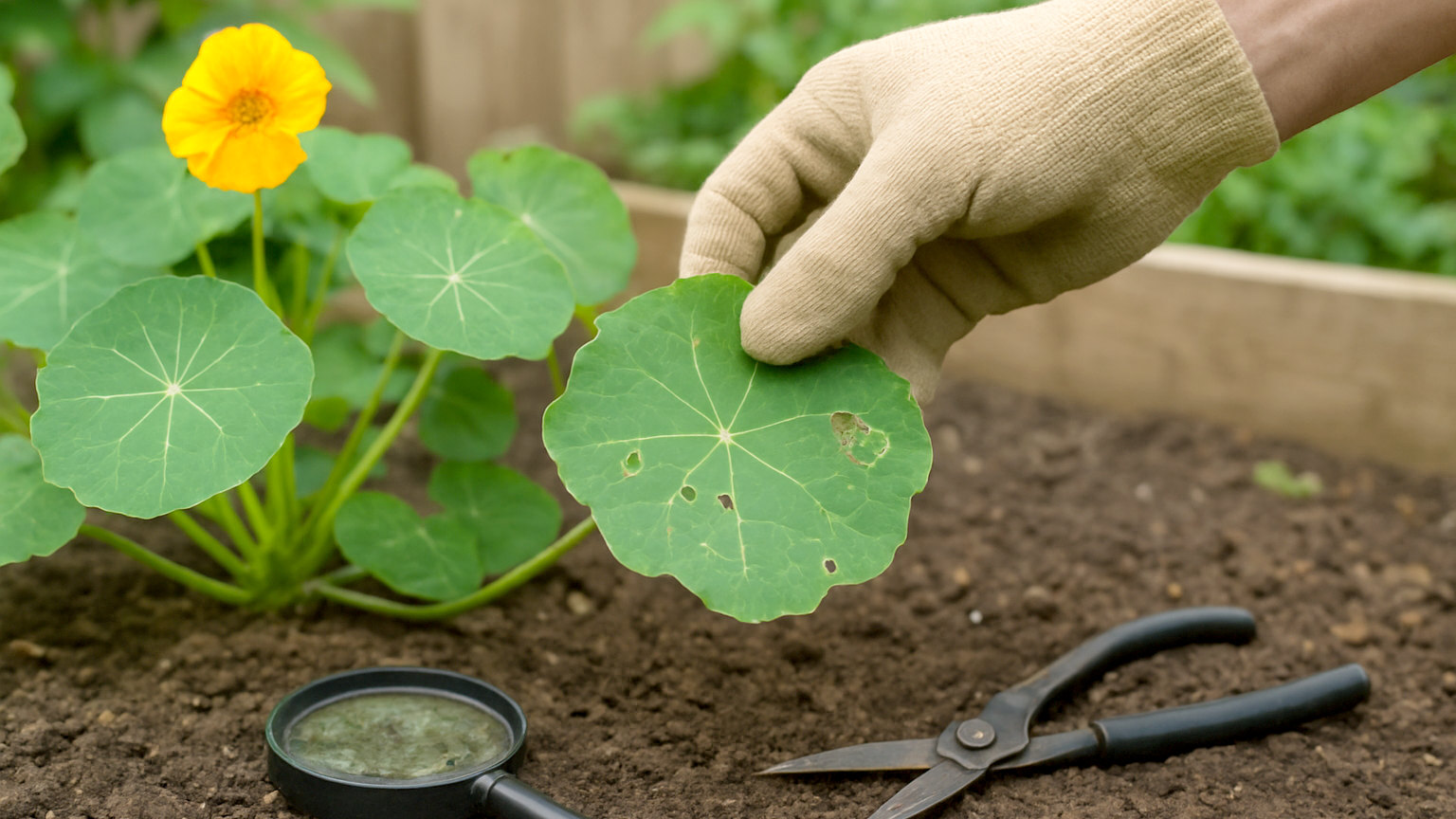
Most pests are gone by the time the damage is noticed. The damage itself is usually distinctive enough to identify the culprit, which matters because the response differs entirely.
Holes in leaves
Ragged holes, often with slime trails nearby: slugs and snails. Worst on soft young growth and after rain.
Neat holes with the leaf skeletonised, veins left: caterpillars or sawfly larvae. Look on the undersides.
Small round shot holes: flea beetle on brassicas and rocket, or bacterial shot hole on cherries and plums.
Notches cut from leaf edges, semicircular and neat: adult vine weevil. Leaf-cutter bees make similar cuts on roses and are entirely harmless.
Whole leaves stripped to the stalk: caterpillars, usually in numbers.
Marks within the leaf
Winding pale tunnels: leaf miners, whose larvae feed between the leaf surfaces.
Silvery or mottled stippling: thrips, red spider mite or leafhoppers, all sap suckers.
Fine webbing with yellow speckling: red spider mite, particularly in a dry greenhouse.
Yellowing between the veins while veins stay green: not a pest at all, but a nutrient problem, usually iron or magnesium.
Distorted growth
Curled, puckered shoot tips with insects visible: aphids.
Ragged distorted young leaves with small brown spots: capsid bug, which feeds on the tip and the damage expands as the leaf grows.
Swollen galls on leaves or stems: gall wasps and mites, which are almost always harmless and need no action.
Blistered red or yellow raised patches: gall mites, again harmless.
Sticky and sooty
A sticky coating on leaves, or on paving and cars beneath a tree, is honeydew excreted by sap-sucking insects.
A black film growing on it is sooty mould, which lives on the honeydew rather than the plant.
Look for aphids, scale insects, mealybug or whitefly above the sticky surface.
Wilting and collapse
Sudden collapse of a container plant, roots eaten away: vine weevil grubs.
Seedlings toppling at soil level: cutworms, or damping off, which is a fungal problem.
Lawn turning brown in patches and lifting easily, with birds tearing at it: chafer grubs or leatherjackets feeding on the roots.
Wilting despite moist soil: root damage, root aphid, or a root disease rather than a leaf pest.
Where to look
Turn leaves over. The great majority of pests feed on the undersides, where they are sheltered.
Check shoot tips and flower buds, which are the softest tissue.
Look at night with a torch for slugs, snails, cutworms and several caterpillars, which feed after dark.
Check the compost and roots when a container plant fails.
Establish it is a pest at all
A great deal of damage attributed to insects is not.
Drought, waterlogging, frost, wind scorch, nutrient deficiency, weedkiller drift and physical damage all produce symptoms that look like pest or disease attack.
Uniform damage across a plant or across many plants of different species suggests an environmental cause. Patchy damage on one species suggests a pest.
Then decide whether to act
Most insect damage is cosmetic and the plant is unaffected.
Act where the damage threatens the plant, the crop or the flowering, and leave it where it does not.
Identify before treating. Spraying the wrong thing kills predators and achieves nothing else, and a great many insects in a garden are either harmless or actively useful.
Keep a note
Recording what appeared, on what, and when, tells you when to expect it next year, which is what makes prevention possible.
Damage that is already over
A great deal of what is noticed in midsummer was done weeks earlier, and the pest has moved on or pupated.
Leaves damaged as buds unfold, then expanding, show holes and distortion long after the caterpillar responsible has gone. Spraying at that point achieves nothing.
Note when the damage actually happened rather than when you saw it, and act at that point next season.
A hand lens helps
Many of the insects that matter are small: red spider mite, thrips, scale crawlers and mites are all difficult to see clearly without magnification.
A cheap lens turns guesswork into identification, and identification is what determines whether any action is worth taking.
Getting it identified
Photograph the damage and the insect if you can find one, including a leaf underside and something for scale.
Gardening organisations and local societies will often identify from a good photograph, which is quicker than working through a list.


