
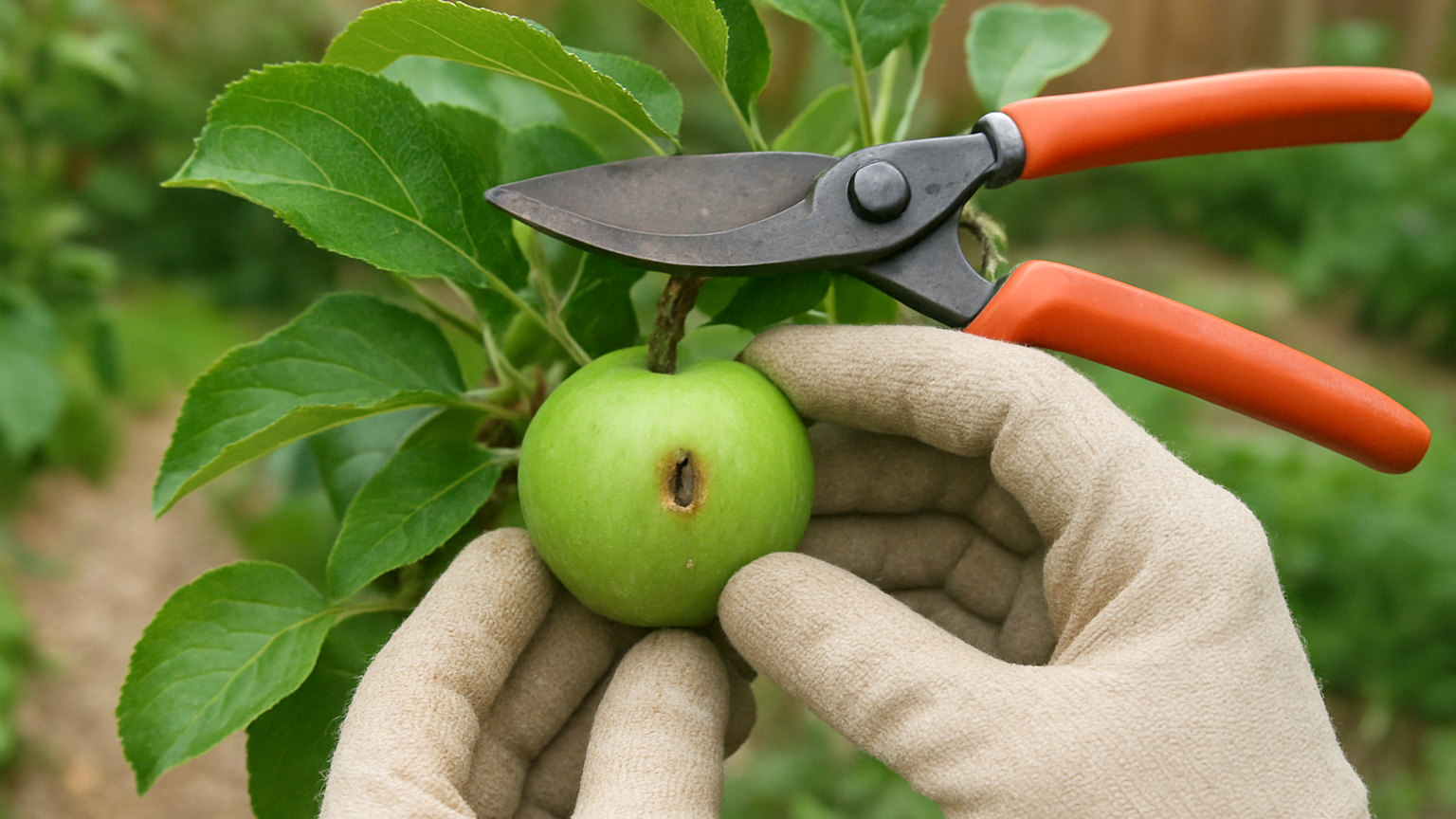
Fruit pests are frustrating because the damage is only discovered at harvest, months after the point at which anything could have been done. The response is almost entirely about timing.
Codling moth
The classic maggoty apple. A caterpillar tunnels to the core, and the exit hole in the side of the fruit is surrounded by brown crumbly frass.
Also affects pears and walnuts.
Adults fly from about late May into July and lay on developing fruit.
Pheromone traps hang in the tree from mid-May and catch male moths. Their main value is telling you when the moths are flying, so any treatment can be timed properly. In a small garden with one or two trees they also reduce mating and can cut damage noticeably.
Hang one trap per tree, replace the lure as directed, and put them up before the flight starts.
Corrugated cardboard bands tied around the trunk in midsummer trap larvae looking for somewhere to pupate. Remove and destroy the bands in autumn.
Encourage birds, which take overwintering larvae from bark crevices.
Pick up and dispose of fallen fruit promptly rather than leaving it under the tree.
Apple sawfly
Frequently confused with codling moth and quite different.
The larva tunnels just beneath the skin early in the season, leaving a ribbon-like scar across the surface of the mature fruit, and often causes fruitlets to drop in June.
Damage is done in late spring, far earlier than codling moth.
Remove and destroy affected fruitlets as soon as they are seen, before the larvae leave to pupate in the soil.
The June drop conceals this, so check fallen fruitlets rather than assuming they are natural thinning.
Plum moth
Caterpillars in plums and damsons, feeding around the stone, with early ripening and gumming at the surface.
Pheromone traps from about May help with timing and reduce numbers in a small garden.
Pick up fallen fruit and remove affected fruit from the tree.
Aphids on fruit
Several species distort leaves and shoots on apple, plum, cherry and currants.
Rosy apple aphid causes badly distorted leaves and small misshapen fruit and is the one worth acting on.
Currant blister aphid produces red or yellow puckered blisters on currant leaves, which look dramatic and rarely affect the crop.
Predators usually deal with aphids by midsummer. Squash colonies by hand early in the season and avoid spraying, which removes the predators.
Winter moth
Caterpillars feed on opening buds, blossom and young leaves in spring, and can badly damage a crop before it starts.
The females are wingless and climb the trunk to lay. A grease band or a band of fruit tree grease around the trunk and the stake, from about October to spring, traps them on the way up.
This is one of the most effective and least intrusive controls available on a fruit tree.
Wasps
Enlarge existing damage on ripening fruit rather than initiating it, and they spend the earlier part of the year eating aphids and caterpillars.
Pick fruit promptly, clear windfalls, and avoid sweet traps, which kill large numbers of useful insects.
General measures
Clear fallen fruit and leaves in autumn, which removes overwintering stages of several pests.
Keep trees growing well, since a healthy tree tolerates damage far better.
Prune to an open structure, which improves air movement and makes birds' access easier.
Accept a proportion of damaged fruit. A garden tree does not need to produce a commercial-standard crop, and a slightly scarred apple is perfectly good to eat.
Where spraying is considered, the label is a legal document, and nothing should be applied to a tree in blossom or when pollinators are active.
Winter washes
Plant oil winter washes applied to dormant trees reduce overwintering aphid eggs and some other stages.
Apply on a still frost-free day in midwinter, following the label, and never to a tree in leaf or bud break.
They are of modest benefit in a garden and worth considering only where aphids have been a persistent problem over several years.
Bird damage
Bullfinches strip fruit buds in late winter and can remove an entire crop before it forms, and blackbirds take ripening soft fruit.
Netting is the answer, fitted taut and checked daily so birds cannot become trapped in it.


