
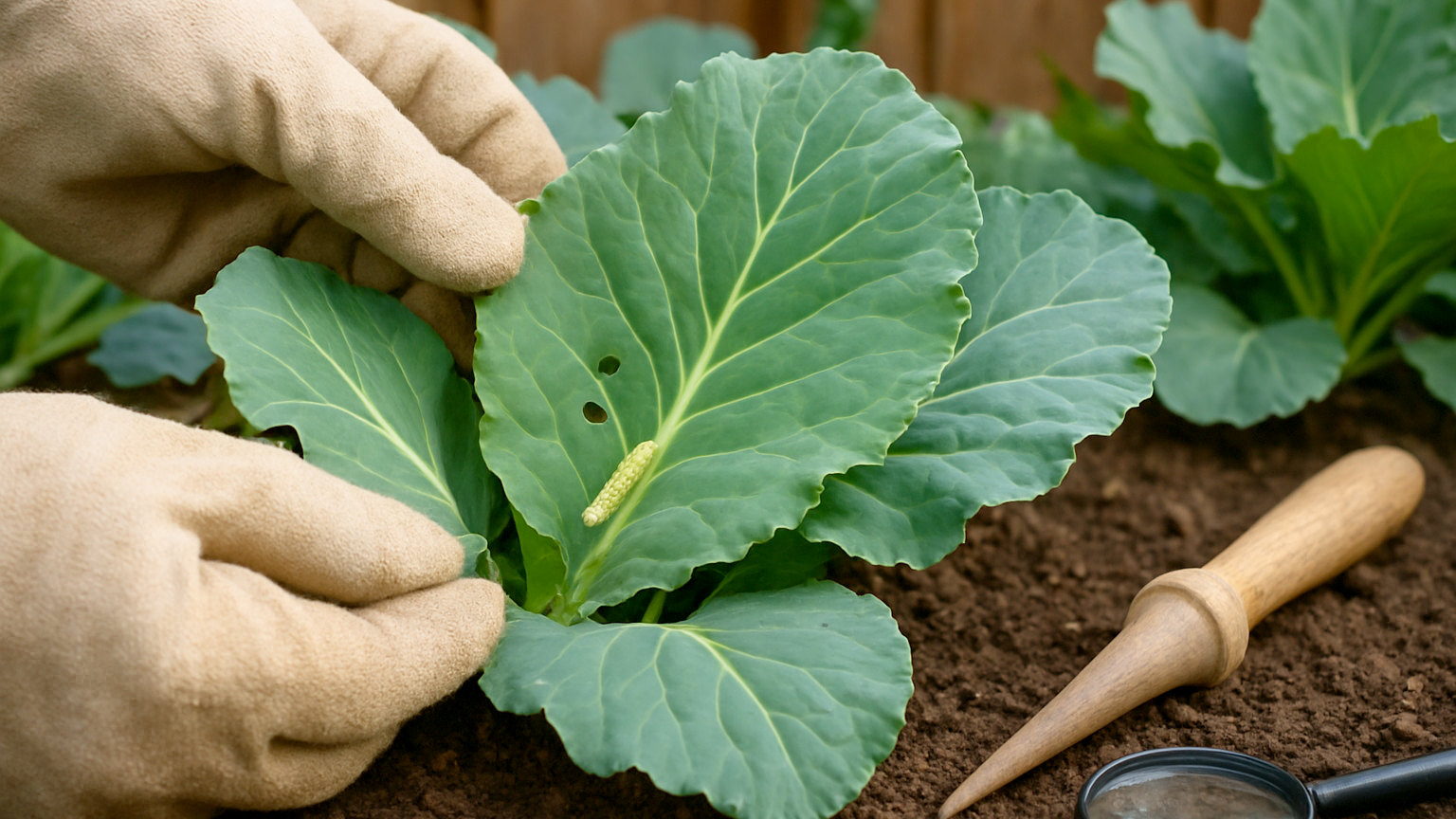
Caterpillars are the larvae of moths and butterflies, and a garden supports a great many species of which only a handful cause real problems. Most of the alarm they generate is disproportionate.
Caterpillar or sawfly larva
They look similar and are entirely different insects.
True caterpillars, of moths and butterflies, have three pairs of true legs at the front and up to five pairs of fleshy prolegs behind.
Sawfly larvae have three pairs of true legs and six or more pairs of prolegs, which is the practical way to tell them apart.
The distinction matters because most biological caterpillar treatments do not affect sawflies, and because sawfly larvae are frequently far more destructive.
The ones that matter
Cabbage white caterpillars on brassicas and nasturtiums, which strip plants entirely if left.
Box caterpillar, which can defoliate a box hedge within weeks.
Gooseberry sawfly, which strips gooseberries and currants to bare stems astonishingly fast, often before anyone notices.
Solomon's seal sawfly, which reduces the plant to stems by midsummer.
Rose slug sawfly, which skeletonises rose leaves.
Winter moth caterpillars in spring on fruit trees, which damage young leaves, buds and fruitlets.
Codling moth in apples and pears, which is inside the fruit rather than on the leaves.
Cutworms, which live in the soil and sever seedlings at ground level after dark.
The ones to leave alone
Almost everything else.
Caterpillars on nettles are peacock, red admiral, small tortoiseshell and comma butterflies, and the nettle patch is worth keeping for them.
Caterpillars on native trees and shrubs feed a very large number of nesting birds. A single brood of blue tits may need many thousands of them.
Hairy caterpillars are frequently tiger moths and similar species, and hairy ones should not be handled since the hairs irritate skin.
Damage to an ornamental plant in midsummer is usually cosmetic and the plant recovers entirely.
Control where it is needed
Picking off by hand is the most effective method in a garden. Check plants weekly through the season, look on leaf undersides, and remove what you find.
Squash the eggs, which are laid in clusters on the undersides of leaves and are far easier to deal with than the caterpillars.
Fine mesh excludes the adults so that eggs are never laid. Mesh of around seven millimetres or finer, well supported and sealed at the edges, protects brassicas entirely.
Encourage birds, which take enormous numbers. Nest boxes near fruit trees pay for themselves.
Biological control with a specific bacterial preparation is available for some caterpillars and works only on true caterpillars, not sawflies.
Sawfly control
Inspect gooseberries and currants from late spring, checking the centre of the bush where the larvae start, since a plant can be stripped in days.
Pick off by hand, and repeat, since there are several generations.
Plants stripped in early summer usually recover if watered and fed, though the crop suffers.
Before reaching for a spray
Insecticides kill the predators as well, including the parasitic wasps and birds that would otherwise keep numbers down.
Many are harmful to pollinators. Never spray open flowers, and never spray when bees are active.
The label is a legal document and using a product other than in accordance with it is an offence.
For nearly all garden caterpillar problems, hand picking and mesh do the job without any of that.
Tolerance
A garden with no caterpillars has no butterflies, moths or insect-eating birds.
Protect the few plants that genuinely suffer, and accept some damage elsewhere as the cost of a garden that supports anything at all.
Cutworms
Soil-dwelling caterpillars that sever seedlings and young plants at ground level, usually overnight, leaving the top lying beside the stump.
Search the soil around a damaged plant with a trowel and you will usually find one curled up within a few centimetres.
Hoeing regularly exposes them to birds, and a cardboard collar around vulnerable transplants prevents the damage.
Nematode biological controls are available for cutworms and are applied to moist warm soil.
Winter moth on fruit trees
The females are wingless and climb the trunk to lay in late autumn and winter.
A grease band or a band of fruit tree grease around the trunk from autumn to spring traps them on the way up, which is a simple and effective control.


