
A surprising amount of garden wildlife is legally protected, and several common responses to garden problems are offences. This is an outline rather than legal advice, and the current position should always be checked.
Wild birds
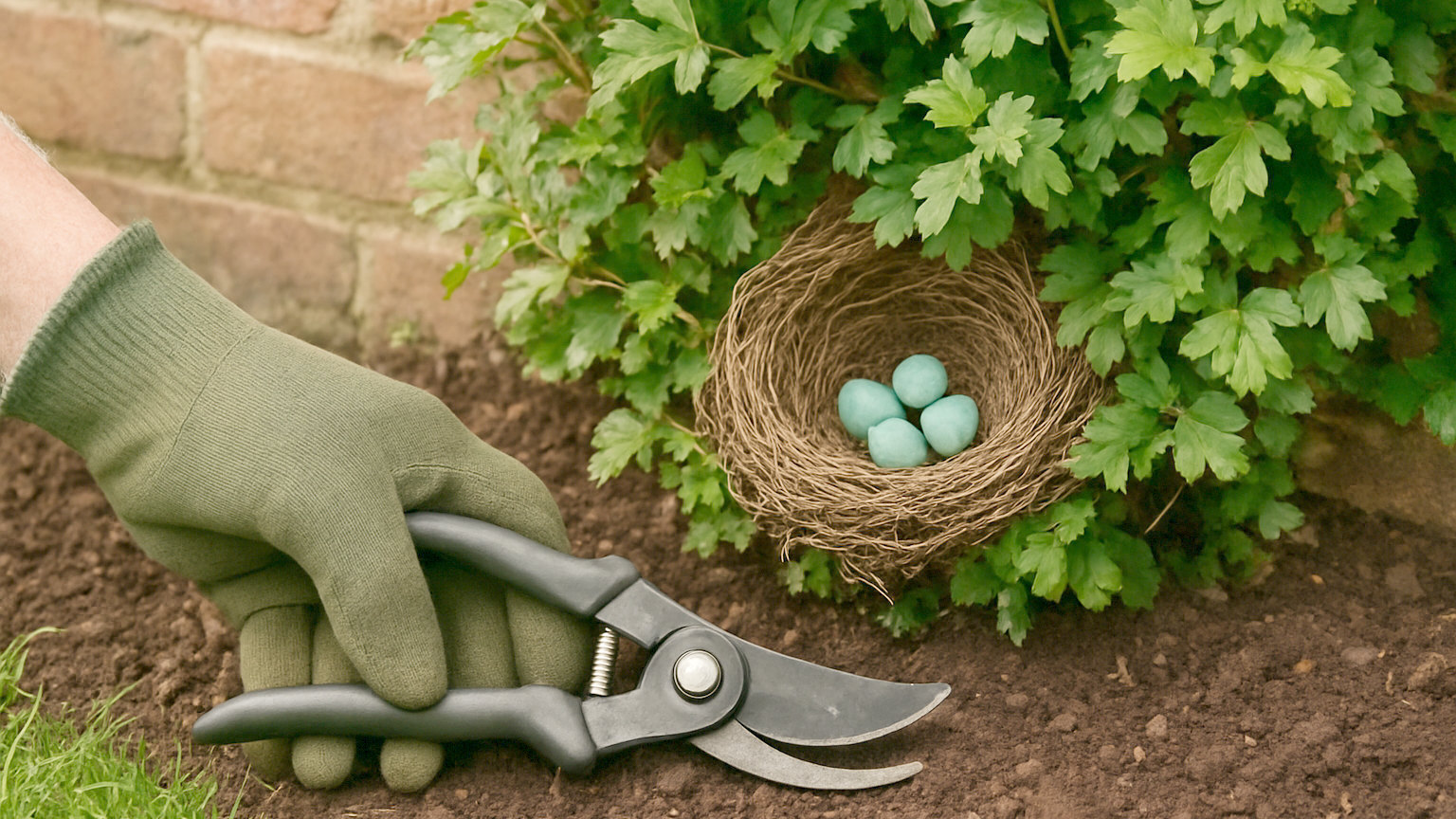
All wild birds, their nests while in use or being built, and their eggs are protected under the Wildlife and Countryside Act.
It is an offence to intentionally kill, injure or take a wild bird, or to damage or destroy an active nest.
In practice this means not cutting hedges or dense shrubs between March and August without checking thoroughly, and leaving any nest found entirely alone until the young have fledged.
Some species may be controlled under general licences by authorised persons, subject to conditions that include having tried non-lethal methods. These licences change and their scope has been revised, so check the current position.
Some species have additional protection making disturbance at the nest an offence.
Badgers
Protected under the Protection of Badgers Act.
It is an offence to kill, injure or take a badger, to ill-treat one, or to interfere with a sett, including damaging or obstructing it or disturbing an occupant.
This applies to setts in gardens, and any work affecting one requires a licence.
Bats
All species are protected, and the protection is strong.
It is an offence to kill, injure or disturb a bat, or to damage or obstruct a roost, whether or not bats are present at the time.
This has direct consequences for building and tree work. Roof repairs, loft conversions, demolishing outbuildings and felling or pruning mature trees can all affect roosts.
Take advice before work on a building or a tree that may hold bats.
Reptiles and amphibians
Slow worms, common lizards, grass snakes and adders are protected against intentional killing and injury.
Great crested newts have full protection, and it is an offence to capture, disturb or handle them, or to damage their habitat, without a licence.
This is a further reason not to move spawn or amphibians between ponds.
Hedgehogs
Protected against certain methods of killing and taking.
The practical points are checking bonfire heaps before lighting, checking long grass before strimming, using netting safely, and not blocking access between gardens.
Invasive species
Different rules apply, and they cut the other way.
It is an offence to plant or otherwise cause to grow in the wild certain listed species, including several aquatic plants and Japanese knotweed.
It is an offence to release a grey squirrel into the wild once caught, or to allow one to escape.
Several invasive plants may not be sold.
Disposal of listed invasive plant material is regulated and it may be classed as controlled waste.
Traps and methods
The Wild Mammals Protection Act makes it an offence to cause unnecessary suffering to a wild mammal.
Only approved spring traps may be used for the species they are approved for, and traps must be set correctly and checked regularly.
Snares, poisons and various other methods are heavily restricted or prohibited.
Pesticide and rodenticide labels are legally binding documents.
Trees
Tree Preservation Orders and conservation area rules restrict work on trees, and unauthorised work carries substantial penalties.
Check with the local authority before any work on a tree.
Where to check
Legislation and licensing change, and this differs between England, Scotland, Wales and Northern Ireland.
Consult the relevant statutory nature conservation body, the local authority, or a specialist adviser before acting where any protected species may be involved.
When in doubt, exclusion and habitat management are lawful, effective and permanent, which is the practical answer in nearly every garden situation.
The practical upshot
Do not cut hedges in the nesting season. Do not interfere with a badger sett. Take advice before work that could affect bats. Do not move amphibians between ponds. Do not release a trapped grey squirrel. Do not tip pond plants into the wild.
Beyond that, netting, fencing, guards and removing food sources cover almost everything a garden requires, and none of it raises a legal question at all.
Why the protections exist
Many of these species have declined substantially, and gardens collectively cover a large area of habitat.
Working within the law is generally also working with the garden, since the same species control a considerable quantity of pests.


