
Bark carries the tissues that move sugars from the leaves to the roots. Remove it in a complete ring around a stem and the roots starve, and the tree dies, sometimes not until the following season.
Why ring-barking is fatal
A partial wound will usually heal over given time.
A complete ring severs the connection entirely, and nothing above the damage can feed the roots.
The tree may leaf out normally in spring using stored reserves and then collapse in summer, which is why the cause is frequently misdiagnosed.
Young trees with thin bark are far more vulnerable than mature ones.
What causes it
Rabbits, gnawing the base in winter, often to snow height, leaving a clean-edged stripped ring.
Voles, gnawing at and below ground level, frequently unseen until the tree fails.
Deer, fraying with their antlers in late summer and autumn, which strips and breaks bark higher up.
Squirrels, stripping bark on the trunk and upper branches in late spring and summer.
Strimmers and mowers, which are the commonest cause of all in gardens and kill young trees within seconds.
Ties and stakes left too long, which cut into expanding bark.
Choosing a guard
Spiral guards are cheap, expand as the stem grows, and suit protection against rabbits and voles on small trees. They must reach below soil level for voles.
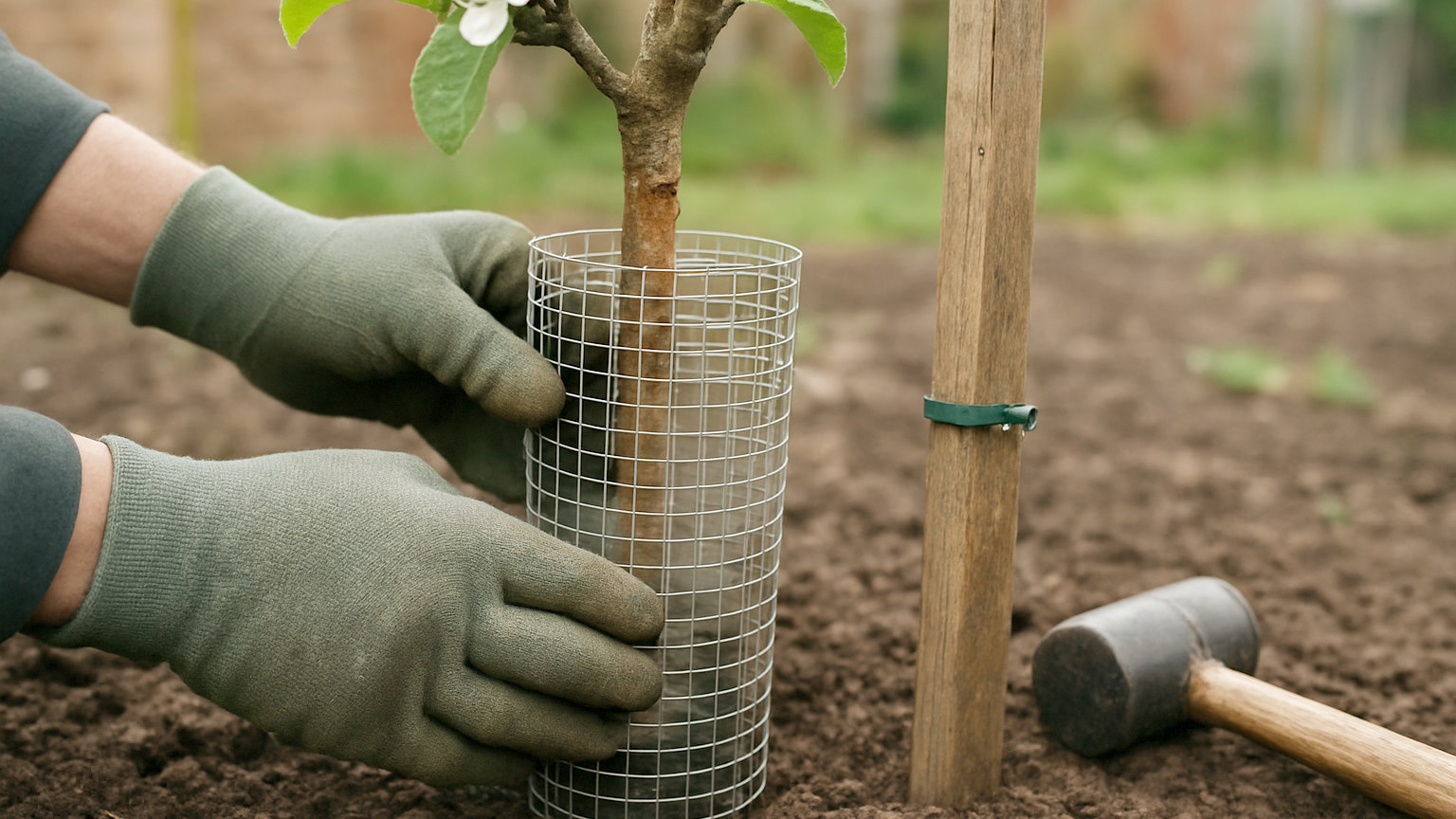
Mesh guards allow air movement and are less likely to cause rot in damp conditions.
Tree shelters and tubes protect against rabbits and deer, and also create a microclimate that speeds early growth. Height depends on the species present: around sixty centimetres for rabbits, a metre and a half or more for deer.
Wire netting cylinders held clear of the trunk on stakes protect against everything including squirrels at the base, and can be made to any size.
Match the guard to the animal. A rabbit guard does nothing against deer, and nothing at ground level prevents squirrel damage higher up.
Fitting them
Fit at planting rather than after damage appears.
Push the base into the soil for vole protection, or bury it slightly.
Stake tubes and shelters properly, since an unstaked one blows about and chafes the stem.
Leave room for the stem to expand, and check annually.
Remove guards once the tree no longer needs them, usually after three to five years. Guards left on constrict the trunk, harbour pests, and hold moisture against the bark.
Check inside guards periodically for voles and mice nesting within them, which is a common and unhelpful outcome.
Strimmer damage
Entirely avoidable and extremely common.
Keep a mulched circle of at least a metre diameter clear of grass around every young tree.
This removes the need to strim or mow anywhere near the trunk, and it also removes the competition from grass, which speeds establishment more than anything else.
Keep mulch clear of the trunk itself by a few centimetres.
Where grass must be cut close, fit a guard as a physical barrier.
Stakes and ties
Stake low and short, at about a third of the stem height, which allows the top to flex and build strength.
Use a proper adjustable tie with a spacer between stem and stake.
Check ties annually and loosen them, since a tie left tight cuts into the expanding trunk and does exactly what a rabbit would.
Remove stakes and ties after two or three years, once the tree can stand unaided.
Which guard for which animal
Voles: a guard reaching below soil level, or a clear mulched collar and no long grass at the base.
Rabbits: around sixty centimetres, pushed into the soil.
Deer: a metre and a half or more, staked firmly.
Squirrels: no practical guard for upper branch damage.
If damage has occurred
Partial damage on one side will usually heal. Keep the tree watered and mulched, do not paint or dress the wound, and let it callus over.
A complete ring is generally fatal, and the tree should be replaced.
Bridge grafting is possible in principle and is not realistic for most gardeners.
Diagnosing a failed tree
Where a young tree leafs out and then collapses in summer, check the base of the trunk and just below soil level.
A stripped ring, whether from voles, rabbits or a strimmer, is frequently found there and explains the failure entirely.
Checking this before replanting matters, since the same thing will happen to the replacement unless the cause is dealt with first.


