
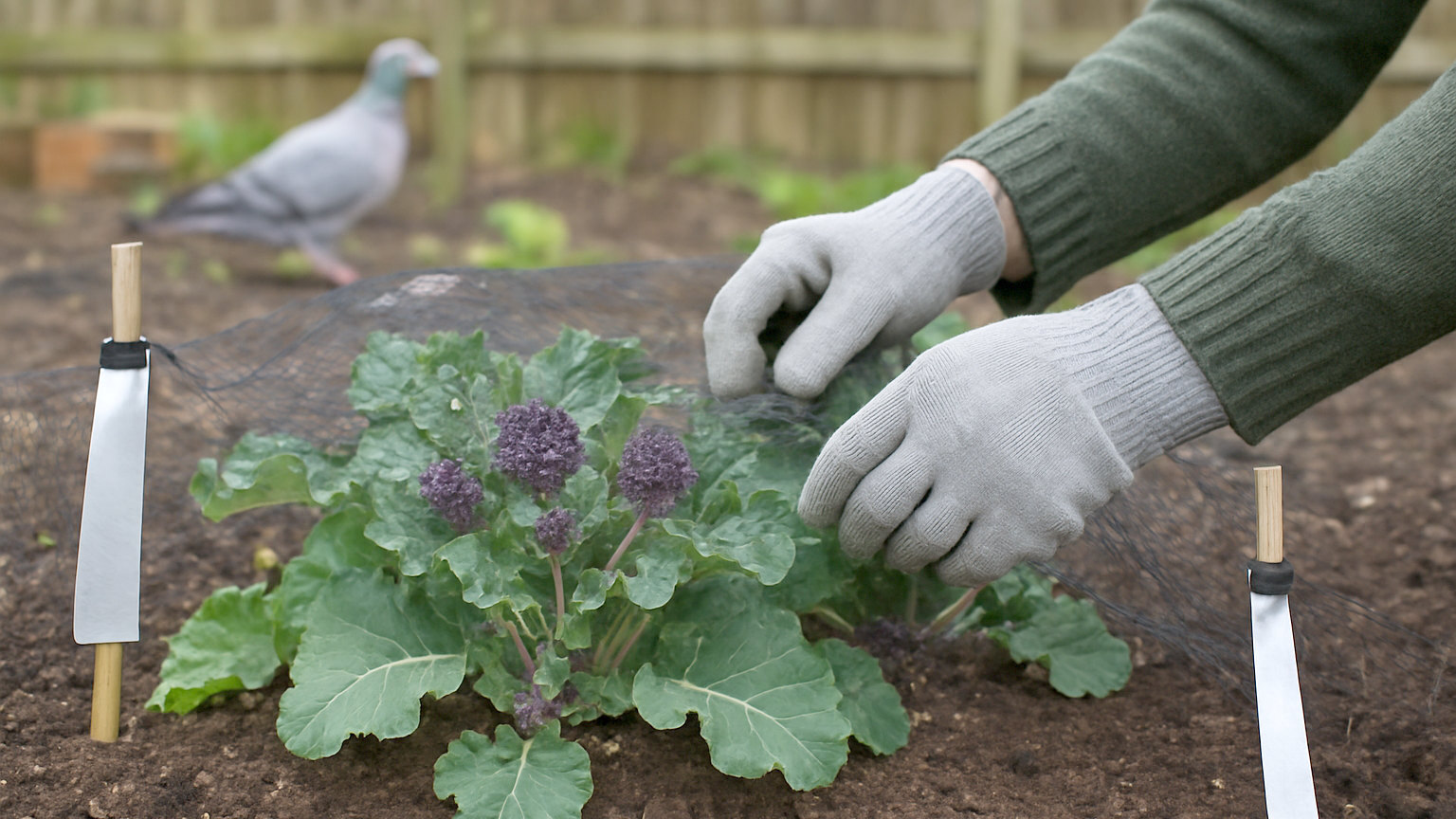
Deterrents are attractive because they promise results without fencing, netting or killing anything. Most of them disappoint, and the reason is the same in every case.
Habituation
Animals learn very quickly that something harmless is harmless.
A novel object, sound or flash produces avoidance for a few days. Once nothing bad follows, it is ignored.
Pigeons perch on scarecrows. Squirrels sit beside flashing lights. Foxes walk past ultrasonic devices.
This is why almost every deterrent works impressively at first and then stops, and why the person who tried it reports success while the one who has had it up for a month does not.
Ultrasonic devices
Sold for cats, foxes, squirrels, moles, rodents and birds.
There is little good evidence that they work for most species, and independent testing has generally been unfavourable.
Some cats respond and many ignore them. Slugs have no relevant hearing at all.
Results are inconsistent enough that they should not be relied on for anything that matters.
Visual deterrents
Foil strips, old discs, flashing tape, plastic hawks, scarecrows and reflective devices.
All work briefly against birds and are then ignored.
Movement and unpredictability extend the effect, so something that flaps in the wind lasts longer than something static.
Move them regularly, change them, and use several types in rotation, which is the only way to extend the useful life of a visual deterrent.
Worth using to bridge a gap before netting goes up, and not as a strategy.
Scent deterrents
Proprietary repellents and remedies based on citrus, garlic, chilli and similar.
Effects are generally short lived and require reapplication after every rainfall.
Some proprietary products have reasonable evidence for short-term protection of specific plants, and none gives lasting protection of an area.
Anything used must be approved for the purpose, and the label is a legal document.
Home remedies such as human hair, blood meal and mothballs have little support and some are inadvisable.
Motion-activated devices
Better than most, because the stimulus is unpredictable and directly associated with the animal's presence.
Water sprinklers are among the more effective options against cats, foxes and deer, and work while the water supply is on.
Motion-activated lights work for a time and are then ignored, and disrupt wildlife including bats and moths.
Batteries, blockages and false triggering all reduce reliability in practice.
What actually works
Physical exclusion, every time.
Netting on a frame, fine mesh, fencing to the right specification, tree guards, cages, cloches and covers.
None of these depends on an animal's behaviour, none habituates, and all of them work for years.
Removing the attraction is the other reliable approach: clearing spilt bird food, securing bins and compost, clearing windfalls, treating a lawn for the grubs that badgers are digging for, and covering bare soil that cats want to dig in.
This is more durable than any deterrent, because it changes why the animal is there rather than trying to frighten it away.
Getting more from deterrents
Where a deterrent is used, a few principles help.
Deploy it before the problem becomes established rather than after.
Move it and vary it frequently.
Combine several different types.
Use it for a defined short period, such as while seedlings establish, rather than permanently.
Treat it as buying time until a physical measure is in place.
Testing honestly
Protect half a bed and leave half unprotected, and compare after a fortnight.
Judge over more than one season, since weather and animal numbers vary far more than technique does.
Most deterrent reputations rest on a good fortnight followed by an assumption.
Why it is worth being clear
Money spent on devices that do not work is money not spent on netting or fencing that would.
More importantly, relying on an ineffective deterrent leaves a crop or a young tree unprotected at exactly the point it matters.
A deterrent that fails quietly is worse than no measure at all, because it removes the sense of urgency about doing something that works.
A short summary
Exclusion works permanently. Removing the attraction works permanently. Deterrents buy a few days or weeks.
Use the third only while arranging the first two.
That order of priority saves a great deal of money and a great deal of disappointment, and it is the opposite of how most people approach the problem.


