
Rodents cause a specific set of problems in a garden, and the response differs considerably between species. Rats are a public health matter; mice and voles are a horticultural nuisance.
Mice
Take newly sown seed, particularly peas, beans and sweetcorn, digging along the row and removing them before germination.
Gnaw stored fruit and vegetables, and bulbs in store and in the ground.
Nest in sheds, greenhouses, compost heaps and stacked pots.
Protecting seed: start peas and beans in modules or lengths of guttering under cover and plant out as young plants, which avoids the problem entirely.
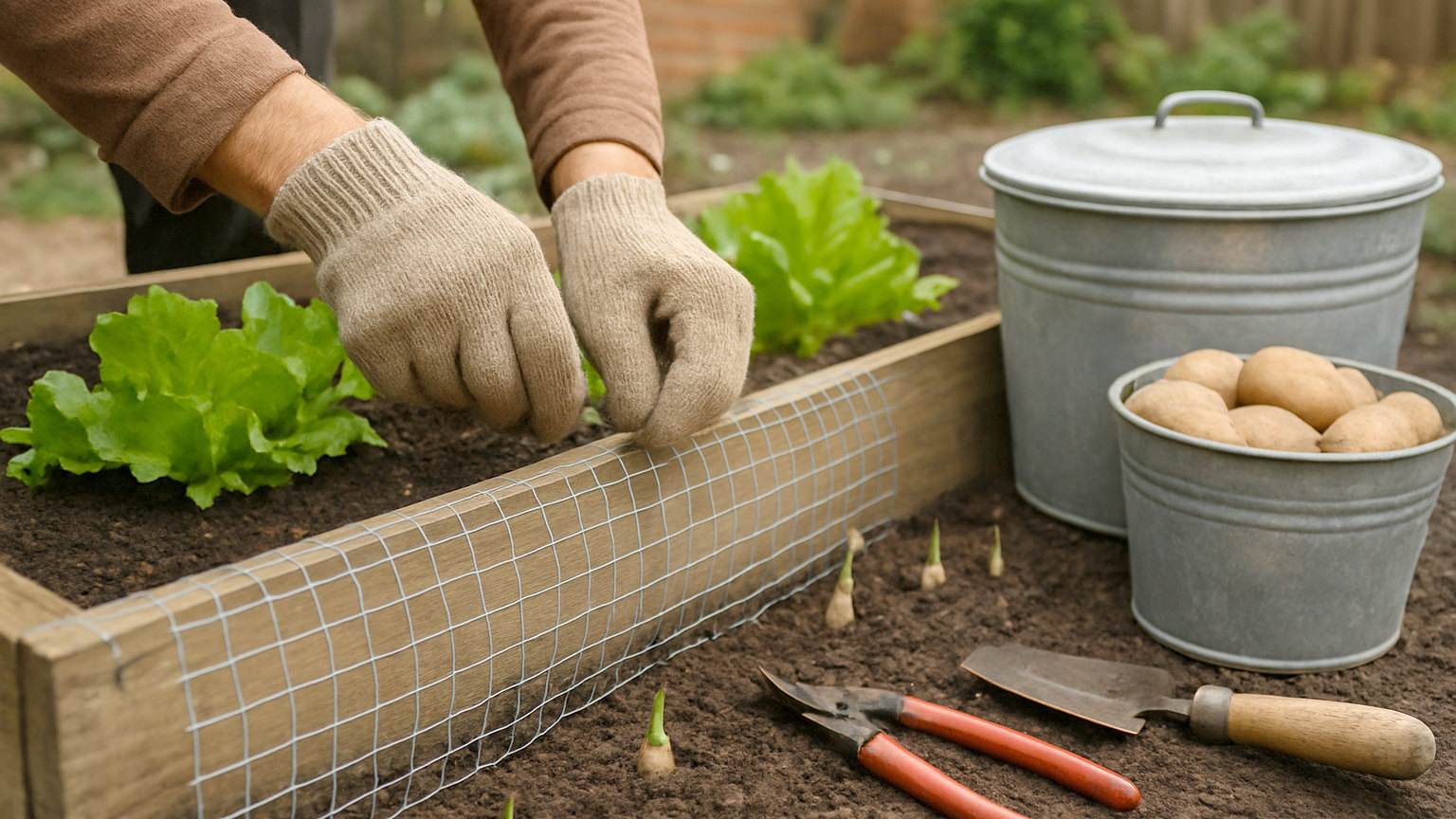
Where sowing direct, cover the row with fine mesh or a cloche, and lay prickly cuttings such as holly along the drill.
Store seed, bulbs and dry produce in sealed metal or rigid plastic containers, since mice chew through cardboard, plastic bags and wood.
Voles
Small, blunt-nosed and short-tailed, unlike the pointed-faced mouse.
Feed on roots, bulbs and bark, gnawing the base of young trees and shrubs below ground level and often under snow.
Use mole tunnels and runs in long grass, so damage attributed to moles is frequently theirs.
Ring-barking at the base kills a young tree, and the damage is often unseen until the plant fails.
Keep a clear mulch-free collar around the base of young trees, use a guard that sits below soil level, and keep long grass away from trunks.
Protect bulb plantings with mesh laid over the surface.
Rats
A different matter, since they carry disease including leptospirosis, contaminate food and stored produce, gnaw structures and cables, and burrow under buildings.
Signs are droppings, runs along walls and fences, smooth greasy marks where they pass, burrows, and gnawing damage.
Remove the food source first. This solves most rat problems in gardens.
Spilt bird food beneath feeders is the commonest attractant. Use trays under feeders, sweep up daily, and feed only what is eaten.
Keep compost heaps free of cooked food, meat, fish and bread. A closed bin with a base is better than an open heap where rats are present.
Store chicken feed, pet food and produce in sealed metal containers.
Clear rubbish, dense low cover and stacked material against walls, which provides harbourage.
Cover water butts and remove standing water.
Rodenticides
Worth understanding before reaching for them.
Rodenticides cause secondary poisoning of owls, kestrels, foxes, hedgehogs and pets that eat poisoned rodents, and residues are widely found in birds of prey.
Resistance to several active ingredients is now widespread, so the products frequently fail.
Their use is subject to stewardship requirements and label conditions, and the label is a legal document.
Any bait must be in a tamper-resistant bait station, out of reach of children, pets and wildlife, and dead rodents must be collected and disposed of properly.
For a persistent rat problem, a professional pest controller or the local authority is the sensible route rather than buying poison.
Traps
Snap traps used correctly are quick, and must be placed where non-target animals cannot reach them, in a covered box or behind a barrier.
Check them daily. An unchecked trap causing prolonged suffering is an offence under the Wild Mammals Protection Act.
Live traps require the animal to be dealt with, and releasing rats elsewhere is neither lawful nor sensible.
Hygiene
Wear gloves when handling anything contaminated, wash hands thoroughly, and cover cuts.
Leptospirosis is a serious illness spread through rat urine, and can be contracted from soil, water and produce.
Wash garden produce thoroughly.
Distinguishing the damage
Neat gnawing with visible tooth marks indicates rodents.
Seed removed along a drill with small holes suggests mice.
Bark stripped at ground level on young trees suggests voles or rabbits.
Bulbs hollowed out in the ground suggests voles or mice rather than squirrels, which usually dig them up entirely.
Greenhouses and sheds
Both are attractive to mice in autumn, offering warmth, shelter and stored produce.
Store seed, bulbs and produce in sealed metal containers, clear away spilt compost and plant material, and block gaps at the base of the structure where they get in.
An autumn clear-out removes both the food and the shelter at the point they are looking for somewhere to overwinter.
Check stored fruit and vegetables regularly and remove anything gnawed, since damaged produce rots and spoils the rest around it.


