
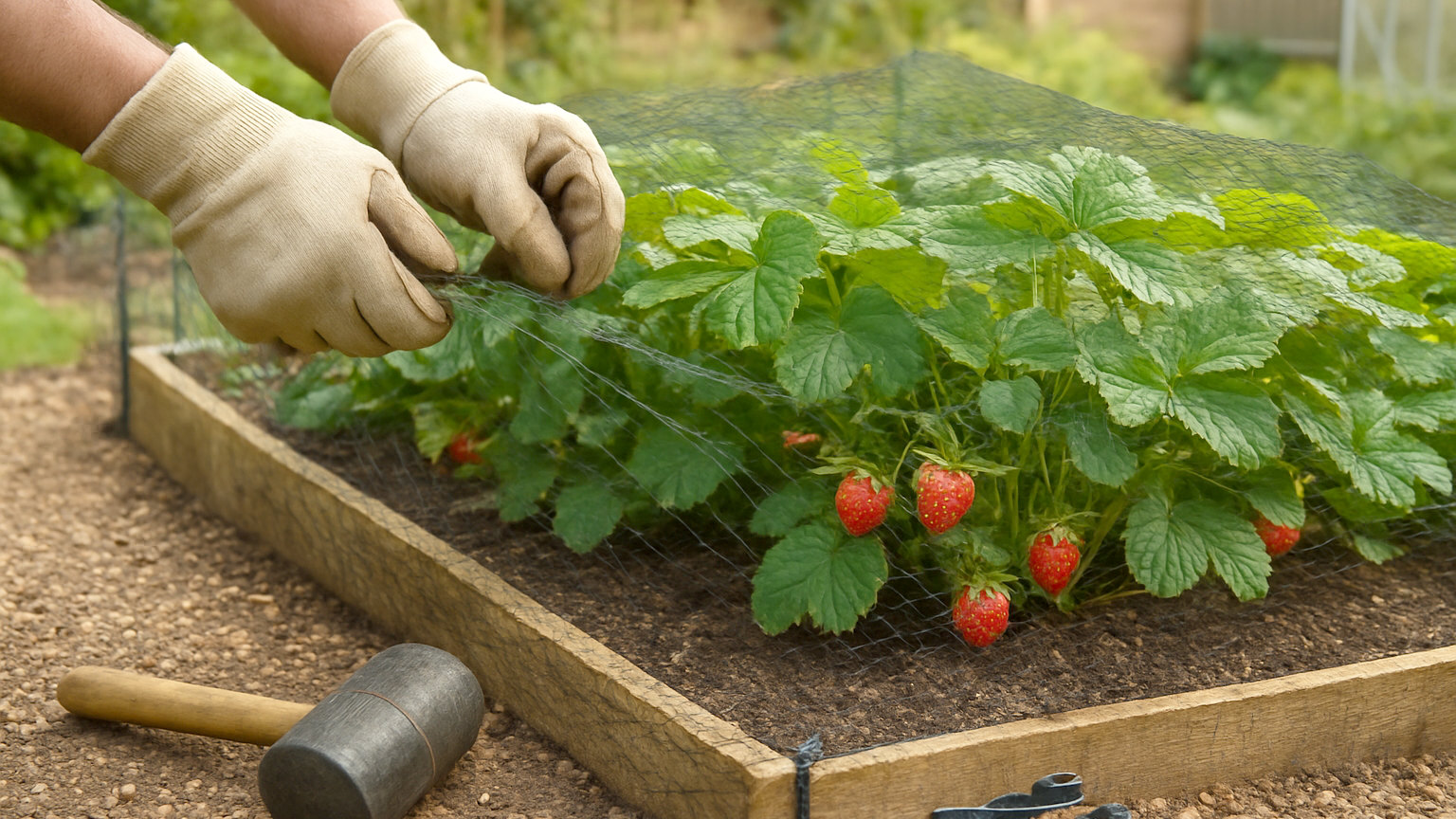
Birds will take a crop the day before you intended to pick it, and there is no deterrent that reliably outlasts their willingness to test it. Netting is the only method that works, and doing it properly matters as much for the birds as for the fruit.
Netting safely
Loose netting kills wildlife. Birds, hedgehogs, grass snakes and slow worms become entangled in slack or fine mesh and die there. Netting has to be installed with that in mind.
Use a mesh of at least two centimetres so small birds cannot push their heads through and become trapped. Very fine netting is the worst offender.
Keep it taut over a frame rather than draped loosely over the plants, and secure the bottom edge to the ground with pegs so nothing can get underneath. Netting that sags onto the fruit also lets birds simply peck through it.
Check it daily during the season. If something is caught, cut the netting rather than attempting to unwind it. Remove netting entirely once cropping finishes rather than leaving it out all year.
Fruit cages
A walk-in fruit cage is the practical answer for soft fruit, and it is worth the investment if you grow much. It protects strawberries, raspberries, currants and gooseberries in one enclosure.
Build it tall enough to stand in, since a cage you cannot work in comfortably does not get maintained. Remove or roll back the roof netting in winter, both so birds can take pests off the plants and so snow does not collapse the structure.
Pigeons and brassicas
Wood pigeons are the most destructive garden bird, and they will strip a row of cabbages, sprouts or kale to the ribs within days, particularly in winter when other food is short.
Netting over hoops is the answer, kept well clear of the foliage since pigeons will eat anything pressing against the mesh. The same netting excludes cabbage white butterflies in summer if the mesh is fine enough, though fine mesh needs more care about entanglement.
Brassica collars and scarers do very little against pigeons, which are persistent and quickly learn that nothing happens.
What does not work for long
Shiny tape, old CDs, scarecrows, plastic hawks and humming line all work briefly and then stop. Birds habituate within days once nothing bad follows.
They are worth using only in combination and moved frequently, and even then as a supplement to netting rather than a replacement.
Which birds cause which damage
Pigeons take brassicas, peas and young leaves. Blackbirds and thrushes take soft fruit and berries. Bullfinches strip fruit buds from trees in late winter, which is damage done before anyone is thinking about protection. Jays and magpies take a bit of everything.
Sparrows and finches will shred flowers, particularly crocus and polyanthus, apparently for the nectar.
The birds are also working for you
It is worth keeping the balance in mind. Blue tits feeding young in May and June take enormous numbers of aphids and caterpillars. Song thrushes are among the most effective snail predators there are. Blackbirds and robins take slugs, leatherjackets and other pests continuously.
A garden that excludes birds entirely loses that, and you will notice it in the aphid population. Protect the specific crops that need it and leave the rest of the garden open.
Legal points
Wild birds, their nests and their eggs are protected by law in the UK. It is an offence to intentionally kill or injure most wild birds, or to damage or destroy an active nest.
This is why hedge cutting between March and August should be avoided, and why netting must be checked and maintained rather than left to trap things.
Timing matters
Get netting on before the fruit begins to colour rather than after. Birds find ripening fruit remarkably early, and a crop discovered by blackbirds is usually gone before you have fetched the netting.
Bullfinch damage to fruit buds happens in late winter, so any tree that has suffered it needs protecting in February rather than in June.
Sharing a little
Planting a few berrying shrubs elsewhere in the garden gives birds an alternative and takes some pressure off the fruit you want. It is not a substitute for netting, but it costs nothing and improves the garden anyway.


