
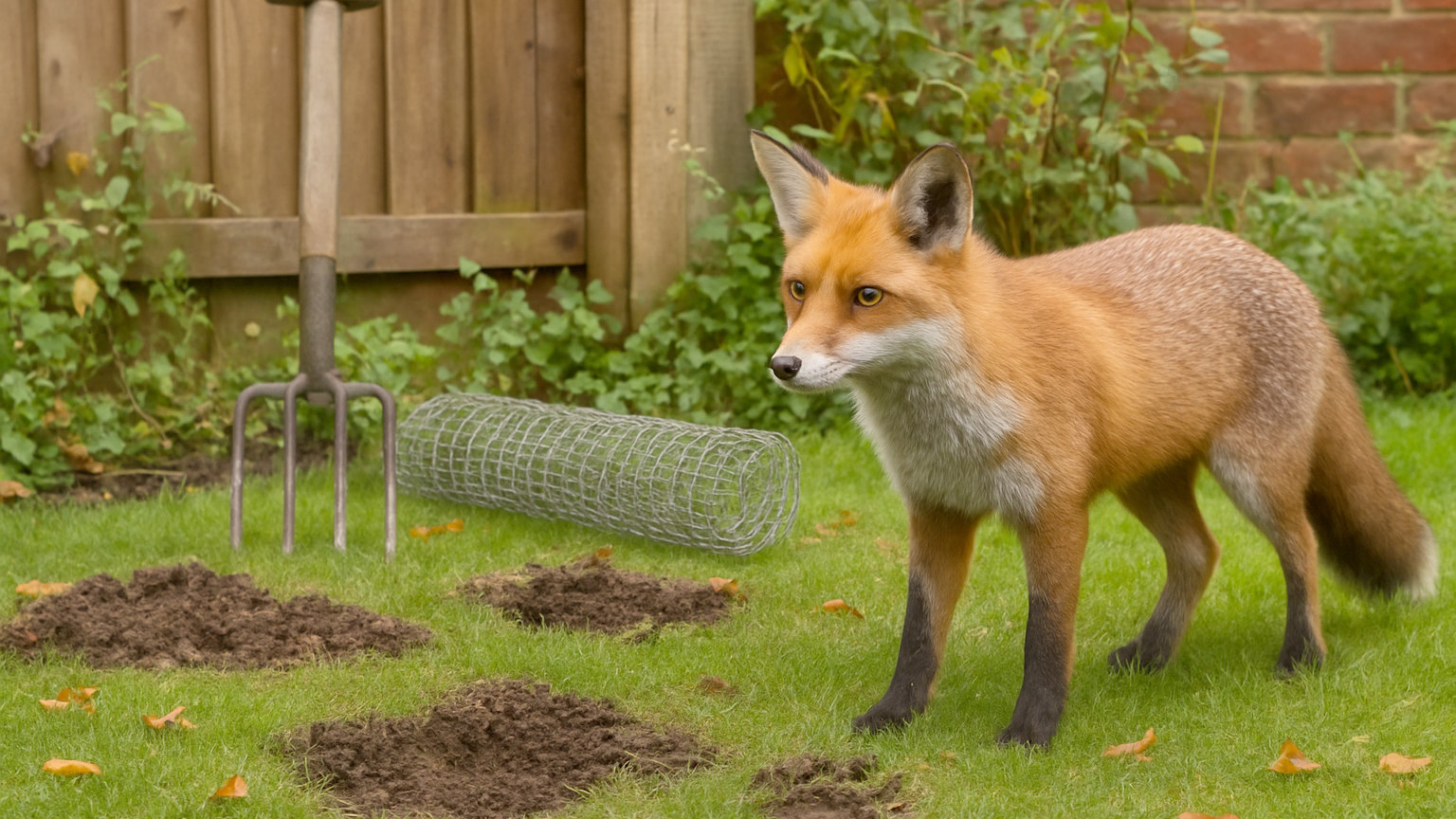
Both dig lawns, both are largely nocturnal, and both are constrained by law in what may be done about them. Badgers in particular have strong legal protection that is frequently not appreciated.
Badgers and the law
Badgers are protected under the Protection of Badgers Act.
It is an offence to kill, injure or take a badger, to cruelly ill-treat one, or to interfere with a sett, which includes damaging, destroying or obstructing access to it, or disturbing a badger occupying one.
This applies even where a sett is in a garden and causing problems, and works affecting a sett require a licence.
Penalties are substantial. If a sett is present, take advice from the relevant authority or a licensed specialist before doing anything at all.
What badgers do
Digging lawns for chafer grubs, leatherjackets and earthworms, which is the commonest complaint. They can roll back substantial areas of turf overnight.
Digging in borders and containers.
Taking soft fruit, sweetcorn, root vegetables and fallen apples.
Pushing through fences and hedges on established routes, since badgers use the same paths for generations.
Latrines, which are shallow pits used repeatedly.
Dealing with badger damage
Reduce what attracts them. Where they are digging for grubs, treating the lawn for chafer grubs and leatherjackets with nematodes in late summer removes the reason for the digging.
This is by far the most effective approach and it is entirely lawful.
Clear windfalls and fallen fruit, and secure bins and compost.
Do not feed them, which encourages visits and dependence.
Fencing must be substantial, since badgers are strong and dig. Wire mesh with the base buried or turned outwards, well anchored, is needed.
Electric fencing is used in some situations and requires care and appropriate advice.
Never block a route through a hedge or fence without establishing that no sett is involved, since obstructing access to a sett is an offence.
Foxes
Not protected in the same way, and the Wild Mammals Protection Act makes causing unnecessary suffering an offence.
They dig lawns and borders for grubs and worms, dig up newly planted areas, foul lawns and paths, take fallen fruit and rubbish, and dig earths under sheds and decking.
They also eat large numbers of rats, mice, slugs and beetles, which is worth weighing.
Damage is generally a nuisance rather than serious.
Deterring foxes
Remove the food source. Secure bins, clear windfalls, do not leave pet food out, and clean up beneath bird feeders.
Do not feed them, which is the commonest cause of foxes becoming bold in a garden.
Block access under sheds and decking with mesh, after checking nothing is inside, and never during the breeding season without checking for cubs.
Protect newly planted areas with mesh or netting pegged down, since fresh soil attracts digging.
Motion-activated water sprinklers and lights work for a time and then lose effect.
Proprietary repellents have limited and short-lived effect, and must be approved for the purpose.
Fencing is difficult, since foxes climb and dig readily.
What does not work
Ultrasonic devices, for which there is no good evidence.
Most scent deterrents, once weathered.
Anything that relies on a novel stimulus, since both species habituate quickly.
Nothing that causes suffering, which is unlawful as well as unacceptable.
Protecting a lawn
Where either species is digging for grubs, the grubs are the problem rather than the animal.
Confirm the diagnosis by peeling back a patch of turf and counting what is beneath.
Apply nematodes in late summer or early autumn while the grubs are small and near the surface, on moist soil.
Firm and water lifted turf, which usually re-roots.
Consider whether a heavily and repeatedly damaged area should remain lawn at all.
A reasonable view
Both animals are part of the local wildlife, both are largely nocturnal, and both cause damage that is mainly cosmetic.
Removing the food source is lawful, effective and permanent, which is more than can be said for any deterrent.
Identifying which
Badger damage is heavy: turf rolled back in sheets, deep snuffle holes, and a strong musky smell.
Fox damage is lighter: smaller scrapes, single holes, and droppings left in prominent positions.
Both work at night, so a trail camera settles the question quickly if it matters.


