
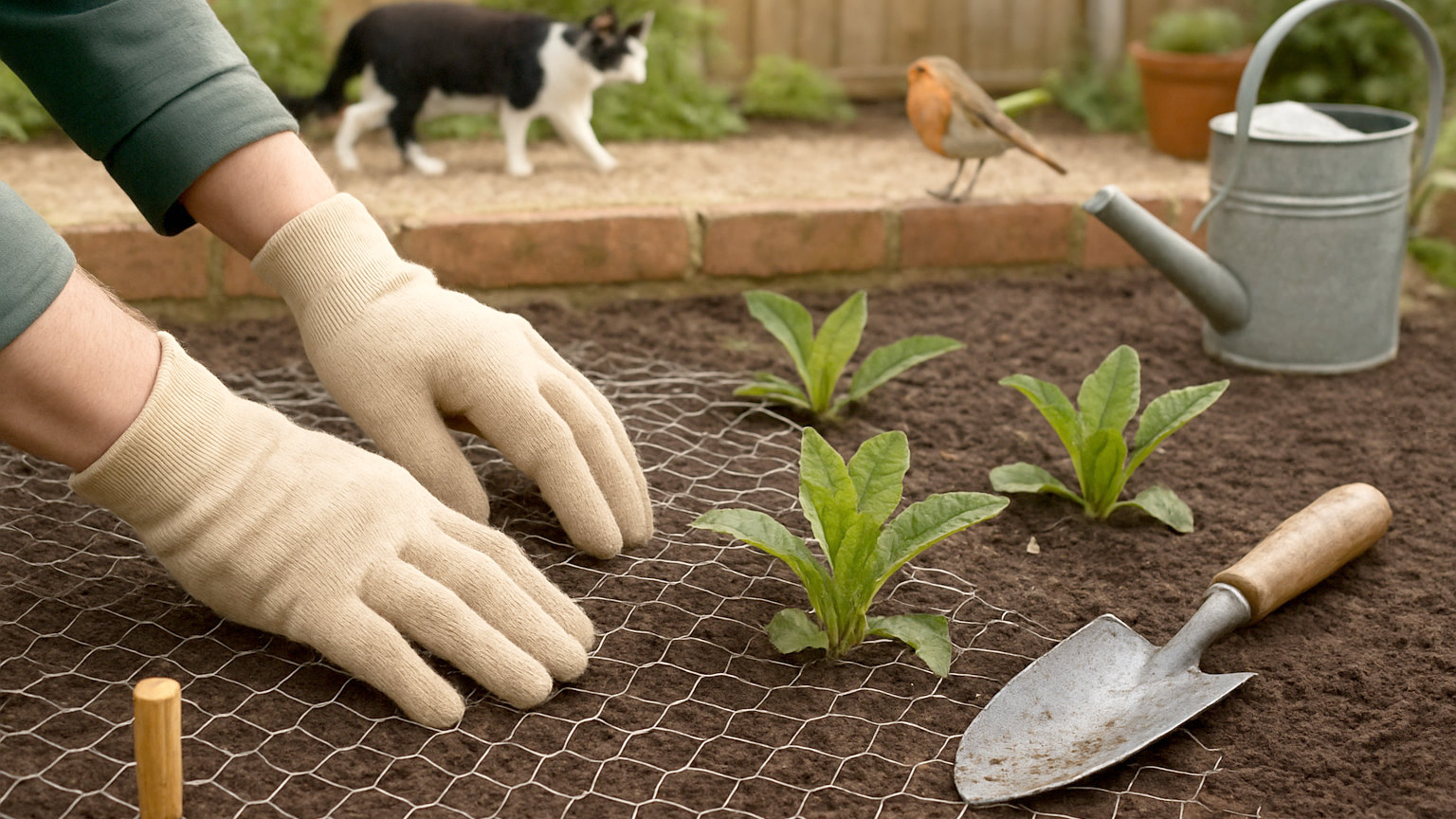
Cats are the commonest source of friction between neighbours in a garden, and the legal position gives very little scope for complaint. Practical measures are the only route.
The legal position
Cats are regarded in law as free-roaming, and an owner is not generally liable for trespass or for damage a cat causes in a neighbour's garden.
It is an offence to harm, trap or poison a cat, and doing so risks prosecution under animal welfare legislation as well as a serious falling-out.
Deterrence is the only lawful approach, and any product used must be approved for the purpose.
What they do
Dig in freshly cultivated soil, seedbeds and containers, which are ideal litter conditions.
Foul borders and lawns.
Flatten seedlings and small plants by lying on them.
Hunt birds, particularly around feeders and nest boxes, and take small mammals, amphibians and reptiles.
Damage from a cat is mostly a nuisance, with the exception of predation on wildlife, which is substantial in aggregate.
Protecting bare soil
Freshly dug ground is the main attraction, and covering it removes the problem.
Lay netting, chicken wire or twiggy prunings over newly sown or planted areas until plants establish. This is the most reliable measure.
Push short canes or plant labels into the soil at intervals, which makes it uncomfortable to sit.
Mulch with something coarse and unpleasant to dig: sharp gravel, pine cones, chipped bark or holly clippings.
Plant densely so there is no exposed soil, since a full border is far less attractive than an open one.
Water the area, since cats prefer dry loose soil.
Deterrents
Motion-activated water sprinklers are among the more effective options and work as long as the water is on.
Scent deterrents based on citrus, or proprietary products, work briefly and need constant reapplication, particularly after rain.
Ultrasonic devices have mixed evidence. Some cats respond and others ignore them, and their effect tends to diminish.
Prickly barriers along fence tops and favourite routes discourage access.
Coleus canina, sometimes sold as the scaredy-cat plant, has anecdotal support and inconsistent results.
Habituation is the recurring problem. Vary the measures and move them about.
Protecting wildlife
Where predation matters, and it does, several measures genuinely reduce it.
Site feeders and bird baths in the open, with a clear view and an escape route, at least two metres from cover a cat can hide in.
Plant something prickly beneath a feeder.
Fit a baffle or a smooth collar on the pole of a bird table and on nest box mounts, and site nest boxes where a cat cannot reach or perch.
Feed birds in the morning and early evening rather than at dawn and dusk when cats hunt most.
If you own the cat
A quick-release collar with a bell reduces hunting success significantly.
Keeping a cat in at night, and at dawn and dusk, reduces predation on small mammals and amphibians in particular.
A well-fed cat still hunts, so feeding more does not solve it.
Provide a litter tray and a patch of loose soil or sand in your own garden, which reduces the incentive to use a neighbour's.
Neutering reduces roaming.
Neighbours
A conversation is usually more productive than a complaint, since most owners do not know their cat is a problem and several will help.
Cat-proof fencing exists, using inward-facing rollers or angled brackets, and is effective for keeping a cat in rather than others out.
Practical summary
Cover bare soil until plants establish, plant densely, keep feeders in the open, and accept that a passing cat cannot be excluded from a garden entirely.
Health
Cat faeces can carry toxoplasmosis and roundworm, which are a genuine health consideration, particularly for pregnant women and young children.
Wear gloves when gardening, wash hands thoroughly afterwards, and cover sandpits when not in use.
Remove any faeces found rather than digging it in, and wash produce grown at ground level thoroughly before eating.
Keeping perspective
A cat crossing a garden does no harm at all, and the damage worth addressing is confined to bare soil and to predation around feeding stations.
Both are dealt with by covering the ground and siting feeders sensibly, which takes very little effort and no confrontation with a neighbour.


